For a moment the loud thunderclap scared me until Maureen told me it was just that, as we sat around the dinner table. I had not expected thunder and rain. It has been cork dry with bright blue skies until now.
As usual I arrived at the office yesterday a little after 7. Every morning the car with a driver and security escort sits waiting in the driveway, inside the compound – a new security measure, until we emerge from the house. At the office most of the staff arrives between 7 and 7:30.
The first activity in the upstairs ‘capacity building team’ office was a challenge: how can we fit one more person in the (large) bedroom sized office that is already accommodating six small desks, a bunch of bookcases, a kerosene stove and a large meeting table with 5 chairs around it. They tried several scenarios. One involved putting the desks so closely together that the more bulky doctor could only get to his seat by sucking in his belly and slide sideways in between the desks. They finally succeeded with the help of some heavy lifters from the support staff. Moving bookcases provided an opportunity to get rid of years of old flipcharts, file folders and other office debris, a good thing.

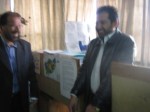
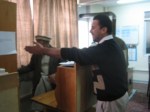
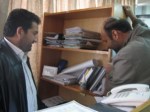
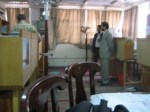

The Open Space agenda we had created the day before hung on the walls and everyone organized according to the agenda and joined the group they had signed up for. I joined the group that was proposed by some members of the Kandahar team on ‘Brakedown Management.’ Expecting that I was to be a resource person, or even teach, I quickly discovered that they were fully prepared to teach the session and had come prepared with a session plan, handouts in Dari and Pashto. I asked occasionally for translations and learned that the breakdown they were talking about was about not meeting their own expectations about performance. They illustrated this with a bar graph that dipped.
Participants from Khost, Paktika and Kandahar provinces had signed up for the session, all struggling with major security issues. They explored the notion of a performance breakdown in the context of total societal breakdowns, a hospital falling apart, and travel too dangerous while a measles outbreak was raging in the background. Everything appeared to be breaking or broken already in their provinces.
At lunch I spent some time with the women. In class and during lunch they sit, as they always do, separate from the men; during breaks they stand together. Sometimes I join them. Their English is very good, better than many of the men. They tell me stories about the endless boredom of the Taliban years. They also tell me that they have a long way to go towards fair treatment, “not during my lifetime,” said the one whose only pieces of exposed skin were her hands and her face. They have come to expect and accept that they are not taken seriously.
One of them is a very senior woman in the ministry of health, soft spoken, unassuming. “When we get a big chair (meaning a position of authority) all the men exclaim that we will fail.” Their biggest headaches come from their peers, educated men, and their own husbands. Their biggest supporters are illiterate and uneducated men who appreciate them. Some of the more enlightened men in our workshop, true leaders, are unenlightened when it comes to women, even – or may be especially – their own. One of the star participants in this group has boys studying for degrees and girls married off at a young age – no need to educate them. When I asked why he shrugged his shoulders.
Women have few private spaces in the public arena. In our downstairs office, near the training room is a toilet marked: For Ladies Only. But when you bend down to sit on the toilet your nose is only inches away from a urinal; not even a toilet to call our own. The other toilets in the place are not marked that way; you have to roll up your pant legs and tuck any loose clothing in to stay dry.


 Sylvia's Journal
“They explored the notion of a performance breakdown in the context of total societal breakdowns, a hospital falling apart, and travel too dangerous while a measles outbreak was raging in the background. Everything appeared to be breaking or broken already in their provinces.”
And then…what did they come p with? A breakthrough? A breakdown? I want to hear more.
It is hard to even begin imagining what they are faced with, and even harder to imagine how they keep themselves up to the events of each day. What a challenge to the “Challenge Model”.