Axel spent the morning in conference with the cooks from guesthouse zero and 33 and Ali the housekeeper exchanging information about basic household items such as sink and bathtub stoppers, (not known here), bath mats, garbage pails, squeegees (called pas-pas in Dari), shower curtains, towel racks, and such.
As a result of this conference we now have plastic mats with the word Welcome on it, at various places around the house. We also have large garbage cans everywhere, as if we are a public park. Some are grey and have PUSH in large letters written on the lid, others are larger and bright red with a small lid built into a larger lid Somewhere there was also a small plastic salt and pepper shaker set that Axel first spotted outside, next to the red garbage pails. It looks like they never made it into the house. We try to think like Afghans in order to locate them but we are of course clueless.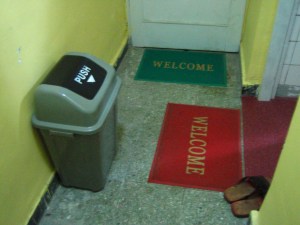
We also acquired a jar of peanut butter, an alien food. Not the peanut, mind you (called mumpili). Pas pas and mumpili would make for great dog or cat names (much like squeegee and peanut would), if we ever decided to adopt some of the flea-bitten creatures sleeping outside our gate.
We now have a heater/airco in our bedroom so that we don’t need to keep the door open to let warm air come in from other rooms. We do value our privacy provided by a closed bedroom door now that we will have our first TDYer flying in tomorrow. TDY is USAID speak for temporary duty and refers to consultants. I was one of them for the longest time but now I am called a permanent.
The arrival of the TDYer is speeding things up. The washing machine and dryer are installed and Ali washed a first load. This included a woolen Pashmina shawl that was returned unrecognizable: a small felted piece of cloth that appeared to be more like a mop than an elegant shawl. I better be careful about what I put in the laundry pile.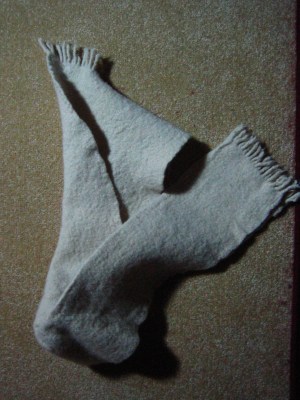
Axel ventured out into Kabul center, to a wireless coffee house, to meet an Indian reporter and make connections while I watched our housekeeper at the office unpack and re-pack large posters that tell health providers in hospitals how to do triage of sick children.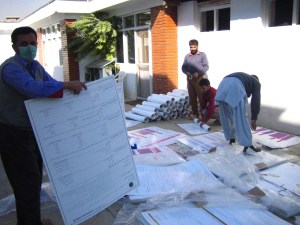
Later I participated in my first local hire interview panel with three other colleagues. We interviewed a great candidate and one who didn’t seem to understand what a job interview is all about. The latter we reached in Kandahar and interviewed using the speaker function of a cell phone. The interview lasted about 10 minutes while we rolled our eyes. It gave me a taste of how hard it is to find good people, and how it is a buyers market for these good people.
We lost one other great candidate whose salary demands were far above the level of his supervisor-to-be. The salary range goes from peanuts to astronomical, even by American standards. These distortions are introduced by donors that need good people to get the work done. These good people cannot be lured into government jobs that follow the local pay scale; their salaries get ‘topped up’ and some quite a bit. If you are smart, speak good English and have marketable skills and degrees, you can do well in Afghanistan, very well. It works for now but it is a house of cards that will collapse as soon as donor support ends or diminishes. But that is too far into the future, most people believe, that it does not need to be considered now, ‘not during my turn.’

 Sylvia's Journal
Recent Comments