This morning was all devoted to drugs, of the legal kind. As our drug management team is transferring from one project to another later this year, the two project leaders and affected staff came together to demystify the transition, deal with rumors and put everyone at ease.
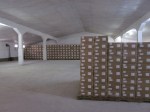
Afterward I joined the warehouse management team for a tour of the facility where all the bulk drugs are stored and then repacked for distribution to the NGOs. It is a very complex logistical challenge. I know that from the emails about procurement, shipments and clearance on which I am cc-ed. But now I finally got to see the result of all the work: boxes piled on top of boxes with the medicines that appear on the approved drug list for health centers and hospitals and are shipped to Kabul with the compliments of the American people.
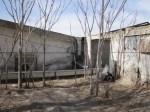
The warehouse consists of several large buildings. They were rebuilt from the debris that the Mujahedeen had left behind, which was little when it concerned the traditional mudbrick structures, or dented and pockmarked with bullet holes when it concerned the building put up by the Russians with indestructible and thick cement walls.
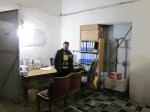
The storage is secured, temperature controlled, pest controlled (all the traps have been empty since a food storage place was established nearby) and closely monitored by staff whose offices are dwarfed in the corners of the gigantic spaces. It is not a comfortable work environment in the winter – these spaces are heated only as much as is needed to keep things from freezing – but then, in the summer everything stays naturally cool.
The inventory check that is done quarterly, a yeoman’s job of counting every box, has consistently surfaced numbers that are within the tiniest fractions of allowed discrepancies from what is expected to be there. When you see the number of boxes you realize the accomplishment. I am told that people coming from outside the country, and who are familiar with pharmaceutical logistics systems are awed by it all. It is one of those accomplishments that is invisible because it is not newsworthy. Only a negative event, theft, fire, would make it newsworthy which is too bad.
The next challenge for the combined project teams is how to transfer the responsibility and running of all this to the government. It will be a slow process that will take years but less so because of the strong foundation on which the system is built.



In the evening I tumbled unknowingly into a meeting of the Pakistan District Rotary Club Kabul; complete with banners and District Governors (a Rotary governance title I learned) from Lahore (male) and two from the UK (one male one female), the latter two wearing their red Rotary blazers.
There were many ceremonies that included speeches and gifts: the traditional Afghan gray silk-turban/skullcap combinations for the men and a chador that looked like a fringed American flag without the stars for the lady. This was preceded and followed by many speeches about Service over Self, upcoming events (Lahore and New Orleans), projects, some history and some posing for the obligatory gift receiving pictures.
Razia jan who was hosting the meeting showed a wonderful new documentary about her Zabuli school for girls that her foundation (and Rotary) supports. It included an interview with Khaled Husseini of Kite Runner fame.
I learned that Zabuli was a wealthy Afghan banker responsible for the introduction of checkbooks and other banking novelties, who left all his money for the betterment of Afghanistan. Razia jan’s school got windows and walls and named the school after him in return.

 Sylvia's Journal
Recent Comments