The first day of Ramazan was hot, long and quiet, even for Steve and me who are not fasting. For Steve fasting is more than entirely unimaginable, for me simply hard to imagine. Yet I know from my more devout Muslim colleagues, here and in other parts of the Muslim world, that for them the fast is a significant, holy, even joyous duty.
I spent most of the day listening to Sherlock Holmes stories, four audio books I downloaded from the Manchester public library, while working on the sampler for Sita and Jim – I have just one month to get it finished. I have eight more diamonds of various sizes to complete.
In the afternoon Farid and his brother, a medical student, came by to say hello, collect another donation for the tennis court from one of my colleagues and to talk about his brother’s vision for health services to the severely underserved Hazara population on the western side of the city, the same place where the wool factory is.
Their father worked for MSH some 30 years ago in Ghazni. I called Steve down to join us and be inspired by these two delightful young men who are bright lights in an otherwise dark, depressing and dysfunctional Kabul.
Steve had worked in the district where the boys were born. He treated us to lots of wonderful stories about the place some 40 years ago. There had been quite a bit of progress since he was last there. But when he asked the medical student about how young people are currently trained to become doctors, the news was disappointing.
Things appeared more or less the same they were decades ago: medical students with less than one year to graduation who had never examined a woman, taken blood pressure, held retractors in surgery. It is a bit similar to the little progress in primary school textbooks (none if to judge by the 3rd grade textbook I am using in my Dari class). It leaves one wondering what happened to the millions of dollars and years of technical assistance that were poured into improving the situation?
Our conversation drifted into the topic of the Hazaras, the ethnic group to which the boys belong, and their treatment, as a minority despite the fact they are the third largest ethnic group in Afghanistan. When Farid mentioned how Abdurrahhman Khan (Emir of Afghanistan from 1880 to 1901) had killed or chased away a significant portion of the Hazara population in the late 1800s, Steve pulled out copies of two of Kiplings tongue-in-cheek ballads about the cruel king who was his contemporary. We all listened spellbound as Steve read his favorite poem. Singing, and reading poetry are two of Steve’s many gifts. 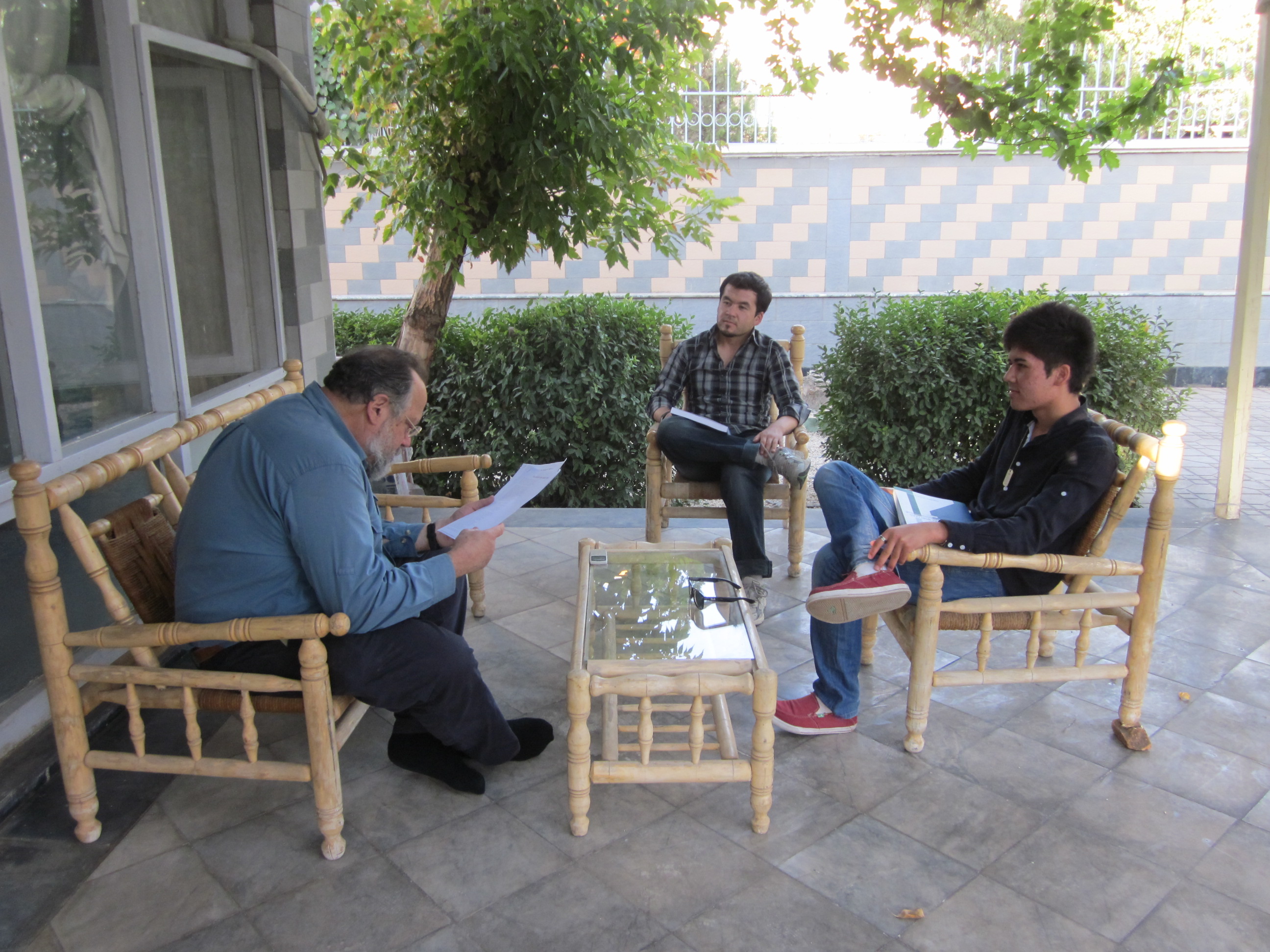
In the evening Steve and I watched Bertie Wooster and Jeeves, only the second of countless episodes Axel had bought back in the US in May. I have watched a few episodes alone and realized tonight that one has to watch these movies in company; they are much more fun that way.

 Sylvia's Journal
Recent Comments