Yesterday I spent five hours in a virtual coaching workshop with my colleagues in Cote d’Ivoire after the workday was finished here. It makes for long workdays but it is thrilling to be able to support the team there despite being 8 time zones away.
Our new translator is more than a translator – she has become our cultural and tour guide. My excitement about seeing a yurt across the street in the backyard of a high rise gave way to astonishment about the number of yurts encircling the city. Thousands of yurts dot the landscape expanding higher and higher up the surrounding hills. On the city map that the hotel provides they are indicated as tiny little white dots. They appear to be the Mongolian version of slums and are permanent structures even though they can be taken apart and re-assembled at any moment.
The rise up the economic ladder is seen when fixed structures are built next to the yurt. We drove a little ways into the area known as ‘gir’ to see some of the yurts close up. One can buy a yurt (in a box) or construct them from scratch. Our translator estimated that one could ship a yurt in a box to America for about 1000 dollars. Not a bad price for a dwelling – but one wonders about what it is like to live in a yurt in this harsh climate.
We also learned that the name of the city, the only big city in Mongolia, means ‘red hero’ a reminder of Mongolia’s communist past. Despite the brutal Stalin regime that killed several of her family members (Llamas and nobility) uur guide believes that Communism saved Mongolia from being wiped out by China, much like native populations anywhere got wiped out or nearly wiped out by the dominant powers of the day. It would have been a sad ending of what was once an enormous empire that stretched all across Asia and bordered several oceans. References to Mongolia’s grandiose past are everywhere: names of buildings and institutions, statues of Ghengis Khan and conquerors less well known in the West and even the Huns which originated from here and overrun Europe long before Genghis appeared on the scene.
It is summer here now and like in New England people come out of the woodwork dressed in shorts, summer dresses and sandals. Still, the days are starting cool and then the thermometer climbs to 29 Celsius before dipping back down when the sun goes down. Layering of clothes must be an art here as one can go through all four seasons in a day.
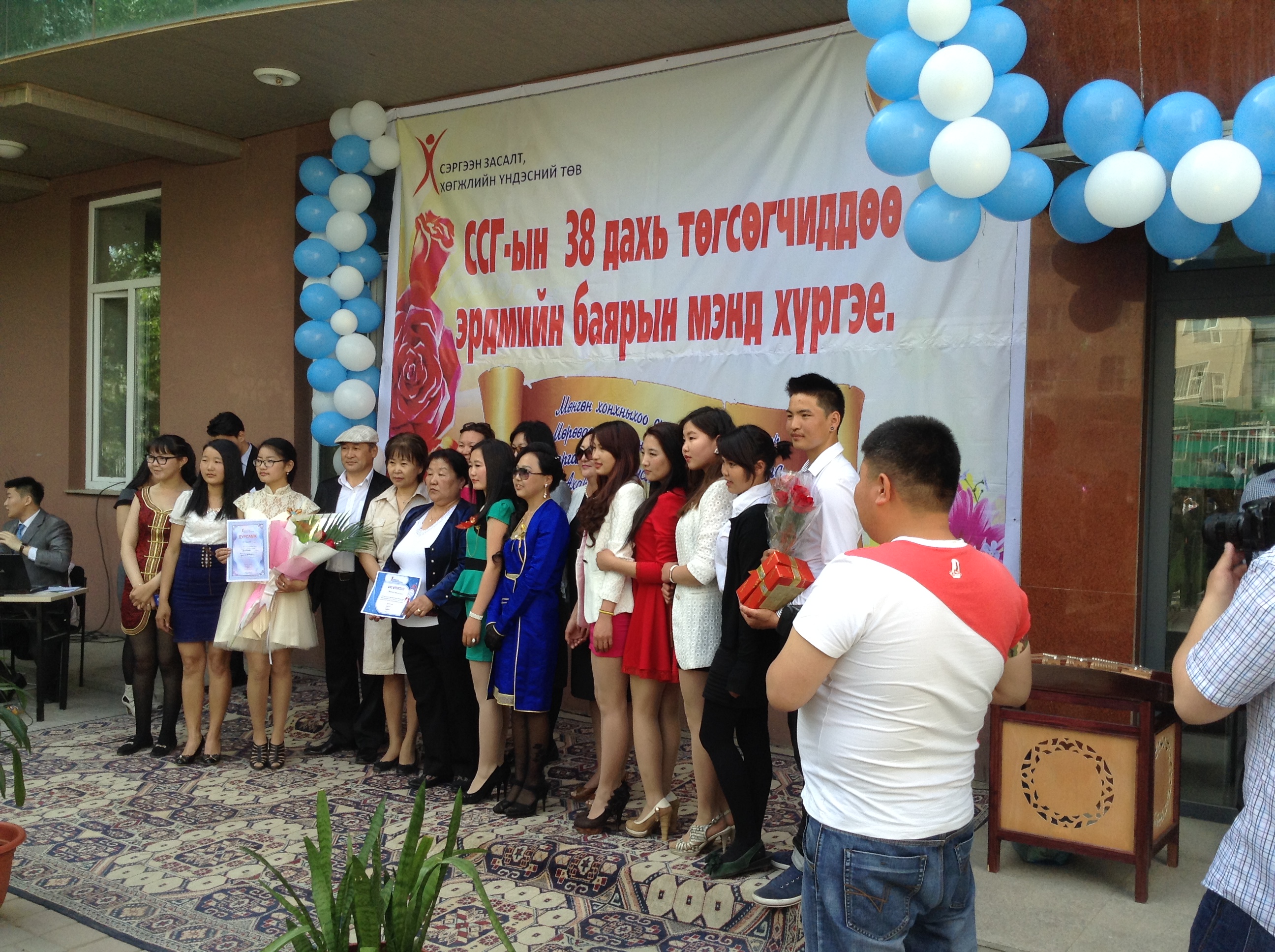 The National Rehab Center where this week’s workshop is held had its annual graduation ceremony for its vocational training program participants. It was a moving experience seeing these young kids, deaf, mute, with cerebral palsy, step up, sometimes with considerable effort, to the podium to receive their certificates with joyful family members clapping and holding back tears. I wonder how they will manage after this as they enter the workplace. Will it be as supportive as this school has been?
We were received by the Vice Minister for Population and Social Protection and visited a foundation that supports community based rehabilitation, two ends from the spectrum of stakeholders. We also visited the Church of the Latter Day Saints which has an important presence here and ships in wheelchairs and provides the training to use them well. We are inviting representatives from these and other organizations to our stakeholder meeting next week and making the rounds to understand their concerns and visions.
Because I had gotten up at 3 AM I had a hard time keeping my eyes open towards the end of the day. I scheduled a massage at 8 but don’t remember much about it as I fell asleep halfway through; I had one more call with the head office before tumbling into bed, oily and relaxed.

 Sylvia's Journal
Recent Comments