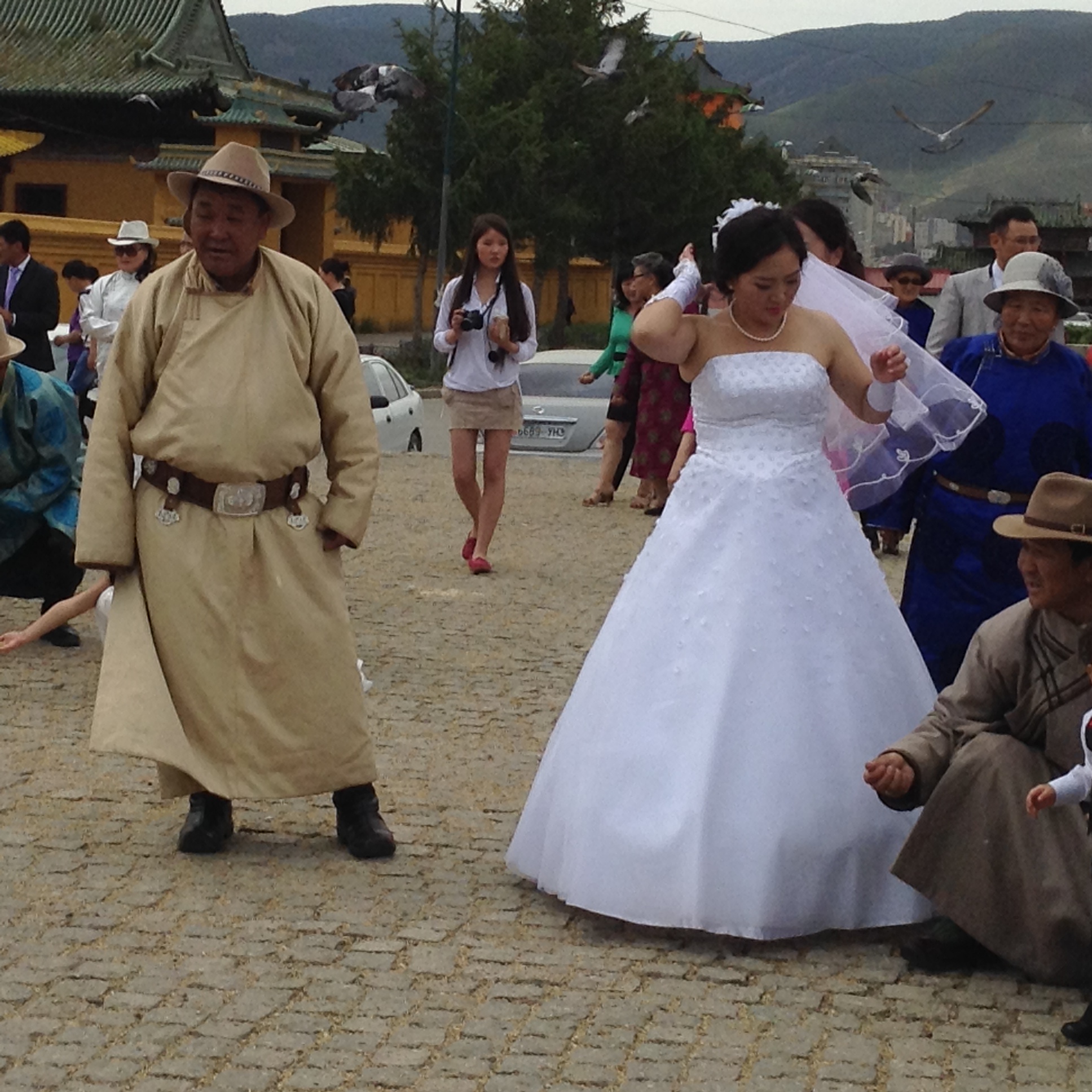
 Saturday was a day of play and rest for Maggie and me while our trainers completed their last day. Our guide and interpreter took us to the Gandan Monastery which is located on the edge of the city. It was established at its current location in 1838 and grew over the next century into a complex that included 9 dastans or institutes, a library and housing for some 5000 monks. It attracted people from all over who practiced the Tibetan form of Buddhism. I recognized the similarity with the monasteries Axel and I visited in Sikkim some years ago.
In 1938 the communists destroyed most (some 900) monasteries in the country. Five of the Gandan monastery temples were destroyed and what was left served as barracks for Russian soldiers or barns for their horses. The monastery did continue to function, although under strict supervision and on a very small scale during the rest of the communist era until the Democratic Revolution of 1990.
Now the place is thriving again and expanding. There are 10 temples and some 900 monks. Our guide keeps calling them monkeys, not out of disrespect but because she confuses the words. After all, if one is monk, two might well be monkees. It is a logical mistake.
An enormous golden statue (my guess: some 3 stories high) of the Bodhisattva of Compassion, Janraisig (Chenresig in Tibetan) stands in the center of the biggest temple which has become a symbol of independence for Mongolians. The original was carted off to the USSR and can be seen in the Hermitage we were told. How they got it out of the building (and how the Mongolians got a copy back in) is a miracle, the latter attesting to the craftsmanship of the Mongolians.
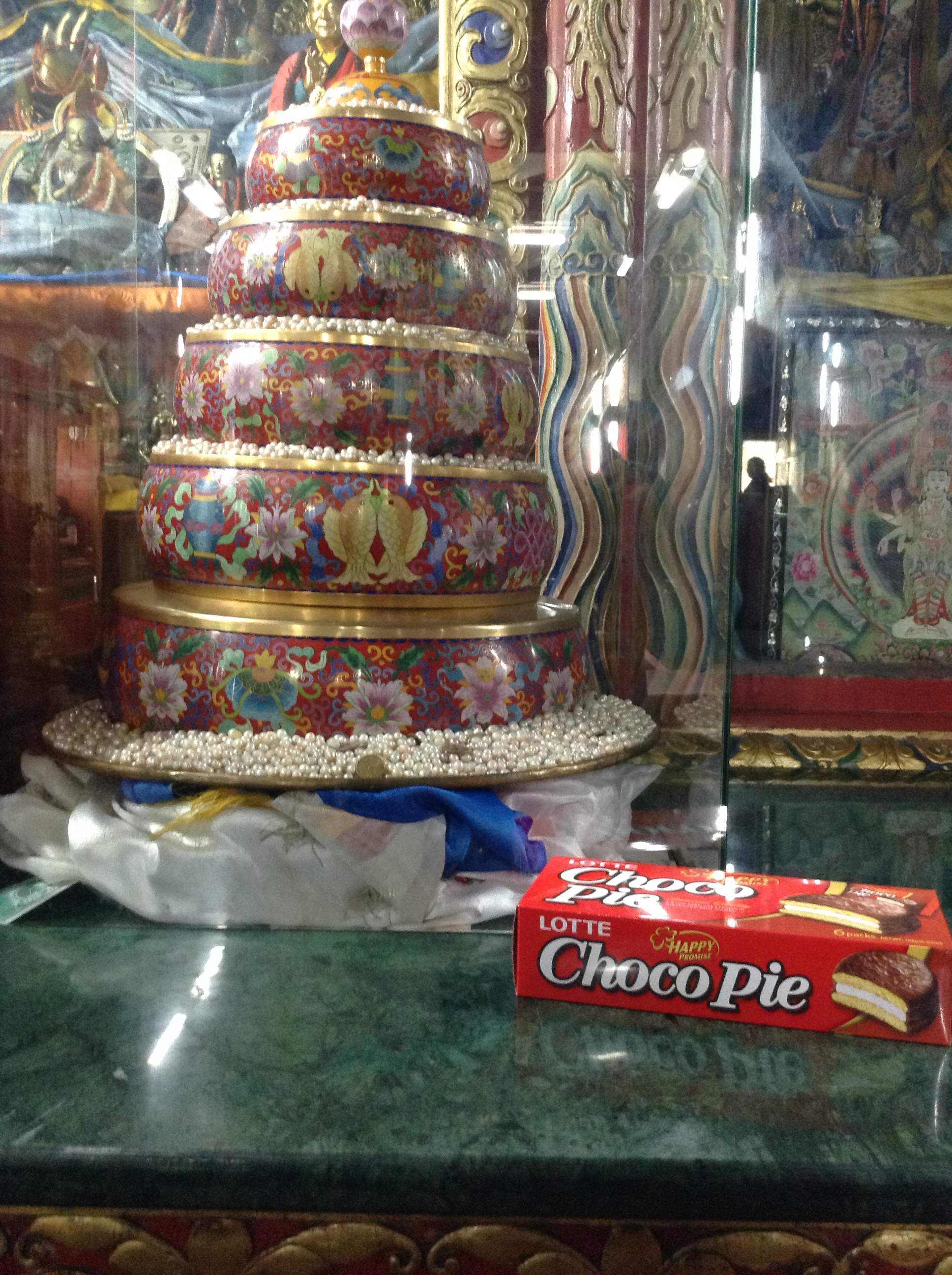
In other temples monks were reciting from the (Tibetan) books of prayer, rocking back and forth. They received gifts, like boxes of Choco Pies which were placed next to religious artifacts, creating some dissonance for me but apparently none for the locals.
We followed our guide and received blessings from several monks by bending over in front of their seat. They placed the prayer book on our forehead. Leaving the temple is a bit tricky with the uneven stones and high thresholds because once cannot turn one’s back on what is inside the temple. It occurred to me that for wheelchair users a visit to this temple is at least for now, out of the question.
An American gentleman started to follow us and listen in to our interpreter’s explanations. We invited him to join us and discovered that he is a visiting OB/management and strategy professor at a Chinese university and was in Mongolian to cross one item of his bucket list, a motorcycle ride across the steppes. He had already done one from the most southern tip of South America to Alaska. He is a circumnavigator, an elite club of people who have gone around the world a few times. It includes many celebrities, among them the former queen of Sikkim, who I knew about from our Sikkim travels.
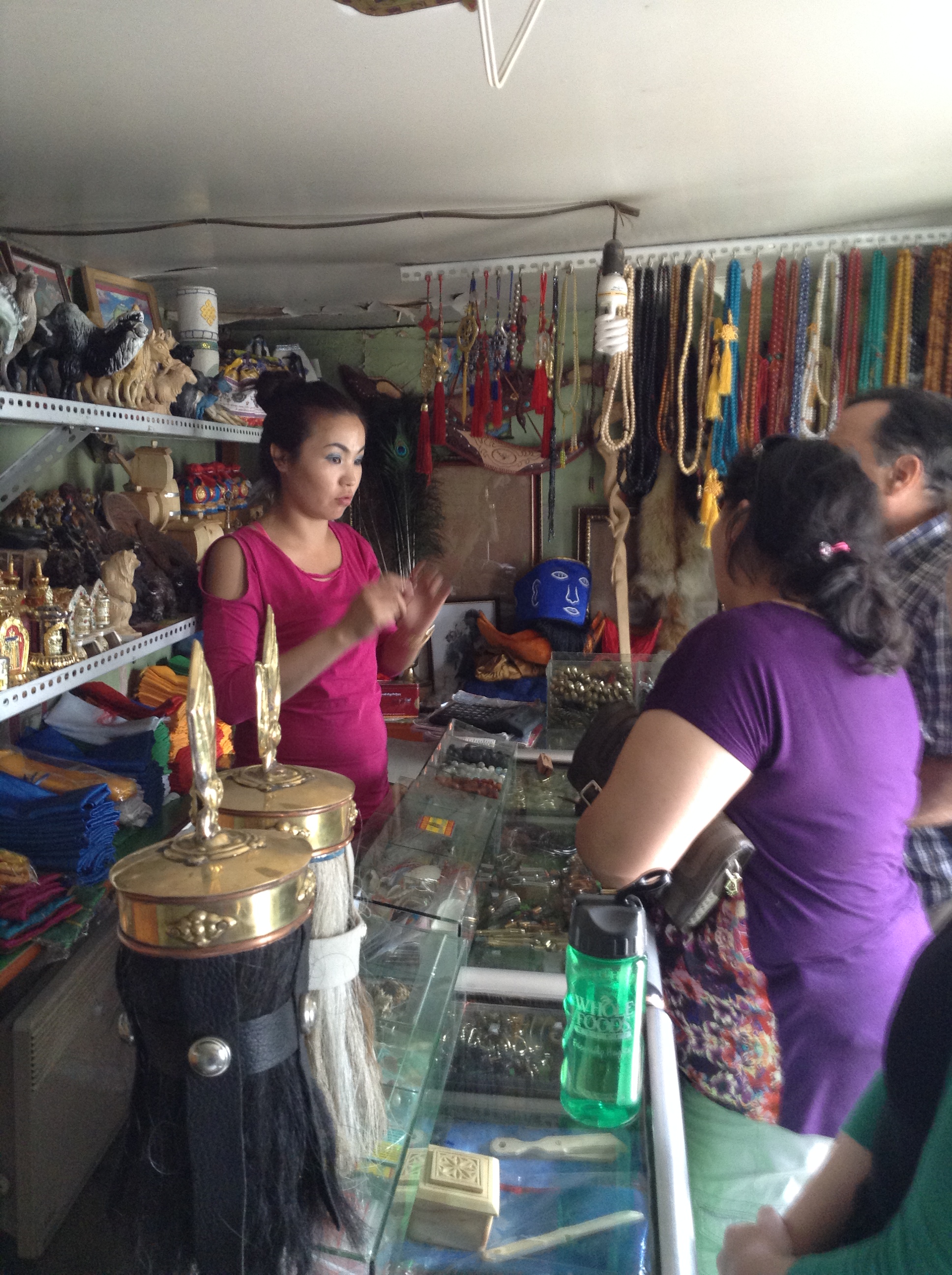
Outside the temple complex are souvenir shops that sell trinkets, mass-produced art and amulets for protection against the dangers of the world. We decided that our new friend needed to buy some protection against the dangers of traversing Mongolia on a motor bike. Maggie and I bought a charm to protect me against flattery and her against interferences to doing a good job. For a dollar and a quarter each, we also bought 9 hedge hock quills in a shaman’s shop. A dollar and a quarter is not much, we reasoned, to protect us against the dangers of travel. We did not buy the more powerful protection, in the shape of an embroidered roll, for 25000 Mongolian Tughrik (about 14 dollars), considering this a tad too much for superstition.

 Sylvia's Journal
Recent Comments