Archive Page 155

Stories of hope and despair

We finished phase two of the leadership program. It was good to have sat in the back because I now know better where my work is. I sometimes wished I could look inside people’s minds to find out how the program affects (or not) their thinking. During the closing reflection I tried to pry loose some of these invisible thoughts but here, as a foreigner, one never knows whether the answers one gets are genuine or attempts to please the foreigner. Or whether the clichés I hear are attempts in a language not fully mastered to express thoughts constructed in their own. As I learn the construction of Dari sentences I can recognize when this happens.

Today was SOLA class after work. This time 5 girls showed up, unlike last week when no one did because of exams. Those are now over and we resumed our session about vision and learning how women in Afghanistan are able (or not) to overcome their thousand and one challenges. I had asked each girl to interview a woman, any age, to whom they look up for accomplishments in the face of all these challenges.

Fatima had interviewed their cleaning lady. She read from her handwritten notes. It started cheery enough. She quoted her cleaning lady as saying, “one beautiful day, when I was nine years old, I was coming home from tending the sheep in the fields when my mother told me that I was going to be engaged. I was very happy because it meant I would get new clothes. But then when I got married my world became hell. I had a baby at 12…”

At this point Fatima’s interview was cut short because the cleaning lady could no longer hold her tears. There were, presumably, another 30 intervening years of hell, during which the husband was killed by the Russians and the 5 daughters grew up. Although it is an intensely sad story, I was happy to hear that this story will not repeat itself anymore. Three of the five daughters are now doctors, one is sitting for her high school exams and the last one is in middle school.

Hila read her story about a girl who had lost both her parents at age 12 and then became the primary caretaker of an 11 day old baby while going to school and educating herself. This orphan is now a 25 year old lady doctor. Everyone clapped when Hila finished her story with the surprise revelation that the 11 day old baby was Hila herself and that this lady doctor, although not her biological mother, is the one she calls mommy.

The last twenty minutes we listened, holding our breath, interrupted now and then by gasps and some tears, to another story of a 16 year old, engaged, married, beaten, miscarrying a boy (her fault) at 17, betrayed, beaten, abused and shunned by her husband. We were all looking sadly at each other but then things took a turn for the better and the story became a story of redemption. The husband cut loose from his overbearing parents, choosing his wife over them. He repented, and helped his wife escape from his parents’ house and moved her to her sister’s while he went overseas for a job. Now he is back and preparing for another posting, this time everyone comes along. There is a job, money and love. It was a combination of Cinderella and the frog prince. Safia wiped her tears and everyone sighed. It is then that I realized that these are not stories as they are for us – these are real life experiences surrounding these girls on all sides, sometimes uncomfortably close.

Next week we will start our reading program, now that we have explored their visions and fueled them with stories of women who overcame mountains of misfortune and are now successful, either themselves or their offspring. We explored possible books to read and choose Khalid Hussein’s A Thousand Splendid Suns – a bit of a stretch language-wise, but familiar terrain. This weekend I will be hunting around town for 6 copies and prepare the assignments.

Loopy snags, fossils and poetry

For the umpteenth time I snagged my scarf on something pointy or sharp that is sticking out of something else where you don’t expect it. Some of my loosely woven clothes have little holes here and there; the scarves I can usually fix although some remain a bit loopy.

All this, snags and sharp things, the experience of being snagged and resulting loopiness are delicious metaphors for our lives in Afghanistan.

All day I sat on the side in our Kabul Conference room watching the second day of our leadership program, phase II, watching a team that wasn’t really a team struggle to color between the lines (follow the facilitation notes). A few newbies were observing, sitting at the sidelines with me. I pointed out the snags and how to fix them while they helped me with translation.

Hopefully they were learning along with everyone else and learning from mistakes made. People are critical of each other and so am I of the team and especially one of my staff who is the master facilitator; it is a habit easily acquired here. It is good that the Appreciative Inquiry literature pops up now and then to remind me that good things are happening as well. People are learning and excited about it.

Since I arrived a little over one year ago I have not sat in these workshops much or supervised the staff who are facilitating them as closely as I should have. As a result some ‘fossilization’ has occurred – errors made and not corrected, becoming embedded in the routines.

As a technical director responsible for management and leadership I have many managerial tasks, am expected to attend many internal and external meetings and events. With only so many hours in a day and many double bookings it has been hard to sit in the back when workshops are going on for long periods of time.

And then there is the language barrier. All the workshops are done in Dari. A year and even half a year ago I wasn’t able to follow what people were saying when they didn’t follow the script. Now I am at a 40% level of understanding and can roughly follow the conversations. I can detect when discussion drift into side roads, or, to stick with the metaphor, when facilitators get snagged.

I received a present from my boss, a book of poetry that he claims is simple, third grade level. But my boss is a poet himself and an avid reader and memorizer of poetry. His standards are high, as my colleagues told me. They think it is much too advanced for me. To make things even more challenging, the print is tiny. It is hard for someone who is still reading letter by letter rather than by gestalt, to identify whether there are one, two or three dots on or below the letters. I think I should have asked for a book of simple nursery rhymes instead.

While the teams were doing group work I translated an official (and short) invitation letter from Dari into English. This was made easier because the reverse of the letter had the invitation in English. I am writing the words in a special notebook for work related words. The short letter had about 20 new words. This is helping me to expand my professional vocabulary with words like ‘consensus meeting,’ ‘stakeholders,’ ‘final draft,’ ‘strategy’ (istartezjee), ‘gathering,’ ‘bring to completion,’ ‘presentation,’ ‘date,’ and ‘venue.’ I feel that I am moving off one plateau and heading towards a next one, a little higher up.

Marching on

‘Afghan men blamed for gender prejudice,’ is one of the headlines in our local newspaper. It appears right below ‘Poppy cultivation un-Islamic, say scholars.’ I am glad these things are out in the open. At least we are clear on that now.

There were some very good tidings in the newspaper as well: our Dutch compatriot Peter, kidnapped in October in Kunduz is free and can rejoin his wife and kids in Holland. His picture and that of his driver illustrated the observation that they appeared to be in ‘depressed mental state.’ Who wouldn’t after such an ordeal.

I had an interesting day at work. In the morning some of us met to review the activities in our work plan that are not moving along as planned. It was a small group that came together (too many competing schedules) but the conversation was interesting as we discussed why some things are just not happening. Many of those are in my portfolio with which I have struggled for some time now – how to get senior leaders to accept and make time for improving their leadership skills.

The contradiction is that every document that analyzes what’s wrong here (and there are many because most advisors and technical assistants follow the ‘deficit school’ of institutional development) cites weak leadership skills, but when we propose actions to remedy this other things always take precedence – especially those activities that have immediate, and visible or tangible outcomes.

The irony of my job here is that it would be much easier to do if the leadership and management skills were well developed, which of course would make my presence here redundant.

In the afternoon I sat between my two young female mentees, the ones who will play a facilitator role in an upcoming leadership development program for the midwives, a program that starts next week. They are thrown in the deep but I know they will swim because they are smart and they can. Today they were participatory observers in a similar program, second stage, for some of our own teams, a team from the medical university and one from the ministry.

I can understand a great deal more now of the conversations that are held in Dari, but not yet the jokes. One joke concerned women – there are four in the room – should they have protested? My young mentees are very aware of the roles society has given them: eyes down, be quiet. I am encouraging them to lift their eyes up and not be quiet but it is a hard sell. I offer to speak out for them when they can but reminded them that I am here only for awhile.

I often notice how powerlessness produces a kind of criticism that is counterproductive, not only because it is always (and understandably) voiced when the strong and dominant are out of earshot but also because it focuses energy away from the self and onto the other, which is rather wasteful from an energy conservation point of view.

On target on time

Our requests for work permits are being processed. So is my request to leave the country for our quarterly R&R, sometime in early January.

While this is being done I returned to my tasks. One of those is to review our activity plan with a view to risk management: identifying where the risks are (of not producing deliverables, of not being prepared for eventualities, of losing people and things, etc.).

It is a good practice introduced by one of my Australian colleagues. I am seeing the advantage of having other nationalities (than those of our host country) on our staff – we are drawing from a much wider reservoir of knowledge instead of recycling our own (American) bathwater.

As the days tick away toward the last day of the project (a little more than 200 days) the competition for timeslots for workshops, study tours, training is becoming more intense. Sometimes different units are targeting the same people, and of course the higher you go in the hierarchy the smaller the pool. Since my focus is senior leadership development I am feeling the squeeze especially hard.

Training activities are tangible and highly desirable if you want to keep up spending rates and have evidence that you are busy implementing your plan, on target, on time. But some of our work plan activities are not so distinct.

In two of my teams work plan activities are of the coaching type, routine and ongoing capacity development that takes place in the workplace – these are the ones hard to connect to results; and if the object of the coaching is not interested (or too busy) it leaves us stranded with our plans.

In contrast, a third team is responsible for ordering, shipping, clearing and distributing millions of dollars of pharmaceutical products to the health facilities in about one third of Afghanistan’s provinces. Compared to the coaching the intended outcome is clear cut and tangible. Not that it is easier (getting things transported here, clearing customs and preventing loss and leakage is no mean task in this part of the world) but when all is said and done at least you can see results for all the efforts: pharmacies being stocked and doling out pills to patients.

Patience and perseverance

Today was one of those days that makes you pull your hair out, a totally non productive day spent mostly in traffic, with three visits to the Indian embassy, a place I prefer to stay away from, given its current history.

It was partially my own fault because I had taken the wrong passport to the Indian embassy and didn’t discover that until we appeared before the official. It required another tedious and long round trip. But at the end of the day we both received our passports with the visa stamp: good until May, officially for 3 visits but since they have to be spaced two months apart I think one can only make two visits, really. It is good enough for now.

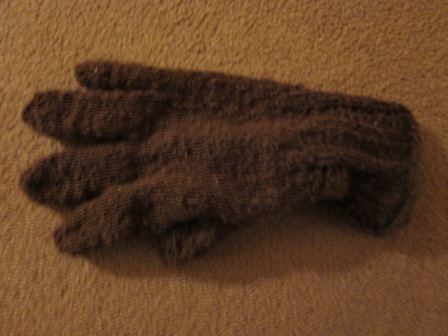
And so, for about 5 hours, I sat in a car, trying to knit and then losing stitches because of the bumps in the road and the stops and starts; each time I have to unravel what i did and start over again because of the complex pattern. May be it is time to revisit the glove project – but it is a nice conversation starter.

The very little time I was not in a car I sat at my desk, not in a very good mood; it is good I did not need to meet with anyone and I could blow off steam on my own. It was one of those days where I think we should be let out every 6 weeks instead of every 12.

The stress (and my high blood pressure, not sure what is cause and what is effect) is exacerbated by all the hoops one has to jump through to get the right papers stamped in the right places at the right time in a time span that is short for bureaucratic standards. Next step is the work permit; with that we can apply for the renewal of our Afghanistan visa. How long that will take is anyone’s guess but hopefully before we leave for Amsterdam early January.

Patient again

I went to see our family doctor, a Ugandan MD trained at the university that MSH has supported in the past, for a consultation about some GYN problems. He decided I needed a more thorough investigation by a specialist. I don’t think it is anything serious, suspecting a minor malfunction caused by switching from American to Iranian hormonal therapy and back to the American one. Still, when he could not recommend any specialist in Kabul and started talking about going to Dubai I cringed. Not again!

He ordered an ultrasound which was to be had at the French Medical Institute for Children. It is where Axel went for his X-ray last summer. It was an Afghan hospital experience that was not bad but made me not want to have any more tests done. Going to the radiology departments is a time-consuming proposition; it is a busy place.

I had made an appointment before heading out there. Most people don’t and crowd around the small glass opening behind which one young lady sits, with her computer, a scanner, a printer and a drawer where the money goes. I brought my knitting (the glove, fourth try) which attracted a lot of attention.

One young woman said, in broken English, that she thought knitting was boring. I wondered what the Dari word was that she translated as ‘boring.’ Men stared at me and women came crowding around, asking what I was knitting and for whom. This was an even better Dari lesson than the one hour I missed because of my trip to the hospital.

Once I had paid (18 dollars) and had a stamped receipt with a number (16) I was sent to a corridor without chairs where sundry people waited, some with kids, some with elderly relatives, in front of various doors marked, in English, with the words, X-Ray, CT Scan, Ultrasound. It was unclear what the drill was so I leaned against the wall and continued knitting. More stares and more attempts at conversation. Finally a young handsome doctor (Ultrasound technician/MD) came out and told me to drink much water. I told him if he had me wait much longer I would burst.

Ten minutes later I was in one of the two tiny portioned alcoves, minimal privacy secured with a curtain and bared my belly. I asked him whether Afghan men would object to revealing their wives’ bellies (I had not seen a female Ultrasound technician) but he told me it was rare, and in those few cases they called on the female doctor, who promptly stuck her head around the curtain.

Although the prescription (provided orally by me as per my doctor’s instructions) asked for a pelvic ultrasound he decided to scan all the organs in my belly. Given the low life expectancy of women and the fact that most go from one pregnancy to another and then die, I think a 59-year old menopausal woman was too good an opportunity to pass up; when else would he have a chance to peek inside and see what everything looks like of someone who has only had two babies and expects to live double the Afghan’s life span.

After awhile he triumphantly exclaimed that he found something, one kidney stone and one gall stone. He turned the US screen towards me and showed me the stones. He suggested I come back later in the day, after fasting, and he would do a more thorough investigation of the gall bladder and kidney but I declined. Given the fact that Axel had been carrying along more than a dozen stones for years without knowing it I thought this exploration could wait.

The doctor left me with a wad of paper towels to clean of the gel. The used papers were dropped on the floor next to the overflowing waste basket with towels from those who had come before me. He then left to write the report and I was back among the curious stares of the people in the waiting room.

Fifteen minutes later I was out of the door with pictures and his report (everything OK except the stones). While waiting for the car a young girl (19) approached me and we started to talk in broken English and Dari. I learned she was a journalism student, engaged to be married next summer to another student and then move with him to Dubai. Her eyes lit up. “I hate Afghanistan. It is not a good place for girls or for boys.”

When I asked her who or how would this country change to become more friendly to boys and girls she shrugged her shoulders, saying, ‘I am alone.’ I assured her she was not, and told her about my students, the two who want to become president of Afghanistan, the one who will be a directors of an Afghan business school, and the one who will be Afghanistan’s ambassador to the UN (we are talking 20 years from now at least). I think these visions puzzled her.

We exchanged email addresses. I would love to introduce her to my students.

A festive day

I awoke to a French toast breakfast (my first, etc.) and a loving husband serving me tea. The birthday massage was cancelled because the masseuse was sick and the only other one available was the young inexperienced one who sliced of part of Janneke’s toe some weeks ago.

Instead we went to find the nice gentleman, agricultural student and manager of a women’s spinning and knitting coop, for some more yarn. It was a long ride to the edge of Kabul, a Shia neighborhood that was getting ready for some big religious festival that requires many large colored flags (green, red and black).

The woolman came to our car with a bag of sheeps wool, cashmere yarn and several knitted hats. After I haggled a bit about some cashmere yarn, and we had agreed on a price he gave me the remainder of the bag. “Please find us some buyers,” he said. I have never been in the wool/yarn/knitted hats business but I promised I would and promptly announced his request on facebook. We will see where it goes from here.

We had lunch in the garden of the Wakhan Café, sending the driver and guard off to prayers and their kind of lunch, before a few more errands that involved large cushions to accommodate our party guests and camembert to go with the French Bakery bread. That camembert came in handy when the delivery boy for the food was about an hour late.

We had forgotten to put ‘no presents’ on the invitation and so presents came along with the guests. The best one was a large orange camel with a Christmas bell around its neck and two camel bags that, I discovered, can hold a cell phone. There were also several bouquets of the type that you give to Olympic champions or opera singers, some bottles of grape beverage, a few cans of adult hop beverages, some made from cherries, a winter snuggly for adults, a Nooristani wooden box and, from Axel, a dress made by Razia jan that he bought last summer at her fashion show/school fundraiser – and kept hidden somehow in this small house that hardly has any hiding places.

The big joy of this evening was the connecting of people – we connected pilots with pilots, neighbors who live across the street from one another, knitters and colleagues. Many of our friends used to be fellow guests at one of Razia jan’s fabulous dinner parties – things clicked and we went on seeing each other when she was not around.

After all the guests left we prepared leftover platters for the guards who had been busy guiding people to our house and opening and closing the gate for everyone, with or without cars. The only disappointment was that none of our friends and family in Holland and the USA came. After all Axel had sent them all invitations with precise directions to our house. One of my brothers cheerfully replied that he was checking out the bus schedule from The Hague to Kabul and then reported there was no good connection.

Next chapter

All through my childhood the day before my birthday I was reminded that this or that activity was the last one I did while being this or that old. It is a habit that Axel has assimilated. And so he prepared my last breakfast consumed during my 59th year on this planet and reminded me that I was drinking my last cocktail (ginger beer and dark rum) and had just finished my last workday. As of tomorrow I will be entering my 60th year with the big birthday looming at the end of this next year. I used to think 60 year olds were ancient; now I think we 60-ish folks are pretty cool.

We had dinner at Paul’s. Over a delicious and enormous meal, accompanied by real wine, we discussed Wiki leaks between us six nationalities: Belgian, Dutch, American, British, Australian and Sierra Leonean (with some of us of double nationality). After that we drifted into other philosophical matters such as ‘meaning what we say and saying what we mean.’ We laughed about things and people, complained about things and people, marveled at things and people, agreed on things, disagreed on things and then (because all the things we said and thought we all agreed that Wiki leaks was not a good idea. And then we parted.

Back home I unraveled the fancy vintage glove I am knitting from real Cashmere wool ($40 per glove!). It was a little disappointing as I thought I was nearly done. However, after the thumb and index finger were completed it stopped looking like a glove. Knitting is a great exercise in patience, humility and perseverance.

Chocolate letters and possibilities

We just returned from the Dutch embassy where, supposedly, Saint Nicholas was to have appeared. We even brought little Kate (4 years) along but she turned out to be the only child and Saint Nicholas had, according to the ambassador, sent his regrets. Poor Kate had been so excited and thought, for a moment, that the ambassador was Saint Nick but his clothes weren’t quite right for the role.

A nice lady from the embassy gave Kate an orange (what other color?) plastic bag with three chocolate letters (we told her the H was for happy) and some other goodies. The combination of the chocolates, chips, perpernoten and pizza was a little too much and all was regurgitated in the middle of the night, her mom told me the next day.

I met some nice Afghan/Dutch citizens who are trying to reconnect with their ancestral home and find work which is not so easy. I envied them for the way the spoke Dutch; so much better than my Dari.

The only sign of Sinterklaas were the traditional sweets: ‘pepernoten,’ ‘taai-taai,’ ‘speculaas’ and ‘schuimpjes.’ I stuffed myself with them, my only chance.

Back at home the workmen have been winterizing our quarters. We have plastic on the windows now and the outside world looks a little fuzzy from the inside which is otherwise nicely warm and cozy. We have been given three new hot/cold air conditioners. We can only run one at a time because of the weak electrical system that cannot be upgraded. But we are happy because that is something we can manage. The summer will be a breeze now that we can produce cool air (silky cool according to the airco manufacturer).

I spent the morning at the ministry and attended a meeting that gave me hope that local leadership is possible and that donor agencies can work together. It was the result of three years of hard work but it was very encouraging because it showed what is possible when the ministry is in charge and the donors fall into place. Everything is possible, although sometimes we forget that here and more than once I wonder.

Varieties of culinary experience

I received three MREs (Meals Ready to Eat) from Doug as an early birthday present. He bought them in the Bush bazaar for next to nothing. A cheap present he admitted, but heartfelt.

One was the snack pack that I already sampled some time ago. Instead of banana chips it has pineapple chips. A second pack was the ordinary MRE, Menu 21 (Tuna). On the package it states that it is Warfighter Recommended, Warfighter Tested and Warfighter Approved ™ and also that it is government property and that commercial resale is unlawful. I wonder whether even having this package in my house makes me liable to prosecution?

Axel joined me at the office in the middle of the morning so we could go to the Indian embassy to apply for a visa. I have never been checked for explosives as thoroughly as at this embassy, which makes sense since they have been blown up twice in the 14 months I have been here.

After standing or sitting in line (the men longer than the women) we handed in our visa application which was carefully checked as if it was an exam. Everything was returned to us and only the fax form retained. This form will be faxed to India for approval. We were told to come back on Sunday. We will have to go through the whole checking and waiting-in-line routine again to hand in our (corrected) applications, our passport and the fee. After that, we are told, it is a matter of stamping the passport and in the afternoon the passport can be picked up, requiring a third visit.

While we waited for the Indian gentleman to check our papers we watched the screensaver in back of him which showed a picture of a luxury houseboat in Kerala. We had been told about these. ‘Very fancy hotel where you can just relax,’ said the visa official. I could hear the longing in his voice. Working at the Indian embassy is not relaxing with the ISI and its Haqqani network moving quietly about town.

When we got back to the office we opened the third MRE, called First Strike Ration, Menu #1. It is supposed to provide enough nutrition to get a fighter through an entire day of strikes and attacks.

So here is what’s in it: Filled French Toast, Pepperoni Sandwich, Wheat Snack Bread, First Strike Energy Bar, Mocha, Dessert Bar, Peanut Butter, Beef Snack, Barbecue, Nut Fruit mix, Caffeinated Gum, Hand Cleaner (2), Spoon, Bacon Cheddar Sandwich, Jalapeno Cheese Spread, Beverage (2) – orange and lime flavored Tang, First Strike Energy Bar, Chocolate, Beef Snack, Teriyaki, Zapplesauce (zany applesauce perhaps?), Accessory Packet C (spicy apple cider mix, sugar, coffee, dairy creamer), a tiny jar of Tabasco (for what? – the spicy apple cider perhaps?) and a re-closable plastic bag (for leftovers? Garbage?).

Total cost (to Douglas, after bargaining): 80 cents. Imagine that, for a whole day! One can live very cheaply here. A month of danger pay can keep you eating MREs for a year!

We ate the two sandwiches while we studied the ingredient lists, each about 1 inch deep and 4 inches long in small print, with hardly anything I would actually consider food, an endless list of chemical, food colors, and preservatives. How fighters can live on those is a mystery to me but if you were brought up on junk food it would be just like home.

The sandwiches filled us but left much to be desired for taste. We had Tang with the lunch and ate some of the power bars. I suppose if you are busy fighting they are handy, bags and bags of junk food, for every meal, with names that create the illusion of real food.

To make up for the missed real-food-lunch we had a real-food-dinner: a hearty vegetable soup and a garden salad with local olive oil and date-balsamic vinegar that we brought back from the Bateel shop in Dubai, finishing our meal with real apple pie for dessert. I think we will keep the rations for emergencies.

Next morning: The chemicals entered my bloodstream during the night: all sorts of dreams with MREs featuring prominently.

This slideshow requires JavaScript.


April 2026
M T W T F S S
 12345
6789101112
13141516171819
20212223242526
27282930  

Categories

Blog Stats

  • 140,797 hits

Recent Comments

Sallie Craig Huber's avatarSallie Craig Huber on Rays for real
Lucy's avatarLucy on Probabilities
Olya's avatarOlya on Cuts
Olya Duzey's avatarOlya Duzey on The surgeon’s helpers
svriesendorp's avatarsvriesendorp on Safe in my cocoon

Enter your email address to follow this blog and receive notifications of new posts by email.

Join 78 other subscribers