Archive Page 182

Good and bad old days

Axel sat by the window as the plane descended into Beirut airport. He became very quiet. Later he explained that flashbacks were exploding in his head. I had no such emotional entry in Beirut as everything had so completely changed that I could have been landing in any new city.

The last time we were at this airport was 32 years ago, me to fly in from Amsterdam and Axel to pick up his mother who had escaped just in time ahead of the famous blizzard of 1978 that obliterated what would now have been our small beach house at Lobster Cove.

Alistair stood waiting for us at the airport. I met him first at our house in Rue Nigeria, 33 years ago, when he and his friend Peter were expulsed from what was then still North Yemen. We have all remained friends all these years.

The road to the city used to be long and surrounded by Palestinian refugee camps. I gather they are still there but large buildings have gone up everywhere and so they are no longer in sight.

I kept wondering how a city, so destroyed and bereft from its intelligentsia, stocked with men with guns could have so transformed. Is there hope for Afghanistan? Can Kabul join the modern world, ever? Not with those millions of dollars leaving Kabul every week, thought Alistair.

We drove to Alistair and Birgit’s apartment near the only (tiny) park in Beirut. I suppose that if you are draped along the Mediterranean Sea you don’t need parks.

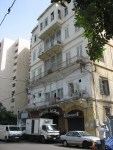
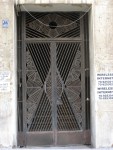
I had forgotten how French Beirut is even though very few of the old French apartment buildings with their louvered shutters, wrought iron gates, balconies and window bars remain. Most are being torn down and replaced by soulless hi-rises that have no personality to speak of but where rents can be quadrupled.

After a lovely dinner, preceded by cocktails and accompanied by Lebanese wine, we left Alistair with the dishes. Birgit, Axel and I walked down to the Corniche, the place where all of Beirut and surrounding areas comes to enjoy a kind of freedom that is so total alien to us now: thinly clad young women run down to the cornice, along the up and down alleys, in the dark, alone.

Heavily wrapped up women, young and old, stroll with their men from the most western part of the Corniche into downtown.

Young men sit in their fancy cars, doors wide open, treating us to music that may or may not be to everyone’s choice. One mullah type was trying to pick up girls with recitations from the Koran. There were audiences for just anything, whatever works.

Men and women hold hands, men and men, or women and women. Young girls and boys check their phone messages, roller blade, jog, do bike tricks or smoke the hubbly-bubbly. A few diehards continued to fish in the dark, off the rocks where we used to swim.

We walked all the way from Ain Mreisseh to Rue Nigeria where we used to live. I occupied with my ex the 3rd floor, while Axel, Alistair and Peter were on the 2nd floor. It was a beautiful old building with terraces on each side, the biggest looking out over the Mediterranean. Each apartment covered the entirely floor with three large bedrooms, an immense living room, and a large kitchen with marble countertops.

The building was owned by the Khalidy family. The youngest daughter, Ilham (which means inspiration) got a bit testy with us as tensions all around us began to rise and real estate became valuable again. Their testiness was problematic as they also had guns. After we left things got unpleasant and Alistair and Peter left. Eventually the building got sold and torn down and the guys left Lebanon. Many years later Alistair came back to Beirut with his new bride to live where we are lodging now.

I recognized little along our walk on the Corniche. Even Rue Nigeria was
hopelessly altered, not for the better I think – what is it with architects who build new hi-rises in old cities?

I suppose when architecture moves from art to commerce that’s what happens. One day whole cities will wake up and say ‘what have we done?’ All they have left is the pictures and the paintings of these olden days. I made an etching of our house, something I had forgotten; but it hangs on Alistair’s wall as a reminder of both good and bad old days.

Distorted

We arrived in Dubai with a planeload of the kind of men you don’t want to anger: crew cuts, biceps and jackets with a lot of pockets. My neighbor was watching a gun show on his portable DVD player. This is the problem with the security and military industry: you add testosterone to testosterone, a flammable mix, even before you add drugs and guns. I suppose the only good thing is that alcohol is not allowed.

We breathed deeply on arrival, even though the air was humid or air conditioned. When we stepped of the plane I was finally able to relax – this is the problem with stress, you don’t notice it until its source is removed.

By the time we arrived at our hotel we were too pooped to get back into a taxi to find the restaurant I had been fantasizing about and so we stayed in.

We ate a late dinner at the Bedouin bar & Restaurant. Axel’s Bedouin burger with turkey bacon was good, my prawn risotto less so, mostly because of the pieces of mystery meat (looked like Spam but how could that be?) that floated in the soupy risotto, side by side the shrimp.

We drunk each half a liter of ice cold draught Tiger beer which constituted about half the bill of the overpriced meal, but who cared? We were free and on vacation.

I marveled at women sitting at a table next to ours. They were out on their own; imagine that, without male companions, and without veils, and drinking wine! To find this very ordinary scene so extraordinary makes me realize in what a distorted world we live.

Packed

I am enjoying my first day of vacation which started right after the packing was done. I packed all the clothes that expose body parts not allowed to be seen in public here. It felt a little naughty: shorts, sleeveless dress, tank tops, bathing suit.

Our plane leaves at 6 PM, at least as per schedule, which puts us in Dubai around 9 PM. We hope to try out dinner in one of those restaurants that stay open (and busy) until 3 AM.

Tomorrow we fly to Beirut, a return after 32 years. We left it in 1978 as an immediate post conflict place with houses in ruins and bullet holes everywhere, and no downtown to speak off (other than the shells of buildings that were eventually torn down). From Beirut we travelled over land by public transport to Afghanistan, taking several weeks. Now we are making the trip back by air in less than 24 hours.

Paper trails

This morning I was introduced to the ultimate paper trail, hundreds of meters, stacked sideways and up of files and folders with information about ministry employees. I imagined the KGB catacombs would have looked like that.

I was given a tour of the stepchild of the ministry of health: its administrative and personnel services. I was shown offices with doors that hardly held together, dimly lit hallways with toilets I was told to avoid. Inside a series of grungy offices I saw tons of people, most poorly paid following cumbersome and possibly meaningless bureaucratic processes that revolved around these millions of files. There was an urgency about the work that escaped me.

Some offices were project offices, and thus received donor monies. You could tell instantly because the places were brighter, with flatscreen computers and orderly files that had already been scanned and entered into data bases. They also had staff who addressed me in English and was eager to explain what they were doing.

It was as if I had gone on a field trip to a very remote district. I was allowed to take pictures, even encouraged, except where there were women. Those I would ask and sometimes they said no.

The health retreat where the HR staff will be presenting about their dismal state is potentially an opportunity to change things but the well educated and paid staff is so stretched and overwhelmed that they can’t give time to preparing for the event and delegating the presenting to others not part of the hierarchy.

I tried to explain the symbolism of not having the chief present but I don’t think I got that message across. The folks over there are in survival mode and that makes it hard to think strategically or symbolically for that matter.

I was invited for lunch at another directorate in a better equipped part of the ministry, across the courtyard. It is the department where I used to spend many hours during my trips here as a consultant.

We sat around the table enjoying the fried fish from the ‘hut of desire,’ I had visited late last month. We were two women, Diana and myself and the rest men. I asked how it was possible that here women could eat side by side with the men but in our office they could not. None of the answers were compelling and so I still don’t get it.

After 6 hours of meetings at the ministry, while all of central Kabul was in total gridlock because of Ahmedinajan’s visit, I made it back to the MSH compound for another 3 hours of work to prepare for the handover of my responsibilities for the next 10 days and another long video call with Boston.

And now I am officially exhausted and on vacation, rohsat they call that here.

Trying and succeeding

A local mullah was abducted from a mosque somewhere in Nangarhar province two nights ago. People found his headless body the next morning. No one claimed responsibility. According to the security reports that show up frequently in our email box the motivation behind the assassination remains unclear but the use of beheading as a method of public coercion suggests that this incident was likely carried out by people who did not like the mullah’s former work affiliation with foreign military.

Reading about this after the giddy reports on all the major news networks about mullahs who hand out condoms and encourage family planning gave me pause. It is hard sometimes to grasp the courage it takes to take on the parts of the culture that are punishing for women.

Closer to home I am celebrating ordinary people, like my staff who are, in small ways, braving opinion and ingrained habits to change things that need changing. My cheering and their action bring about tiny movements, millimeters really, but I know in the end they will end up to significant advances.

One of our achievements is the opening of a daycare center on the premises – a small thing for some but a big thing for the nursing mom who needed to take the long ride across town to nurse her baby.

Today all of the women, including myself, had to sign a sheet with our names to acknowledge that we had received a present for women’s day – for the auditors maybe? And so I found out how much the gifts were worth. Now that is a taboo where I come from.

Our cook has started the preparations for a traditional new year’s treat (NaoRoz is on March 21); it is made of wheat grass. In the bottom of a cookie tin and a small plastic container wheat grains have been kept wet and grew into 6 inch tall grasses. They will be cooked, mixed with sugar (according to some, not to others) and then compressed into candies if I understand his Dari well. I missed a few words. I am very curious.

While I was at work Axel got both a job (after much trying) and an exercise machine (after some lobbying). The job is with a social marketing firm that needs help in producing marketing materials in proper English.

The elliptical machine is enormous, a behemoth that is taking up half the upstairs hallway. We thought that by ordering the elliptical rather than the treadmill we’d get the smaller of the two. It may be smaller but it certainly isn’t small.

Now, with Julie’s donated jump rope and stretch bands, are old rowing machine we are ready to get in shape. Tonight I ran a whopping 1 elliptical kilometer in nearly 4 minutes. I am so out of shape.

Women (and men)

International Women’s Day came and went. A front page article in the Afghanistan Times reminded its readers that for some women this day was rather meaningless with the headline ‘8th of March doesn’t make any difference to me.’

It tells the story of a woman whose husband lost both of his legs in Northern Afghanistan while fighting the Russians and so the wife goes out begging as she sees no other way. “The government only celebrates women international day for rich women with an income.” I kind of agree with her. What if she, with some educational support, would have turned out to be the next Albert Einstein?

Our carefully prepared celebration took off slowly. At the start of the event only the women who had organized it sat, in their best dresses, in the empty room. It took an effort to fill the room up. Marzila and I swept through the compound dragging men away from their computer screens and offices (not really dragging but it did take some coaxing).

And then some had the gumption to say at the end that the men should have organized the day for the women. We were all convinced that if we’d left it to the men nothing would have happened. And we have proof for that assertion: since Miho our gender specialist left in 2004 there have been no celebrations of this day.

We also did invite men to be on the organizing committee, several weeks ago, but none joined us. The road ahead is still long and bumpy I am afraid. To get the easy words changed into actions.

But I was proud of my female colleagues who put up a seamless program that lasted a little over one hour. We listened to prayers, poetry, we watched a slide show with dismal statistics, an encouraging film, and after that there was a quiz and gifts.

When everything was done and said sweet milk tea, cookies and cake were served in the adjoining room. Like a bride, I was asked to cut a beautiful cake with a rusty (but clean) Exacto knife that came from someone’s toolbox.

While we stood around the table eating and drinking, we asked people to speak about the extraordinary women in their lives. Of the few who talked most celebrated their mothers, one celebrated his wife and another said he didn’t want to celebrate his wife because things weren’t so good at home.

Some of us tried to give the day some content and meaning beyond the Valentinesque nature of the event. The statistics Marzila presented were dismal but I am not sure that showing them shocked anyone into action. Still, we got women on the screen.

Slow

Julie left before the sun came up. By now she will be getting ready to board her plane in Dubai to DC. Going home always is the best part of travelling. I got up early to see her off and offered her our Cape Ann Savings Bank travel mug filled with Peet’s coffee to get herself into shape during the car ride to the airport, the first leg of her very long trip to Boston.

It was a holiday for us because of International Women’s Day, which, I am learning is celebrated here more like Mother’s Day (all mothers are women but not all women are mothers, so this day is more inclusive). There is an expectation of gifts. When I first met with the women in the office and suggested we celebrate the day at MSH they immediately asked about gifts for themselves. I was taken aback and slight annoyed. I think I said something like ‘it’s not about you!’ But now I realize it is about them and all their Afghan sisters.

Despite the holiday that closed our office (but not the government) I had two meetings set up at the ministry. Being in the neighborhood I decided to make a visit to the physical therapist whom I had not seen for three weeks: first Axel was sick, the week after it was me and yesterday I was supposed to have gone to Badakhshan.

The ride into town took longer than ever – something important was happening in town but the driver could not explain it in English and it was too sophisticated for my limited Dari vocabulary. The entire center of Kabul was tied in one huge traffic knot in each and every direction. The usual 20 – 30 minute ride took nearly one a half hour.

Because we were going so slowy, and a different route than normal, I ended up having a long and contemplative ride watching the Kabulis going about their business. I wondered about the lives of all these people I saw: had they gotten worse or better? What losses had they endured, what hopes did they still have?

At the PT office I realized that during my three weeks absence my Dari had improved so much that we could actually have a real conversation as opposed just asking about children and naming body parts. The staff told me they missed their English practice with me – they are rarely among English speakers and so I fill a gap. I warned them all that Dari was no longer a secret language and that I could now figure out what they were talking about.

I was chided by my PT for not doing my exercises as religiously as I should and that it was no wonder my right arm is still very weak. It’s hard to keep doing these exercises, I explained her, if you don’t see much progress. I felt just like when the dentist asks if I floss regularly (when I haven’t).

At the ministry I visited for the first time the section that Peter calls ‘the ghetto,’ and that has never received any donor money for paint jobs, heat or internet connections. It’s a rundown place compared to the DG offices in the other part of the ministry building, the one that is painted blue and purple on the outside. On that side there are offices in which you can actually get work done and receive visitors.

I met with two of the five presenters at the upcoming strategic health retreat in order to fine-tune their presentations, design the rest of their session, focus the group work and do some leadership coaching about aligning and mobilizing people and commitment before the actual event, three weeks from now.

Waiting

I was supposed to have flown today to and from Badakhshan in a US (civilian) helicopter, with several people from the ministry, including Her Excellency, several people from USAID, UNICEF and a camera man. One of my staff had flown ahead on Wednesday to set thing up for this one day whirlwind visit. US planes and helicopters have to be back on base before the sun sets, so getting up early was critical to get in as much of a day as was possible, given a two hour flight each way.

A colleague from UNICEF was early at the US airport, which is separate from the regular airport, and I got to wait in her armored (hard skin) car. I sent my car back to the office and moved in with her to bide the time. I noticed that slamming the car door shut is not easy when the ‘skin’ is tough like that. With my still weak right arm it was nearly impossible.

We chatted until the US team arrived to let us further into the heavily guarded part of the airport and then the wait began. Over the next three hours the weather started to deteriorate and the clouds moved in over Kabul and over the Salang Pass. When you fly in a helicopter this is a problem. And so, after three hours of waiting the flight was cancelled and we each went our way again.

But for me the wait was not a waste of time. Although the surroundings were less than comfortable (at least there were chairs), we essentially waited in a container. I got to practice my Dari with some random people who were also waiting – we tackled the list of opposite nouns, like hot-cold, good-bad, light-heavy, etc. My new teachers learned how to pronounce the words in English and I got to memorize the Dari adjective pairs. At times everyone got in on the act and so it was great fun.

We also talked about family planning and the role of the mullahs, after an article in the English language newspaper that had been picked off the wire and told a surprised world that Afghan couples will use family planning if the mullah says it is OK and if given the chance. Family planning remains one of the most effective and inexpensive public health interventions: a child not wanted and not born cannot get sick and cause problems for its mother.

We were all disappointed that the trip got cancelled. There was talk of postponing it to next week but then I will be in Beirut. The cancellation was particularly disappointng to the team up in Badakhshan who had been preparing the scene for this high-powered visit. The only good thing is that I was able to go to my Dari class with Axel and prepare mousse au chocolat from Russian dark chocolate, and watch Julie pack.

Life goes on

Our man in charge of security called it ‘goofy’ but somehow that doesn’t seem to describe it properly when men in uniform tell foreigners to get out of their car and hassle them (‘knock down’ it was called in Australian). This didn’t happen to us but to friends with whom we were supposed to have had dinner tonight. We cancelled and stayed home, cooking our own dinner of Afghan pad thai.

There is a high alert, like a code orange, that has been hovering over the city for some days now. Apparently an Indian delegation is in town to call the authorities to account for the Indian casualties in the last attack; insult upon insult upon injury after two embassy bombings and now their people who were lodging in the destroyed guesthouse.

The US warden circulated another warning, with a precise location. I am glad we live and work nowhere near that location and I wondered about people who do.

Security cleared Julie and me for our Friday massage in Wazir Akbar Khan and the masseuses expertly kneaded the kinks out of my taut muscles. Living under a code orange is no fun.

Afterwards, all oily and relaxed we joined Axel for a lovely spring walk in Bagh-e-Bala park. We saw our first spring blossoms on the rows of almond trees, growing well protected on the sunny side of the hill.

Axel had printed out pictures of the various people we had photographed there, among them the mudir of the pleasure palace. He rewarded us with access to the place, since he had to key to the padlock.

He asked me whether I had brought the medicine (dawa), a request I had clearly not understood at our last visit. He explained once again, this time I understood. He wants medicine that makes him strong and to illustrate this he flexed his weak biceps. Since our last visit I had learned the words for strong and weak and was able to hold up a good chunk of my end of the Dari conversation until he lapsed into Pashto. Next year, I promised.

He told us the pleasure palace is being turned into a guesthouse and to illustrate this he pointed at the electrical wires that were coming out of the walls everywhere. The large Olympic sized pool will also be cleaned up and filled. It’s hard to imagine but it’s a great idea. If Karzai wants it to happen, as he claims, it will. Karzai is after all his boss, he should know.

From there we went back into town for lunch and latte in the sun and in the company of a father and son (or daughter) cat who were after our chicken wrap.

The rest of the afternoon we went shopping in the area that only a week before had been blown to pieces. Things had been cleaned up but broken glass was still visible everywhere, from the top of the buildings down to the ground. Many shop windows, including those as far away as Chicken Street, were cracked or gone and replaced by plastic sheeting.

The sidewalks were cluttered by large piles of twisted metal and other debris and then there was of course the big hole in the ground where the guesthouse has been.

This is something you realize when you live close to such disasters: except for those who died, life goes on.

New beginnings

The balmy weather of the last few days adds to the ‘lightness of being close to vacation and close to spring.’ The leaf buds on the rose bushes and fruit trees are swelling and some tiny leaves are visible on the honey suckle outside my office. After hours some staff had their first volleyball game. It is hawa bahariye, or spring weather, indeed.

Yet in many places spring is still months away. March and April are the rainy months; in elevated Bamiyan precipitation still comes down as snow I suppose, judging from the mountains around Kabul. After an enormous rain and thunderstorm a few days ago, there upper reaches are white again. Down in the valley we are done with the snow. The last vestiges disappeared about just over a week ago.

I participated in Julie’s ‘writing good impact stories’ session which was fun. I was partnered with one of our ‘druggies’ as I call them, the people who make sure enormous quantities of drugs get to people in the provinces that are supported by USAID. Simultaneously, on the other side of the sliding glass doors the facilitator training was drawing to its close.

Julie and I watched one of the participants in our session transfer what she learned to the facilitator group. I could follow most of what she said and Julie smiled when she saw her main four points reproduced with great enthusiasm on the other side of the doors. Now that is just-in-time training.

One of my staff had organized a lunch in his office for people he wanted to introduce to each other and who he likes. He is an arch networker and so brought together an interesting cast of characters. Axel was also invited.
We listened to stories about the first day after the Taliban were ousted and the shaving of beards that happened instantly. These stories came from the people who were closely associated with the birth of Afghanistan’s current, post-Taliban, health system. Only the rudiments of a health system existed 8 years ago, which included 3 computers in the entire ministry.

Although we are sometimes impatience with the slow progress and the endless stumbling blocks we encounter, hearing where they started was a good reminder of how much has been accomplished in what is after all only 8 years. New beginnings always happen slowly.


April 2026
M T W T F S S
 12345
6789101112
13141516171819
20212223242526
27282930  

Categories

Blog Stats

  • 140,880 hits

Recent Comments

Sallie Craig Huber's avatarSallie Craig Huber on Rays for real
Lucy's avatarLucy on Probabilities
Olya's avatarOlya on Cuts
Olya Duzey's avatarOlya Duzey on The surgeon’s helpers
svriesendorp's avatarsvriesendorp on Safe in my cocoon

Enter your email address to follow this blog and receive notifications of new posts by email.

Join 78 other subscribers