Archive Page 255

Cascade

Yesterday the participants were doing the work of teaching and learning by facilitating sessions we assigned to them in teams of three. They continue doing this today, our last day together. We define leading as ‘enabling others to face challenges and produce results in complex conditions.’ So that is what we are doing. Midway through the workshop our work was essentially done; we created the structure, introduced the concepts, laid out the processes and the rookie LDP facilitators are now doing the work. Each team is learning from the feedback given to the preceding team and so the quality of the sessions is steadily going up. This way we are accomplishing three things at once: the participants are learning the things they need to learn, the facilitators learn to be coaches and I am freed up to pay attention to prepare next week’s double workshop and be responsive to other requests from senior project staff. But one thing I have not delegated and that is turning my iPod on and off to play the Afghan music before and after sessions. It makes everyone smile, even the serious types.

The Kabul Chief Burger had to do without our business for lunch yesterday. My co-facilitator Ali felt that a change was needed. We were served Kabuli rice, kebabs and a large bone with chunks of meet that you had to hunt for, hard work but delicious, with some unidentifiable mush of spicy greens, also delicious. A small packet of plastic utensils, sugar, salt and pepper in cellophane was offered with the meal. On closer inspection this turned out to be US army issue. It appears there is a flourishing market of American army goods outside the American base in Bagram right under the nose of our men in uniform. There is also a bush (not Bush) market in Kabul where US army products of any kind are available for sale. Our caterer must be getting his take-out utensils there. We did not need the salt/pepper and sugar packets enclosed with the utensils. I really hope someone picks through the garbage and saves the sugar, at least.

The MSH project team is determined to use every second of my time and attention. They are right, since it took a lot of resources to get me here and the end of my trip is showing on the horizon, but it means there is never a dull moment. On Sunday we start another training of trainers for 60 people in two parallel rooms with occasional sessions together. And one piece of my original scope of work that was taken out is put back in again. A proposal has been sent to the ministry to hold a senior alignment meeting to support the scale up of the leadership program in the 13 provinces. It is an all time record for me: three 4-day workshops and one 4-hour alignment meeting all in two weeks time plus strengthening the local team of lead facilitators. The only reason that this is possible is that a good chunk of the work was done in the first few days when the design was tested and finetuned. All I do now is give feedback to the lead team of facilitators and make sure the design for next week will work. My Afghan colleagues will do the heavy lifting from now on, taking my place as a coach, while I sit back and watch them. My job is, in essence, to create the containers in which the learning is most likely to happen with the least effort on anyone’s part. In this way, hopefully, we are cascading the skills sets downward and expanding the pool of LDP facilitators in Afghanistan. Some good results from improved leadership in the provinces over the last year are already in. We are very encouraged. People like to be associated with success and it seems a critical mass is building!
Guest House Zero

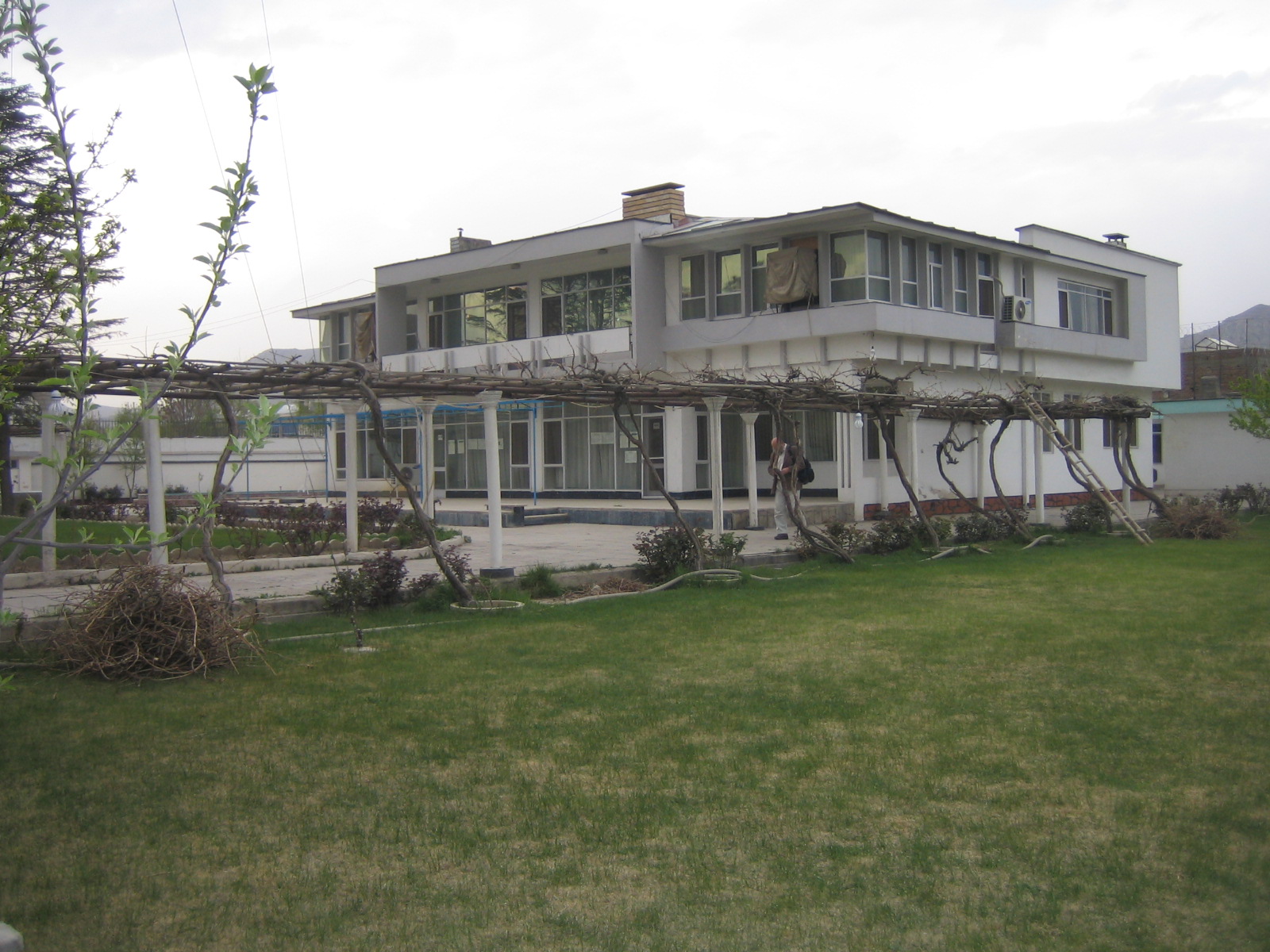
img_1622.jpgThe MSH office was originally built as a house for a person with visions of grandeur and a large family. It has a nice garden with a long pergola that will give wonderful shade when the temperature rises and the grapes will practically jump into your mouth. Now it also has its own petrol station, enormous bars to protect the compound from uninvited loaded cars or trucks and several gates, barbed wire, guard houses on the top of a wall and more that I have not explored and probably won’t.img_1623.jpg

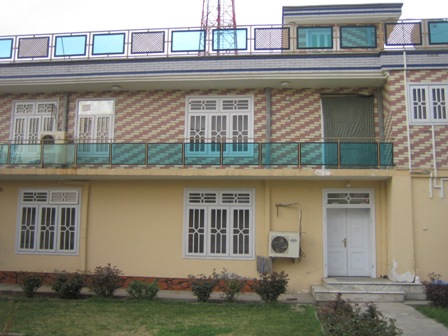
I finally took some pictures of the two houses that make up Guest House Zero where the Tech-Serve img_1624.jpgproject puts up its visitors from abroad. I am staying in the one with the chimney. In between the two houses is a lawn and rose beds. The grass has started to grow and the dandelions are already seeding the lawn.

We eat wonderful meals cooked by an invisible chef who I never see and who leaves the food in the oven for us to serve whenever we are ready. Mirwais and I are the only ones left and we enjoy quiet meals together. Mirwais is an engineer/architect who is checking out the reconstruction of health facilities, something he supervised under the previous project. He is Afghan but has made himself and his family a life in the US a long time ago. He is one of the few beardless Afghans I have met.

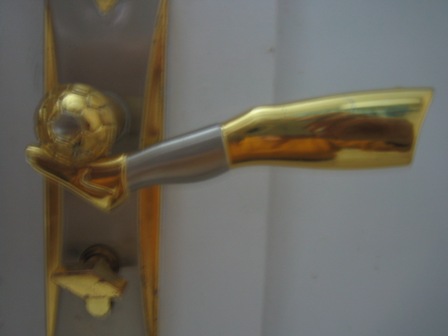
It was only yesterday that I discovered the door handle to our hideous bathroom. It consists of a leg kicking a img_1581.jpgfootball. Here is the picture. I quickly scanned the rest of the house to see what other surprises there were by way of doorhandles but there were none. I was trying to imagine the thinking process that led to the installation of such a handle. Is the owner of the house a football fan? Was it put in by one of its occupants over the last few years by an MSH colleague or consultant, or the maintenance man?

When you leave your familiar surroundings and go out into the wide world there are so many strange and funny things that you could easily miss if you didn’t look for them. I got more of an appreciation of this when I started traveling with Sita; first to Burkina Faso, in 2001, then to Senegal in 2005 and finally to Dubai and Kabul in 2006. Sita has a third eye for strange, funny or ugly things that, in their ugliness take on a certain beauty. It is the artist’s eye. My family is full of artists with third eyes: Axel’s eye for Beauty, Tessa’s eye for things that are practical and visually pleasing, and then there is Sita’s for the strange, the quirky, the ugly.

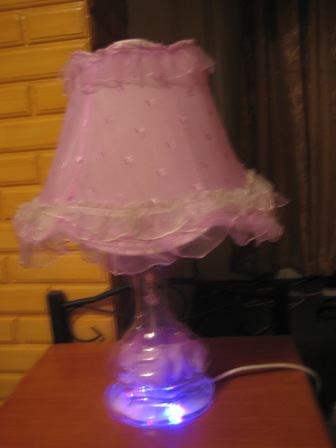
img_1629.jpgI have now developed my own version of Sita’s third eye, and it has made the experience of living in this guest house rather interesting. My house mate Steve left and I moved into the room he vacated. img_1626.jpgIt is the largest room in the house, the size of our Lobster Cove living room and dining room combined. Although it is as ugly as the rest of the house it has a balcony and I can open windows and look out onto the street if I push the white window covers aside. It also has a garish little bedside lamp that has tiny pulsating red and blue lights in the bottom, twirled around fake pink and purple roses encased in the glass base.

Scar Tissue

I had dinner with one of our students from the BU course in which I actually taught (July 2006) rather than the one where I was listed as faculty but was indisposed (July 2007). Meghann had suggested we have dinner in one of the few restaurants in Kabul that MSH security staff allowed me to go. It is a congenial Tex Mex place owned and run by a woman who, in her day job writes the good stories about interventions that help Afghans to get back on their feet again.

I was taken there in a sturdy SUV with driver and guard. I don’t know if he was armed but imagine he was. It was a little tricky when I left the place a few hours later to find my car and driver/guard combo among the line up of similar cars and grim looking men, in the dark because you are scanning for exactly the kind of people and cars that you imagine your kidnappers would look like. Luckily they recognized me and brought me safely home through the empty and barricaded streets of Kabul.

A war zone it is, especially without the people. The Serena Hotel that was bombed in January and where Sita and stayed two years ago looked liked it was the Pentagon. Whole streets are blocked by large chunks of concrete and barbed wire everywhere. This is the scar tissue of armed conflict. It is what is left after the bombs have exploded and the fear is firmly planted in people’s minds. And then there is the futility of it all; the barricades go up afterwards, like the shoe checks at the airport. The Serena is unlikely to get bombed again and may well be the safest place in Kabul now with all that protection.

Axel and I also have scar tissue. We don’t know exactly what scar tissue looks like but I suspect it is ugly too and looks and acts like those barricades as it obstructs the flow of things. Axel’s scar tissue is more severe and problematic, especially in his hand where the muscles have not worked properly for so long and have shriveled up to make movement very hard and stressful for the remaining muscle strands. I have scar tissue in my foot and try to break it down through exercises but it is slow going.

I am also struggling with some scar tissue in my heart; that too obstructs the flow of something. I once wrote a little poem that came back to me yesterday: The other day I found/this hard spot in my heart/The one called me and mine/That keeps me separate/From the divine. My heart’s scar tissue is about relationships that have been damaged and obstructed flows of communication. It is creating puddles of stagnant water. It stinks.

Afghan Chiefburger

The workshop started with about 75% of the participants. Maybe some people were disappointed about this bimg_1515.jpgut I was happy as it made the room a little less crowded. The reduced number allowed me to re-arrange the program to accommodate for the opening delays and the fact that everything takes much longer than I guessed because of translation. Oh how I wish I could speak the language of Darius!

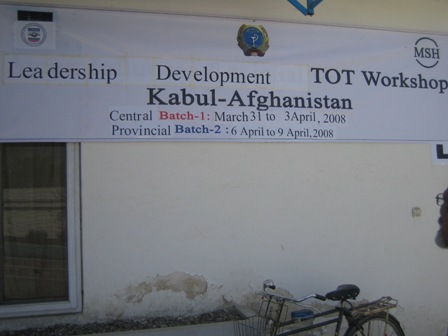
We are doing the training in the MSH office This means we are completely self-sufficient: above us is the secretariat, all around us are MSH support and technical staff, down the hall is the kitchen that provides us with food and drink, and next door the prayer room so no one has to leave the place. Next week is going to be quite a show, we will have the biggest of MSH’s conference rooms set up in theater style to seat about 50 people and on each side of it a workshop room seating about 25 provincial health authorities, NGO representatives and technical advisers around smaller tables.

After watching a video of an inspiring leadership program in Egypt that Joan and Morsi launched some 6 years ago we engaged the group in a visioning session that had to break through rigid mental models steeped in current reality problems, abstract language and a focus on action rather than results. This is the contradiction: people are urged to act but then all they can think of is action verbs without any of them being anchored in the end result that the action is supposed to produce. It took some effort to get them down to thinking in pictures and it was a bit of a stretch for my co-facilitators. We switched back and forth between Dari and English and ended up facilitating as a trio. It feels OK, my gut tells me; it is the only honest source of feedback I have because I am unlikely to be criticized. This is a problem I share with top leaders when I am out in the field: severed feedback loops. I have cultivated my gut to compensate for this paucity of information through more direct channels.

Lunch was served in boxes from Kabul’s fast food chain called Chief Burger. It contained a hamburger, fries and a coke. What gives it away as Afghan fast food is the flat bread. It was only halfway through my hamburger that I discovered that the Afghan flat bread was wrapped around kebabs. The first bite brought back memories of the trip Axel and I took around Afghanistan in the fall of 1978. We traveled on a budget of just dollars a day and this is what we ate, pretty much all the time. The only thing missing is the small tray with the three spices: powder made of ground grapes, chili pepper and salt. Taste and smell evoke instant memories of this magical trip along the hippy trail that bonded us together for the rest of our life.

In the afternoon we had strayed so much from the program that it was no use trying to catch up. Instead I used the dynamics in the room to illustrate some facilitation do’s and dont’s; like how to recognize and then deal with energy dips; how to respond to the incessant requests for explanations about how scanning is different from monitoring and evaluation (it turned out the Dari translators used the same word) and the most engaging ways to handle the reporting out by small groups.

The first day ended on a high note and was closed by the DG of Provincial Public Health exhorting everyone to write down every word I say. I’ll try not to make that happen. Here too I am amazed again how new and novel adult education methodology is. Everyone knows the theory but translating it into action does not happen. It is no wonder training has gotten such a bad rap; and it is no wonder that people believe training workshops are not complete without ice-breakers; of course, something’s got to break the ice, since powerpoint slides don’t.

Dry & Full

We are all early risers in this place. The built-in alarm is the generator if you manage to sleep through the morning prayers that precede the generator. The call to prayer is coming from a distance, not like the one in Wazir Khan where it would practically levitate me out of my bed.

Breakfast is informal, help-yourself style, with many choices: cold cereal, yogurt, juices, eggs, Afghan flat bread and Western brown bread, even home-made breakfast bars and a large choice of local jams and honey. The car arrived promptly at 7:10 – as I was told. It announced itself with the chirping of a bird, which I learn quickly, is the doorbell. We piled in the car and drove the 100 meters to the heavily guarded compound. It does look indeed like we are in a war zone. But inside is a lovely courtyard with blossoming trees and a light veil of green hanging over the branches and bushes. If I ignore the barbed wire rolled on top of the walls I can imagine the lovely gardens and freedom of movement I remember from the Kabul I first encountered 30 years ago.

The morning was spent aligning expectations and greeting old friends and settling in my temporary office. Iain who was supposed to be living in Spain with his wife Riitta-Liisa, is here while she is in Nepal. And the story of Paul and Laurence is a bit like that too. These people are never home, or else everywhere is their home. Paul is Flemish and he has invited me to meet other Lowlanders at his guesthouse on Thursday. I will be halfway through my stay in Kabul by then.

Over lunch I met with the project staff who will be playing a key role in the workshop and beyond as the project is thinking about the sustainability of all its initiatives. We sat around the table and talked so that I could learn about their challenges and realities and they about how people deal with such challenges (some the same, some different) elsewhere. Three of the staff members of the Capacity Building group will be the facilitators for the next few days; the others will participate and become the facilitators in the next round of workshops, 5 days from now, when the provincial people arrive and we’ll do a twofer.

We had a working lunch which showed that the Afghan staff has taken over some bad American habits. Everyone is working very hard and long hours in an environment that is always full of surprises.

The rest of the day went faster and faster, or rather, tomorrow came closer and closer, faster and faster. It was truly a flying start but everyone is cool about it and so am I; after all, the Afghan staff will do the bulk of the stand up facilitation; in fact I would not be surprised if much of it will happen in one or the other of the local languages.

I received my security briefing, more of the dos and don’ts I can now practically recite, from Baba Jan, MSH’s Security Director. I learned from the book Window on Afghanistan that is written by my colleague Fred Hartman and his wife Mary that Baba Jan used to be Ahmad Shah Massoud’s field commander. The briefing occurred in triangular fashion through one other man who speaks English. It is odd to be in conversation with someone on your right when the meaning of what is being said comes from your left; the dilemma is where to fix your eyes? Baba Jan has never spoken in English to me, and I never in Dari to him. My hunch is that he understands English better than I Dari. I first met him in 2002 and the re-acquaintance was not lost in translation.

I arrived home parched despite drinking at least a liter of water and many cups of green tea. There is not one dropafghanluxwc.jpg of humidity in the air. It is the kind of dry air that provokes the most awful cough attacks. The late afternoon sun lit the bathroom perfectly and I took the picture I promised yesterday. The fixtures are Afghan-de-luxe; there are gold-colored knobs and covers and matching sets of water cup and tooth bush holders, soap dishes, towel racks, etc which have lost some of their former glory or functionality. But the toilet works, there is running water for now and the shower is hot and wonderful.

Dinner with Mirwas and Steve was much nicer than sitting alone in a hotel restaurant. There was much talk about leadership. It is a never ending topic for inquiry, challenge and surprise. After that I willed myself to complete the support materials for tomorrow’s facilitators. It truly was a heroic act of willpower to overcome the heavy pull of my bed. That willpower is now gone and there is no more resistance possible.

Mid-night break

A weird night, full of dreams interspersed with bathroom breaks. The air is as dry as it can get. My sinuses hurt from the pressure and the dryness. My allergies or whatever is wrong with my head, are now beginning to feel like an old-fashioned cold, one I haven’t had since the crash. Everything is still measured against the crash. It has become a demarcation line between normal and not normal, no matter how hard I try.

It is only 3 AM but I am wide awake and know that if I don’t write the dreams down now they will be gone later.

The dreams, as usual, make little sense at first. Tessa is running a bath that is full to overflowing; she gets distracted by a call from Sita, one floor higher, and gives an answer that, in my mind, is not complete. As I walk up to Tessa to ask why, it looks as if she is adding water to her full tub; it is not her but someone else, familiar in the dream but unrecognizable now, in my wakeful state. There was also a near miss between me on a bike and someone I knew in a car, who chided me for standing on my rights of priority as a biker and my shameful self-righteousness. I saw her later at a cocktail party she gave and where she couldn’t decide what to wear while talking about rowing and encouraging me to quit my current rowing club and join hers. There was more, but now, with the lights on, the dreams pop like soap bubbles…., ‘pop’ ‘pop’ all gone!

I am sleeping under what feels like 20 pounds of blankets. They look exactly the same as the ones handed out to a community close to starvation and freezing in the Western mountains that I saw in a slide show someone sent me.

I checked the label of the blankets. They are from Korea and weigh 7.2 kg each. They could be used as weapons! I never saw blankets as a public health risk but now I see how; they cold crush an infant and smother a small child. I had two blankets but got rid of one, sleeping under 15 kilos (33 pounds) is a bit much. It isn’t as cold as people had predicted.

I cannot look out of the windows. They are covered in white cloth, stapled to the edges out of safety: no one can look in and tsguesthouse1.jpgthe cloth will catch the glass in case of explosion. The white cotton cloth is hidden by the most atrocious gold colored curtains with tulips and roses woven into the fabric’s pattern. Who thinks these things up? (I can’t wait to show pictures of the upstairs bathroom!) The combination of not being able to look out of the window and the curtains makes it hard to create the atmosphere of a nest, something I try to accomplish wherever I stay. In the beginning the nesting instinct is strong and important, but as soon as I get to know people I will be living with, the warmth of the relationships make up for what is missing in beauty. It has always been that way.

Being a house mate is a completely different experience from checking into a hotel. I like it. Mirwas gave me a tour of the house, pointing out the drills: laundry on Mondays and Thursdays; dinner cooked by a terrific Afghan chef. He asks if an early dinner is OK; with every new house mate such things have to be re-negotiated. I am shown where the towels are, and where to find plates and silverware; a thermos with hot water for coffee or tea at any time sits on the dinning table downstairs. That is also where the library is full of interesting books and tons of DVDs, any genre. I can help myself to anything in the fridge in exchange for $40 a day that covers food, a cell phone, transportation, drinks (no alcohol), laundry and all the books and videos I could ever want, plus of course the company of very interesting people. And finally I learned how to reboot the server which goes off when we switch to town electricity which is usually too weak. Steve does that now early in the morning but he will be gone in a few days.

Connected

I spent a restless night in utter luxury in Dubai. My fancy room, appointed in pink, contained an industrial size espresso machine, a bowl full of fruit, an ironing board, a huge flat panel screen and a balcony overlooking a lush garden and pool. All this in the middle of the desert!

While checking email I watched scenes from Holland about the release of Geert Wilder’s video – to see how far he can go enraging Muslims. There is something utterly Dutch about this whole affair; a part of Dutch mentality I do not particularly like. The Dutch newspaper I read in the plane from Amsterdam was full of commentaries on the anticipated and actual reactions – mild, balanced and far from the expected furor. Somehow it seems that the Dutch distaste of open display of emotionality has rubbed off on at least the leaders of the Muslim immigrant population. So far so good. There was a large and peaceful demonstration, allegedly, in Kabul, delaying some flights in and out of the capital. However, I was also told that many of the Imams have not seen the video yet and it is possible that the shit won’t hit the fan yet until next week which is when the Imams’ experience of the video will be transmitted, rightly or wrongly, to the general population during Friday prayers.

I arrived early at the terminal for my flight to Kabul and waited in a smoky cafeteria, right under the nicotine-stained no-smoking sign, with Eddi from Bosnia and Kirk from the Philippines, both employed by the UN in Kabul and on their way back from home leave. The small terminal contains a duty free shop that sells everything except the anti-histamines I needed badly to contain my allergic reaction to something. I could have bought Gripe Syrup, packaged in ways that may not have changed in a hundred years, and sold to remedy wind and other problems of the bowels of small children. There was an abundance of syrups, the preferred treatment it seemed over pills, amidst a great variety of condoms and CDs with Arabic music and scantily clad young ladies on the cover. This part of the world is so full of contradictions.

I am travelling to Kabul on the UN plane with some 100 expats from all parts of the world, all earning a living because Afghanistan is in shambles. This is the ‘development industry’ that some people write about in not very flattering terms. I belong to that group as well and when we travel together in such a large pack it feels a little awkward. I prefer to travel more anonymously, mixed in with the general population, as I tend to do when I go to Africa.

I sit next to Eddi in the plane, one of the two people I now ‘know’ on this flight. He falls asleep instantly. He is going back to work. As an IT specialist he is on duty all the time. We talked earlier about the folly of the UN and other organizations to want to upgrade to Office 2007 when the older version is perfectly suited to the kind of work that most of us do. This is how we create work and waste money, he said. These upgrades require bigger and newer computers and complicate our communications with people in other countries, or counterparts in ministries who don’t have the money or expertise to follow the latest fads in computer technology. Hmmm, I thought, maybe I should resist this upgrade business that requires a new computer when I am quite happy with my old one that actually fits on a tray table and in my handbag.

The trip from Dubai to Kabul takes a little less than three hours, flying mostly over desert lands. The UN plane does not have a magazine with maps and routes in the seat pockets and I can’t remember the region’s geography very well so I don’t know which desert lands we are traversing. I imagine it is Iraq and later Iran that I see far below.

I was picked up by three men, Ahmad Mourid found me where the luggage comes in, then there was a driver and another who, I assume, was a security detail. Staff security is taken very seriously and there are many dos and don’ts: no taxis, no walking on the street, no going to places where foreigners tend to, or used to congregate, etc. Even though the office is 100 meters away, we are bussed there. Only Mirwais, one of my house mates, who is Afghan, can walk there. My other house mate is Haider, originally from Bangladesh but now from Maryland, who I haven’t seen since my early days at MSH when I worked in Nigeria where Haider was with USAID. My third house mate is Steve from New Mexico/Indonesia, a pediatrician with an impressive resume that includes Commissioner of Health for the City of New York in the early AIDS days as well as Peace Corps doc in the early 60s in Nepal. We sat around the table to figure out when and where we met, if we did, and rattled off acquaintances or friends we have or may have in common; enough for some interesting conversation to kick off my stay.

Jawed, the same IT manager who I first met in 2002 is still here and comes to my rescue when I find out I cannot connect to the server. Saturday is his day off but he shows up anyways in the evening to help me out. I am too tired to watch what he does but I am connected again when he leaves, a few minutes later. I give him a big bar of chocolate. It traveled thousands of miles exactly for this kind of service.

Present

I watched the movie Juno on the plane and then listened to the music of the monks of Keur Moussa. This ‘House of Moses’ is a monastery in Senegal, famous for its music which Axel, Sita, Tessa and I listened to one Sunday morning exactly 3 years ago. The trip to Senegal was a present to ourselves to celebrate our love and life as a family, 25 years after we got married and Sita was born there. The chemistry between the movie and the music produced a flood of memories that made me intensely grateful for everything I have in my life. I felt blessed even though I am high up in the sky and on my way to a very turbulent place, far away from the people who form the object of these memories.

Isn’t this the purpose of music? To remind us of things we might otherwise forget or take for granted? Or of poetry, to take us places we might otherwise forget to go? The last few weeks are a blur of work with very little room for poetry, music and art. The trip to the ICA was imposed on me by circumstances, not of my own choosing. Of course it turned out to be a fabulous trip. I do believe that the universe sometimes intervenes on my behalf, even though I don’t realize it at the time and the benefit is not immediately obvious. Maybe our crash was one of those ‘interventions.’

My trips overseas, although also blurs, are blurs of a different kind; two-week bursts of intense and very focused interactions with colleagues from other cultures. They anchor me, both professionally and personally, in the reasons why I do what I do. I am one of those lucky people who get paid for doing what is essentially a hobby. I was queried by my Dutch friends about the utility of the work I do. There was a hint of something not so positive in the queries. I have heard them before. In fact I have thought much about it. I think my most compelling answer is that when you see a bunch of young women sitting quietly in the back row while older men, often with huge blinders on, talk, in the beginning of the leadership program, and you watch them, sometimes 4 months later, sometimes only 4 days later, and see them sitting in the front row, having found their voice, then there is one little victory that will reproduce itself that is worth every ounce of energy, every penny invested. Granted, not all the newly found voices are used well, but there are always some that do. Those are the seeds that have sprouted. Some of those I have seen grow into seedlings and then plants over the years. That’s the answer to people asking me how can I do something that seems so endless and unlikely to succeed. Endless yes, pointless no!

I mentioned last night the inspiration I received from Elise Boulding, some 10 years ago when she visited our Quaker meeting and spoke to us one evening about her peacemaking work in Africa’s Great Lakes Region, and throughout her life. Elise speaks of the 200 year present, as in here and now. It is the period that started when the oldest person now living was born and that reaches into the future to when the longest living baby now born will live. I found the concept intensely liberating and it has taken the impatience out of my mission (although not out of my daily work drive). When I read history books that describe what life was like for people living 100 years ago, anywhere in the world, when our current ‘present’ started, it is ready to see that we have come a long way, even in this very tense and turbulent present. Imagine where we might be at the end of this current present that ends in 2108! If we can have older men be open to the contributions of even 1 young woman in 4 days or even 4 months, we are moving at the speed of light!

Memories

Yesterday, after the graduation and lunch were over, Theta and I drove to Amsterdam and I got to experience rush our on the Dutch highways. Luckily we had lots of catching up to do and so we didn’t notice that we inched a long for half an hour. We still arrived one hour early for a reunion of a student committee (de lustrum commissie) that organized a gigantic 5 day celebration that takes places every five years at the student association Minerva of the University of Leiden. It is one of those ritualistic events with a long history, an illustrious cast of characters who call themselves the Winnie de Poeh Society (intentional Dutch spelling) and no gender balance until 1974. Ours was the first event organized by and for both sexes and Theta and I have the honor of being the first female commissioners in this exalted committee. We had not seen each other for many years and then started making contact again when our hair turned grey and the act of retelling old stories became increasingly rewarding. Only our treasurer was missing. It was a wonderful occasion to test our memory of the joys and nightmares of that intense time of organizing and managing together; it was also a test of spontaneous recall of names and people who populated our various subcommittees and the dramatic events that now seem exceedingly funny.

My memory was probably the worst and I can blame it on the crash or on the fact that at the time I had fallen in love with someone from outside the student society who had little patience with our vision of grandeur and accompanying follies. Since I saw everything through his eyes (love is blind as far as one’s own eyes go) I erased many of the memories, good and bad; but over cocktails and a wonderful dinner last night things began to come back into focus. My stops in Holland are a great excuse to meet up again, and continue the telling of stories, interrupted for so many years.

Being in Holland is a complex emotional experience for me. Although on some level I am home, I am not in the country I left some 30 years ago. At that time Holland was mostly a white, Calvinistic country. Now, people who used to be foreigners hold Dutch passports and speak Dutch quite fluently. There is of course resentment about that. A recent book by Ian Buruma, Murder in Amsterdam, describes the context of Theo van Gogh’s murder and the changed make-up of Dutch society. This morning I witnessed a scene that warmed my heart. A cleaner, probably from Turkey, rolled his cleaning cart into a waiting area where one black man was sitting. He approached the gentleman and spoke to him in perfect English, “Sir, are you from Africa?” followed immediately by the words, “You are very welcome in Holland.” The two two engaged then in conversation while I walked out of earshot. It made my day.

I got my upgrade for the flight to Dubai after only two, very short, lines. It still required some back and forth and I cannot get anything arranged for the return trip, but I am happy with what I got now. And now on to Dubai.

Winter time

I am back in winter time in more than one way. Holland hasn’t gone over to daylight savings time yet and it is damp and cold. The daffodils have been beaten down by a freak snowstorm on Easter Sunday. It is a sad sight to see these flattened flowers just at the height of their bloom. Only the large fields still look spectacular from the train.

The flight from Boston to Amsteram was harder than I had expected. It seemed that the space between chairs had gotten even smaller since I last sat in the back. An obese gentleman across the aisle could not lower his tray table because of the size of his belly and had to content himself with a slanted table, eating with one hand and holding on to his food items and drinks to keep them from sliding off the tray on the ground. I admired his good spirits. I once read that patience is the ability to wait without complaining. He was a patient man.

I ran into my ex colleague and good friend Barbara who was on her way to Malawi. We had some catching up to do; the last time we saw Barbara and Steve was when we were still patients and they came to cheer us up, sometime last fall or summer.

I slept fitfully during the short night and woke up with a swollen right foot and back pain, the kind I suspect Axel has all the time. It made me wonder whether he can actually make the trip across the Atlantic next month to celebrate a few important family events. Upon arrival I decided to investigate whether I could get an upgrade for any of the remaining stretches of flight. I spent the next hour standing in various lines. It was a frustrating experience because each time I made it to the front of a line I was given information that turned out to be incomplete when I arrived at the front of the next line. And each time there was another line. I gave up and tried to do things by cellphone but the experience repeated itself; all to no avail. I was told to try my luck on Friday when luck returned and I secured the much coveted upgrade for the flight to Dubai.

After my arrival I took a taxi to Aalsmeer. My driver was from Afghanistan and was very angry at first. There had been a police trap at the airport to catch drivers who had not paid their various taxes. The trap had gotten him stuck for several hours at the airport and he needed a very long ride to make up for lost time. My ride was much too short and hardly worth his while. But once he found out I was on my way to his country and actually spoke a whopping three words of Dari he thawed and we parted on good terms and he with a nice tip. He never wanted to live in Holland but was ordered there. He wants to go back to Afghanistan ‘when it is quiet.’ We both knew this may never happen.

In Aalsmeer Sietske had made my bed before she left for France. Piet received me with a few cups of coffee and a breakast of good dutch bread and then we each went our way. I took the train to Leiden University Medical Center to attend the graduation of my nephew Reinout. We were nearly complete, with me and my sister being the aunties who came from afar (Ankie came from Brussels). Only one of his (paternal) uncles was missing. With that we had surpassed the allotted 9 seats reserved for the graduates’ families but no one noticed. It was a very formal event with doctors in black velvet robes and caps and each graduate pledging the Hippocratic Oath (alternative: Promise if you did not want God Almighty to help you). My nephew choose not to ask God for assistance. After that the presiding authority presented a 5 minute biographical sketch for each of the brand new doctors. In a room with bad acoustics and 15 candidates all deserving equal air time, this was an exercise in patience, especially since it was over lunch time. We all made it through, solemnly listening to the top doc’s acknowledgments of each graduate’s unique and impressive student career. For some of us it would have been more bearable if we had actually understood what he said.

Something funny happened after the ceremony was over – the graduates and their families were offered a drink and some snacks in a room too small to hold us all. Quickly the families spread out across town for celebratory lunches. Ankie, her husband, my friend Theta and I found ourselves excluded from our nephew’s lunch arrangement for reasons we did not quite get. It stung a little bit but we got over that and ended up having a very nice and quiet lunch with just the four of us. As a result I never got to say goodbye to anyone, as we had expected to be part of the celebration over lunch. Families can be funny.


October 2026
M T W T F S S
 1234
567891011
12131415161718
19202122232425
262728293031  

Categories

Blog Stats

  • 144,597 hits

Recent Comments

Olya's avatarOlya on Pocket rollers
Edith Maxwell's avatarEdith Maxwell on Boosted out
Sallie Craig Huber's avatarSallie Craig Huber on Rays for real
Lucy's avatarLucy on Probabilities
Olya's avatarOlya on Cuts

Enter your email address to follow this blog and receive notifications of new posts by email.

Join 83 other subscribers