Posts Tagged 'Afghanistan'


Slow

Julie left before the sun came up. By now she will be getting ready to board her plane in Dubai to DC. Going home always is the best part of travelling. I got up early to see her off and offered her our Cape Ann Savings Bank travel mug filled with Peet’s coffee to get herself into shape during the car ride to the airport, the first leg of her very long trip to Boston.

It was a holiday for us because of International Women’s Day, which, I am learning is celebrated here more like Mother’s Day (all mothers are women but not all women are mothers, so this day is more inclusive). There is an expectation of gifts. When I first met with the women in the office and suggested we celebrate the day at MSH they immediately asked about gifts for themselves. I was taken aback and slight annoyed. I think I said something like ‘it’s not about you!’ But now I realize it is about them and all their Afghan sisters.

Despite the holiday that closed our office (but not the government) I had two meetings set up at the ministry. Being in the neighborhood I decided to make a visit to the physical therapist whom I had not seen for three weeks: first Axel was sick, the week after it was me and yesterday I was supposed to have gone to Badakhshan.

The ride into town took longer than ever – something important was happening in town but the driver could not explain it in English and it was too sophisticated for my limited Dari vocabulary. The entire center of Kabul was tied in one huge traffic knot in each and every direction. The usual 20 – 30 minute ride took nearly one a half hour.

Because we were going so slowy, and a different route than normal, I ended up having a long and contemplative ride watching the Kabulis going about their business. I wondered about the lives of all these people I saw: had they gotten worse or better? What losses had they endured, what hopes did they still have?

At the PT office I realized that during my three weeks absence my Dari had improved so much that we could actually have a real conversation as opposed just asking about children and naming body parts. The staff told me they missed their English practice with me – they are rarely among English speakers and so I fill a gap. I warned them all that Dari was no longer a secret language and that I could now figure out what they were talking about.

I was chided by my PT for not doing my exercises as religiously as I should and that it was no wonder my right arm is still very weak. It’s hard to keep doing these exercises, I explained her, if you don’t see much progress. I felt just like when the dentist asks if I floss regularly (when I haven’t).

At the ministry I visited for the first time the section that Peter calls ‘the ghetto,’ and that has never received any donor money for paint jobs, heat or internet connections. It’s a rundown place compared to the DG offices in the other part of the ministry building, the one that is painted blue and purple on the outside. On that side there are offices in which you can actually get work done and receive visitors.

I met with two of the five presenters at the upcoming strategic health retreat in order to fine-tune their presentations, design the rest of their session, focus the group work and do some leadership coaching about aligning and mobilizing people and commitment before the actual event, three weeks from now.
Waiting

I was supposed to have flown today to and from Badakhshan in a US (civilian) helicopter, with several people from the ministry, including Her Excellency, several people from USAID, UNICEF and a camera man. One of my staff had flown ahead on Wednesday to set thing up for this one day whirlwind visit. US planes and helicopters have to be back on base before the sun sets, so getting up early was critical to get in as much of a day as was possible, given a two hour flight each way.

A colleague from UNICEF was early at the US airport, which is separate from the regular airport, and I got to wait in her armored (hard skin) car. I sent my car back to the office and moved in with her to bide the time. I noticed that slamming the car door shut is not easy when the ‘skin’ is tough like that. With my still weak right arm it was nearly impossible.

We chatted until the US team arrived to let us further into the heavily guarded part of the airport and then the wait began. Over the next three hours the weather started to deteriorate and the clouds moved in over Kabul and over the Salang Pass. When you fly in a helicopter this is a problem. And so, after three hours of waiting the flight was cancelled and we each went our way again.

But for me the wait was not a waste of time. Although the surroundings were less than comfortable (at least there were chairs), we essentially waited in a container. I got to practice my Dari with some random people who were also waiting – we tackled the list of opposite nouns, like hot-cold, good-bad, light-heavy, etc. My new teachers learned how to pronounce the words in English and I got to memorize the Dari adjective pairs. At times everyone got in on the act and so it was great fun.

We also talked about family planning and the role of the mullahs, after an article in the English language newspaper that had been picked off the wire and told a surprised world that Afghan couples will use family planning if the mullah says it is OK and if given the chance. Family planning remains one of the most effective and inexpensive public health interventions: a child not wanted and not born cannot get sick and cause problems for its mother.

We were all disappointed that the trip got cancelled. There was talk of postponing it to next week but then I will be in Beirut. The cancellation was particularly disappointng to the team up in Badakhshan who had been preparing the scene for this high-powered visit. The only good thing is that I was able to go to my Dari class with Axel and prepare mousse au chocolat from Russian dark chocolate, and watch Julie pack.

Life goes on

Our man in charge of security called it ‘goofy’ but somehow that doesn’t seem to describe it properly when men in uniform tell foreigners to get out of their car and hassle them (‘knock down’ it was called in Australian). This didn’t happen to us but to friends with whom we were supposed to have had dinner tonight. We cancelled and stayed home, cooking our own dinner of Afghan pad thai.

There is a high alert, like a code orange, that has been hovering over the city for some days now. Apparently an Indian delegation is in town to call the authorities to account for the Indian casualties in the last attack; insult upon insult upon injury after two embassy bombings and now their people who were lodging in the destroyed guesthouse.

The US warden circulated another warning, with a precise location. I am glad we live and work nowhere near that location and I wondered about people who do.

Security cleared Julie and me for our Friday massage in Wazir Akbar Khan and the masseuses expertly kneaded the kinks out of my taut muscles. Living under a code orange is no fun.

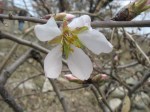
Afterwards, all oily and relaxed we joined Axel for a lovely spring walk in Bagh-e-Bala park. We saw our first spring blossoms on the rows of almond trees, growing well protected on the sunny side of the hill.

Axel had printed out pictures of the various people we had photographed there, among them the mudir of the pleasure palace. He rewarded us with access to the place, since he had to key to the padlock.

He asked me whether I had brought the medicine (dawa), a request I had clearly not understood at our last visit. He explained once again, this time I understood. He wants medicine that makes him strong and to illustrate this he flexed his weak biceps. Since our last visit I had learned the words for strong and weak and was able to hold up a good chunk of my end of the Dari conversation until he lapsed into Pashto. Next year, I promised.

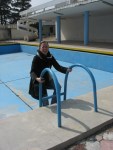
He told us the pleasure palace is being turned into a guesthouse and to illustrate this he pointed at the electrical wires that were coming out of the walls everywhere. The large Olympic sized pool will also be cleaned up and filled. It’s hard to imagine but it’s a great idea. If Karzai wants it to happen, as he claims, it will. Karzai is after all his boss, he should know.

From there we went back into town for lunch and latte in the sun and in the company of a father and son (or daughter) cat who were after our chicken wrap.

The rest of the afternoon we went shopping in the area that only a week before had been blown to pieces. Things had been cleaned up but broken glass was still visible everywhere, from the top of the buildings down to the ground. Many shop windows, including those as far away as Chicken Street, were cracked or gone and replaced by plastic sheeting.

The sidewalks were cluttered by large piles of twisted metal and other debris and then there was of course the big hole in the ground where the guesthouse has been.

This is something you realize when you live close to such disasters: except for those who died, life goes on.

New beginnings

The balmy weather of the last few days adds to the ‘lightness of being close to vacation and close to spring.’ The leaf buds on the rose bushes and fruit trees are swelling and some tiny leaves are visible on the honey suckle outside my office. After hours some staff had their first volleyball game. It is hawa bahariye, or spring weather, indeed.

Yet in many places spring is still months away. March and April are the rainy months; in elevated Bamiyan precipitation still comes down as snow I suppose, judging from the mountains around Kabul. After an enormous rain and thunderstorm a few days ago, there upper reaches are white again. Down in the valley we are done with the snow. The last vestiges disappeared about just over a week ago.

I participated in Julie’s ‘writing good impact stories’ session which was fun. I was partnered with one of our ‘druggies’ as I call them, the people who make sure enormous quantities of drugs get to people in the provinces that are supported by USAID. Simultaneously, on the other side of the sliding glass doors the facilitator training was drawing to its close.

Julie and I watched one of the participants in our session transfer what she learned to the facilitator group. I could follow most of what she said and Julie smiled when she saw her main four points reproduced with great enthusiasm on the other side of the doors. Now that is just-in-time training.

One of my staff had organized a lunch in his office for people he wanted to introduce to each other and who he likes. He is an arch networker and so brought together an interesting cast of characters. Axel was also invited.
We listened to stories about the first day after the Taliban were ousted and the shaving of beards that happened instantly. These stories came from the people who were closely associated with the birth of Afghanistan’s current, post-Taliban, health system. Only the rudiments of a health system existed 8 years ago, which included 3 computers in the entire ministry.

Although we are sometimes impatience with the slow progress and the endless stumbling blocks we encounter, hearing where they started was a good reminder of how much has been accomplished in what is after all only 8 years. New beginnings always happen slowly.

Heady

The facilitator said ‘May God kill you,’ and everyone laughed heartily. When asked why this was so funny in this country where many are killed in the name of God, I was told it was an icebreaker joke. Sometimes I don’t get things here at all.

I watched more of the joyful proceedings of the leadership development facilitator refresher training that started on Sunday and the ease with which the team approached the task. This time we were hosted by the Blood Bank, in the Leadership Learning Center there that we equipped and the team there that we helped to become stronger leaders. They have some impressive results to show for it.

I had already arrived there when the security alert came per SMS that the city was on high alert and unnecessary travel across town discouraged. My staff was scattered across town and I phoned each one to determine whether they should stay where they were or move. I stayed where I was and made it safely back to our compound at lunch time. Nothing happened, luckily.

In the morning I heard that two Big Heads, one from our country and one from our host country were meeting today and that one Big Head wanted the name of one corrupt senior ministry official to give to the other Head, like a head on a platter. I got the symbolism. It was a nice idea.

And as the implementing agency in health, we got a last minute request from our own government to provide the name of this person. In theory this sounds reasonable, but if you want to continue to work here and live, providing a name is a terrible idea, even if you had hard evidence.

This is where most of the anti corruption efforts go off the cliff: On the one hand people don’t dare to whistle blow for fear of reprisals. The assumption is that the powerful will never be caught but you, as the small whistle blower will.

On the other hand the people who are supposed to certify transparency and clean books are the ones who ask for bribes to certify you as ‘clean.’ If you decline to pay they will certainly dirty you, your name, your reputation and create big problems for you.

This is what our host was threatened with, not an academic issue. With the labyrinthine government regulations any auditor can find irregularities in the way you run your organization and blow them up into something illegal.

He asked me if we could include ‘ethics’ in our leadership program. I wonder, will that make any difference?

Cooked

Yesterday I learned in class that a mature man, a ripe piece of fruit and a paved road are all described with the word for ‘cooked’ (pokhta). My questions to the driver to find out if he was ‘cooked’ got a chuckle; indeed he considered himself an ‘adam pokhta,’ a cooked man (all this while driving over a few uncooked and one cooked road).

Some of my early ‘cooking’ efforts here as a coach (from early 2008 on) have produced well cooked facilitators. I watched a trio of people who I first knew as otherwise confident people (all doctors, one young female and two older males) who knew nothing about leadership development. Today, some 2 years later I watched them ‘dance’ with the participants and teach them about being leaders in ways I could only have hoped in my wildest dreams then. Such a joy.

I am now the coach behind the coach behind the coach and am hardly needed except for some pointers about working as a team rather than as accomplished individual facilitators. This fits my different position here as someone who watches the dance floor from the balcony (an image from Ron Heifetz), rather than remaining busy on the dance floor.

Julie and I had a lovely lunch at the Pelican restaurant down the street from our office: an authentic French mushroom quiche with freshly squeezed apple juice served (and maybe cooked as well) by young Hazara boys in white starched shirts and peach striped vests. We ate our lunch outside, sitting on the traditional chaharpai furniture on the terrace in the warm spring sun.

On our way back the road was blocked by buses parked at right angles to the road and many men with guns. Our bad luck was that the Parliament building was right in between our restaurant and the office. It took some maneuvering by our driver through muddy side streets to get from A to B.

In the evening, coming in late from another long work day, I found a slightly altered version of our family’s favorite ‘Chicken Fiszman’ recipee in the oven (named after our kids French teacher at High School). The chicken was so tiny that Julie thought it was one of the missing pigeons from her window sill.

We are still working on the concept of moist and juicy for roasted poultry (or pigeons as the case may be). Our cook tends to produce meals that are a little too ‘pokhta’ for our taste.

Multiple universes

Today was one of those days when I was acutely aware of the multiple universes that exist side by side in this enchanting but broken land. I interact with some of those universes and others I only know they exist from hearsay.

First of all there is the universe of the government, which in itself has several substrata. There are the people who are smart, ambitious and quite well paid (for Afghan standards). They want the best for their country. They focus on what makes senses from a technical point of view and they are fully engaged in debates and conversations that tease out where to go next. I love to work with them.

Another stratum consists of what we would call dead wood in the US: people who are beyond capacity building, who are just marking time and for that, get a tiny salary that they supplement in any way they can: petty corruption or second and third jobs or living off relatives. For them the ministry is not about improving health but about employment. Sending these people home doesn’t solve much and just increases the misery of whole families.

A third stratum consists of people who are taking advantage of the chaos and the streams of money coming in with all the possibilities for milking the projects that require millions of dollars in procurements. They are enriching themselves beyond their wildest dreams.

They are the ones building what we call the ‘poppy’ houses, the hideous architectural extravanganzas that are way too big for their tiny plots, that are decorated and embellished with a cacophony of styles, tiles, fences, gates, colored glass and what not while being barricaded behind sand bags and blast walls topped by razor wire. I presume they are also the owners of the billions of dollars, declared or undeclared, that leave the country for investments in Dubai and elsewhere.

The next universe is the one I am part of: well meaning professionals trying to do their best to build capacity of their counterparts in the ministry or local NGOs or businesses. They (we) act as if this is possible and believe we make a difference – sometimes we think this is really true and sometimes we fool ourselves. Actually we probably do make a bit of difference in the lives of individuals, but whether the systemic changes we profess to pursue are really possible in our life time is debatable. We live in this stressful universe and receive handsome compensation and benefits such as danger pay and R&R for putting up with something we don’t have to put up with if we so desire.

Within this universe there are many strata, differentiated by the sources of our contracts and how much we earn. It’s all rather unequitable I suspect and a function of whether we are part of a buyers’ or sellers’ market. I saw an advertisement for a Pashto translator with a base salary of 215.000 dollars. This must pull some Afghan Americans back to their homeland I imagine; a great way to pay for college or medical school.

A third universe is the one inhabited by the foreign Christians who have lived here for ever, moved here with small kids or produced them here, and who are teaching us Dari and about Afghan culture. They live very low to the ground and do good Christian work. They have no SUVs, no army of guards and drivers; they live in simple houses and walk to work or class. They blend in as much as they can. Many speak the local language(s) fluently. They dress either in local garb (especially the men) or they wear frumpy frocks. They are kind and lovely and very sincere. As Christians they are always at risk and they have had some casualties, both in terms of lives and real estate, but they soldier on, as Christians do.

The fourth universe is inhabitated by the Americans who live in hooches (containers) in their own bubble that has nothing to do with Afghanistan. They are guarded by Nepali ghurkas and eat imported food froom imported furniture in imported prefab buildings. They try frantically to implement American policy which changes all the time and serve many masters. We sometimes help a few of them escape into Afghanistan that’s just down the road. They rotate in and out of Afghanistan as fast as windshield wipers which creates an institutional memory problem.

A fifth universe is populated by foreign armies. I know nothing about them expect that they fight, are young and see a totally different Afghanistan than we do. A subset of this universe consist of the civilians embedded in their FOBS (forward operating bases). They are professionals trying to help but because they are from the government, the help is sometimes misguided as when they cut across our path and bypass the government structures we have been trying to build so carefully. Clinics where such doctors work sometimes get shot at.

And then there are the sixth to umpteenth universes that are scattered across the country: the stone-age people that live far from the modern world in places where nothing we take for granted exists; the nomads who try to keep up a lifestyle that is from another century and not good for one’s health; the slave girls in service and bondage, the illiterate couples trying to eke a living out of hostile ground producing baby after baby with few surviving the harsh conditions.

The violence and conflict keep producing more universes: the IDPs (internally displaced persons), the Taliban and Al Qaida fanatics sneaking in every which way, under cover or openly in tanks or pick-up trucks with guns; but also the smart kids that show up in Axel’s school out of nowhere riding on this or that opportunity that fortuitously showed up on their door step or was actively pursued. These are the ones to go for further study to the US, where they will tumble into yet another universe.

Movement

We were all woken up at 4:15 AM; it was as if our bed was gently rocked back and forth; a soft clanking of metal against metal outside added to the eerie experience of feeling the earth moving underneath us. It was my first earthquake and it was a frightening experience. The epicenter was about 175 km northeast of Kabul and deep under the Hindukush mountains, which made us all grateful for tall mountains.

Sickness, attacks, earthquakes, it really feels as if we are receiving multiple messages from the universe that it is time for our R&R. In that respect we are lucky, Afghans don’t get R&R, and so we can’t complain.

Today seven provincial teams from the South and the East of Afghanistan, many of them considered dangerous places, came together in our large meeting room for a refresher training as facilitators of our successful leadership development program.

I did a similar program over 14 months ago in the same place with the same teams. Then I took the lead. Now the process is expertly managed by one colleague from our Kabul team, one from Kandahar and one energetic young lady from the ministry. It was immeasurably satisfying to see them apply adult teaching methods with great ease, as if they’d done it all their life and being utterly confident.

They used the morning session to find out where people were in their learning process and crafted a very responsive program around it, firming up a rough idea of a program I had shared with them earlier.

Although I am supposed to be part of the facilitator team, they are really running the show; it is better that way because all can be done in Pashto and Dari.

I was please to be able to follow much of the Dari instructions (but none of the instructions in Pashto) and realize that there too has been much progress in my language acquisition.

And, right in line with all these experiences of movement (most in the right direction, some disturbing) and being moved, Axel applied for a job with a company called Harakat, which means, yes indeed, movement.

All in all a moving day!

Stressed

I missed a post yesterday because I was sick, floored by some GI virus but also heart sick because of the latest attacks on guesthouses where foreigners reside. We were supposed to have gone on an outing to Bandi Qargha, a lake on the outskirts of Kabul, but we chose not to after we heard of the attacks. We watched the scenes of destruction on local TV with horror.

This morning, after a feverish night full of dreams about trying to improve organizational processes at the ministry of public health, we both went to see the doctor. It was a follow up visit for Axel and for me a first visit. The doctor took my blood pressure and noted it higher than normal. Maybe it was the combination of being sick and the nightmare of these recurrent attacks in Kabul or maybe it is the slow building up of stress that I remember from living in another war zone, in Beirut, 33 years ago. It creeps up on you

To get to the doctor we had to drive into town, not far from where the blasts and fighting took place. Shop windows everywhere were shattered and everyone was busy replacing or pasting the broken glass back together. The scenes of destruction and the resulting traffic mess left me depressed.

On days like this I do wonder, why are we bothering to learn Dari, go through all this effort to help Afghanistan. Can it be done? Is it worth it? For the first time since my arrival here now five months ago I felt overwhelmed by the demands of living and working here.

This is, I suppose, why we are let out every three months, to go to a place where there are no razor wires, blast walls, sand bags and men with guns everywhere. Some organizations let their staff leave every 6 or 8 weeks and I have come to realize that my limit may be 10 weeks.

Our Beirut trip is within view, less than 2 weeks from now. The grey weather and the bad things happening here make me want to speed up the days that separate us from our departure.

Light

Today I got a taste of the distress, despair and distrust that is pervading the ministry at all levels. It is no wonder that we have a hard time to get people to focus on things other than themselves. The stories about what is happening that everyone is spinning around them – for themselves and others to believe – are having the opposite effect of the inspired leadership we are after.

Nowadays it seems that our more or less neutral presence – we don’t take sides – allows people to vent. Much of that venting happens in Dari but I can now at least understand the general gist of the venting – to know that it is about things or people.

Through all this we are soldiering on – we with our work plan to implement and our consultants with their two-week scopes of work to complete. This is difficult even under the best of circumstances. If there are predictable but entirely unexpected holidays called for the next day (there are three calendars operating here side by side: solar Muslim, lunar Afghan and western Gregorian), it is time to slow down and let the chips fall where they may. Breathe, breathe…

We had our second women’s meeting and the program for International Women’s Day is shaping up nicely. We have a mistress of ceremonies, an opening prayer, an opening prayer poem, a slide show with lovely pictures of Afghans (Yo Afghan Yo) and a singer who sings about unity (we are all one people).

One of my staff produced a very professional slideshow about the status of women in Afghanistan, with pictures and statistics, which she will conclude with a reflection that should produce some intentions to take action within people’s own families.

One of the pictures she selected is that of a young nervous looking girl, 14 years at most, sitting next to a man who looks about 73 on a dais during a wedding ceremony. When I asked the women how they felt watching these pictures and statistics, I had expected (and hoped) to hear about anger and outrage but all I got was sadness and pity. In my opinions the latter emotions are too light to trigger the kind of action that is needed here.

One of the women checked out a whole bunch of videos on YouTube. I rejected most of them: they were either about women in the armed services with the words ‘Women Armed’ flashing in bright red letters across the screen. It just didn’t seem to transmit the right message.

There were also many videos about women cut, burned, mutilated, crying and other images that would bring you to despair in seconds; also not quite the message we wanted to convey. Finally we found a 5 minute clip about progress (some of it thanks to US taxpayers) that lifted our spirits. That’s the one we selected.

We are also working on a quiz with chocolates as prizes. We will ask anhyone who wants to rise and speak about important women in their lives; then Rabia our receptionist will read another poem. And finally we will provide gifts for the women and then we have lunch. It should be a lovely day of celebrating women and calling everyone to action. Every little bit helps.

The day ended late again because of our weekly phone call with Boston and so I arrived home at the same time as our dinner guest, Catherine, who works for the US government in remote bases.

Her last post was Nooristan, formerly called Kaffiristan, the land of the unbelievers. Now it is the land of Light. It is a place of stunning beauty, the setting for Kipling’s ‘The Man Who Would Be King’ and the place of some fierce fighting. Catherine and her armed fellows worked quietly on good governance, meeting with the highest and the lowest people in the Province, dispensing advice and resources to make life a little lighter.


February 2026
M T W T F S S
 1
2345678
9101112131415
16171819202122
232425262728  

Categories

Blog Stats

  • 139,798 hits

Enter your email address to follow this blog and receive notifications of new posts by email.

Join 76 other subscribers