Archive for October, 2009

Some like it hot

Today is the first day of the work week for the government. I was invited to attend the weekly staff meeting of the general directorate for health services provision, at 10 AM. The boss came in late and canceled the meeting after he had shaken hands with all his subordinates and subordinates-once-removed, and apologized to me, the only one who had come in from a distance and on my day off.

The H1N1 panic is rising and an inter-ministerial meeting was called. Nursing students came in to the ministry to ask what to do and the person in charge had no idea. ‘We are poor’ she said with a voice that quivered and called for guidance and help instead of showing the decisiveness we have come to expect from leaders. Unfortunately, this from one of the very few women at the top.

Rather than going back to my guesthouse I decided to stay and do some scanning to see what people are doing about the potential epidemic that is roaring at Afghanistan’s gates. One death confirmed, but who knows how many unnoticed?

It is clear from that I saw that we still have a long way to go to get the central department heads and directors to play a leadership role. The few officials I saw are all waiting for orders. It was a good diagnostic opportunity to see what happens when there is a potential thread. Not much, I concluded.

I see what I need to do to rally our Tech-Serve troops around this challenge: they have to scan the information to see what is rumor and what is fact; they have to focus on a few high-leverage activities and align with the right departments and agencies to mobilize all resources and all hands on deck. And finally, rather than panicking, they have to inspire their own people that this can be tackled.

I asked one team to record, along the way, what they are doing well and where they messed up or where things didn’t work as expected, so that, afterwards, we can sit down and see what needs to be changed. It’s a simple idea but panic can make one forget to do the simple things. Besides, people are focused on keeping their families safe – when in danger, that’s when we withdraw onto ourselves. I get that. I should be worried about my family in the deeply infected United States.

On my way back from the ministry I stopped at two supermarkets to indulge myself a bit. I bought a case of non alcohol beer which has now become a huge treat (alternative is fermented yogurt or a non alcohol fruit beer). I also bought myself hot chocolate powder to prepare for the cold winter nights and, to counter that, some ice cream, from Herat no less.

It was quiet at home as Steve went on a day trip to one of the provinces to sort out a messy situation between ministry and NGO staff who are doing the same hospital work but are not paid the same salaries. I wished him luck and reminded him about the practices of managing and leading, as he would be needing all of them.

I emptied my mailbox a bit further until I got tired of sitting on my exercise ball in front of the computer. I picked a handful of hot peppers form the bush outside my house and tried to make sambal which filled the house with fumes and cleared out my sinuses. The resulting paste is close to inedible, too hot for me. I can’t wait to have some southern Indians visit us, the ones who made fun of what I considered hot, and challenge them to eat my concoction.

Security lunch and Swiss cheese

The guard assigned to us is Amid Allah, or Amid Jan as we call him more affectionally. He is a wonderful caring man who looks after us foreigners. Every time we leave someplace he comes over to check whether I have my camera, my phone etc. Last night he gave me a tin with traditional Herati sweets. I dutifully declined three times and then took the gift when he insisted.

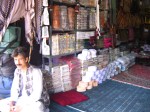
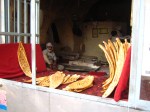
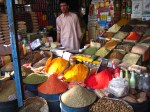
This morning he took me on a walking tour of Herat: we went to the old citadel which was closed, so we walked around it and to the mosque. For this we walked along endless small shops, a photograper’s paradise.

It was so wonderful to be able to walk around freely and poke my nose in all sorts of shops and exchange greetings with people. I did not feel threatened at any time, so many smiles and invitations to take pictures and walk into shops. I think the Heratis are as curious about me as I am about them.

At one point we even took a taxi, something we are not allowed to do in Kabul. The driver played Badakhsan traditional music which I recognize from having played it for hours during my trip in 2002. My guard is also from that part of the country and he grinned from ear to ear. Listening to one’s own music can make you happy that way.

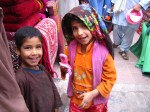
I had my camera on all the time, clicking away as I saw one wonderful scene after another. People here mostly don’t mind having their picture taken. Occasionally a middle-aged bearded man says no, but that is rare. I do ask each time if it is OK to take a picture and most people grin and pose. A picture is called ‘aks’ in Dari, reminding me of my honey each time.

Around noontime we made our way to the airport. My male colleagues had to stand in line for each subsequent check point but I breezed through them with great ease. There are so few female travelers, may be one for each 20 or 30 males that there are rarely lines.

At one of the checkpoints for females I found three of the ladies sitting around the table where one is supposed to open one’s luggage. But there was no room as they were having lunch. It smelled delicious and I said in my best Dari that the smells made me hungry, at which I was promptly invited to sit down and eat with them; to hell with luggage checks!

Once again the security arrangements were like Swiss cheese. No one ever asked me for an ID. Last names and birthdates don’t really exist in traditional Afghanistan, which is why you will see that many Afghans are born on January 1 of a year that, given their appearance, is a good estimate of their age.

Identity cards are not used either, only by those who work for expat organizations or who travel abroad. You can make a serious looking ID card in the market and make up any information that is printed on the card; add a fake leather holder and a lanyard and you have an identity that looks official.

In between check in and luggage drop off there is plenty of time and opportunity to slip something bad in a piece of luggage and then leave the airport grounds unobtrusively. And of course, from an American point of view, nearly all of one’s fellow passengers look like the 9/11 hijackers. If the same cast of characters were to board a domestic flight in the US they would all receive extra special screening treatment. Everything is relative and contextual.

We left only one hour late and for 70 dollars (330 dollar less than the UN flight -one way) we made it in record time to Kabul, one hour in the air; with the UN flight, during my last trip, the same trip took an entire day. Granted, it was crowded in the plane, with no legroom and nothing served except water, but for one hour that is manageable. It took us more than that time to get from the airport to our guesthouse even though it is Jama’a today, a day of rest. Not for us as the weekend is essentially over.

Pilgrim shots

I watched Hillary call the bad people in Pakistan names (cowards) while drinking something that comes out a can that looks like a real beer but it is actually 0.0% alcohol Bavaria brewed lemon malt beer. It is not bad when you have forgotten what real beer tastes like.

Last evening I watched endless reruns of the bomb blast in Peshawar and the attack on the UN Guesthouse in Kabul while answering emails inquiring about my safety from concerned friends from all over the world. I try to explain that there are many guesthouses in Kabul, more than there are hotels, and that Kabul is a big city and that we live far from where most of the foreigners live; but I do understand the concern and I am grateful for all the good vibes and prayers that are sent our way.

In the meantime Axel’s sewer project has hit a snag which may mean a delay in his arrival, which would have to be at least a week’s delay because of the run-off lockdown. We are receiving instructions from our security men to lay low and refrain from our weekly Chicken street outing; even our walk around the highschool is cancelled. Maybe this is a signal that I should finally try the elliptical in our house or go for a rowing visit to house nr 26.

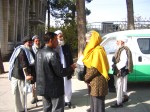
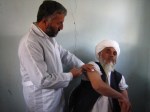
Half way through the morning I went to take pictures of the hajjis receiving the seasonal flu vaccines at a local mosque. The vaccines have been donated by the American people and arrived at the right place and the right time thanks to many sleepless nights, thousands of phone calls and emails and much sweat and tears from many of my colleagues. My guide was the vaccination chief at the regional health office and he introduced me left and right to bearded men, sometimes introducing them as ‘he used to be a talib!’ and then everyone grinned. I would have loved to find out why the change of heart and label but my Dari is not good enough for such conversations and their English wasn’t either.

At the end of my visit to the mosque I was formally thanked on behalf of the Afghan people by an impeccably dressed religious official who, I was told later, was an official in the provincial health office at the time of the taliban.

Later one of our participants in the workshop told me how you could get your fingers or even your head cut off if the taliban police found you in the possession of a pen drive, as this meant you had a computer and that was of course a machine invented by the devil. He would hide his pendrive in the ashtray in the arm rest of his seat on the bus and pray that they would not find it.

It is hard to imagine that this was no so long ago and it is always surprising how people tell stories about the taliban as if that period was just one big joke. It seems that for my colleagues here taliban means ‘incompetent fanatics’ and sometimes I detect a hint of compassion, as if these poor sods didn’t know any better.

I had lunch again with the only other female in the room; women don’t seem to be able to eat together with men. We occupy her husband’s office and unpack the many wrappings our lunch comes in, always the same: naan (flatbread), a small plastic container with raw vegetables with a packet with low fat mayonaise on top, a plastic spoon, fork, and straw wrapped inside two tissue papers and a plastic sleeve, a plastic container with white rice, some saffron rice mixed in and tiny red berries that i am told are hard to find and good for lowering cholesterol. The last container has a big chunk of mutton, bone and fat included.

We returned early to our hotel because it is Thursday and people go home for the weekend. I came home to a hotel on back-up power which meant I had to get my mail sitting in the lobby. I sat right behind Murad from Jalalabad who was talking on Skype with his fiancée in Pakistan. I could look right over his shoulder into a living room somewhere in Pakistan where he fiancée was sitting next to, presumably, her sister and her mother lying on a mattress in the back, all very intimate, the women only half veiled.

I asked Murad if he could interrupt his video call for a brief moment so I could download my mail and he immediately obliged. As it turned out he also works for a USAID project and pursues similar objectives as we do, except he does procurement, a very tricky field, full of mines as one can expect here. He told me he missed he fiancee so much, emphasizing the ‘so’ so very much that I did not dare to download all my mail for fear of separating these lovebirds.

Tonight we will go out across the street again for dinner in the restaurant with the carpets on the grass and eat kebabs with sabzy (cooked greens) and drink the fermented yoghurt, imagining it is beer.

Bleak and colorful

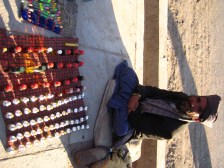
Our workshop venue is in between the TB ward, the infectious diseases ward and the mortuary, so it may be more dangerous here than in Kabul where gunmen created mayhem and death. Dangers are lurking everywhere in this country, but then, amazing and wonderful things are also staring at you at every street corner – a grandpa climbing over a walk to fetch his little grand or great-granddaughter; and the ancient looking seller of mysterious perfumes sitting by the side of the road. I showed him the picture that I took of him and his wares. He looked at the small display on my camera and I wondered what he thought. Magic? Weird foreigneress?Misc 095

I am watching the group process that is created by my colleague. I don’t quite agree with his approach and we skirmish a bit on how to proceed. He’s impatient, as most foreign fly-in consultants are because their time frame is short. Now that I live here I see things differently. I try to get people in the habit of reflecting on what they are doing, seeing the big picture, how does what they do fit into the larger whole – because that sort of reflection is not happening. Everyone is so focused on small tasks. People are engaged with the individual trees and losing sight of the woods as a result. Every new consultant brings in new assignments that may look large and important to them, but in the greater scheme of things produce yet another set of tasks that suck up attention and energy.

We recognize that we have a fundamental philosophical difference about how people learn. My colleague thinks people learn from working on their own and then have their work product critically reviewed in plenary to correct errors and deepen the reasoning. I believe in coaching people in the intimacy of their small work group so that what the groups finally present in plenary is the best possible product. I wonder if this is the kind of philosophical difference that cannot be bridged with compelling arguments.

After lunch I asked to be taken on a tour of the hospital to get some pictures of healthcare in action. It is a regional hospital and people come from all over. I followed the man in charge of the cold chain, I call him Mr. Cool Man but he doesn’t understand that that is funny. He keeps correcting me, emphasizing that he is Mr. Cold Chain man. He is very serious about being addressed with the right title.

We first went to the first aid section where a doctor and a male nurse attended to patients that walked in or were carried in. They were all pleased to pose. I asked if I could take pictures of the patients, victims and families. My security guard and Mr. Cold Chain shrugged but I insisted they ask. No one seemed to mind and most posed with big smiles, except those who were crying or suffering or simply too ill to respond. Occasionally a woman steps out of my picture frame and covers her head. I am surprised that not all women do that. There are discarded burqas, scarves and abayas all over the place. The clothes that the women wear underneath their wraps are exposed in all their wonderful colors.

After we checked in with our Kabul based colleagues to find out what was rumor and what was fact about the early morning attacks, we, the two foreigners only, are ordered back to our hotel at 3 PM. I am both touched about the concern for our well being and annoyed that we have to leave the group. Luckily our Afghan colleagues are allowed to stay and we know the work is in good hands with them.

Sita’s birthday

Once more we are staying in the Nazary hotel that was designed by people who have a very different idea of what hotel room should be like than I do. The bathroom is designed for small people, much smaller than the average Afghan or American. I think the Chinese were in on this deal. The bathroom has a callipgraphy still life design and stickers on everything indicate the manufacturer in Chinese characters.

There is no place to put clothes, only a coatbandi, as the Afghans call the ubiquitous multi-knobbed coat racks. That and the beautiful Herat carpet ar the only non Chinese things in the room. The mattress is hard as a plank and has a sheet put on top of it that is too small to tuck in. The bed is not made up and I wonder what the idea is of the small sheet that is folded on top and that looks like a johnny. Am I supposed to wrap it around me? A clean johhny sheet is put on the bed each night, wrapped in plastic.

The Chinese blanket has the weight of the lead aprons that the X-ray technicians use. I cannot pull the blanket over me because it requires two strong arms and shoulders; with my still inflamed right arm and shoulder I cannot do this. It is good that it is not very cold yet in Herat, so I manage sleeping rolled up in my sheet-johnny.

Our workshop is held in the vaccination training room of the EPI program. Instead of posters, all the vaccine-related information deemed important for trainees is painted on the wall, permanently affixed in bright colors, including a map of Western Afghanistan. All the lettering is in Dari so I am perfecting my reading skills while discussions happen around me that I cannot follow.

We sit on plastic chairs that still have the manufacturer’s plastic protective wrapping around them, half peeled. I cannot help myself peeling the plastic off even further until I encounter a piece of old scotch tape that has melded into the chair’s metal armrests.

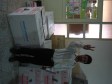
At the end of the workshop we check out the cold room to see if the boxes that we sent at great cost to Afghanistan to protect international travelers from seasonal flu had arrived. They had. That required a victory picture. This took some explaining as the employee did not understand Churchill’s victory sign; if I had held up a Kalashnikov with one arm he might have understood better. But I did get the picture with a somewhat tentative V and a puzzled look.Misc 090

Our security man allowed us to walk back to the hotel across the hospital grounds, an untold freedom. One of my colleagues showed us around telling stories about the time he was a student doctor there; stories about the Taliban waking up students with sticks at 3 AM if they weren’t praying; the removal of the women’s recovery ward from the operating theatre to separate the sexes – this meant that women coming out of surgery had to be wheeled in mid winter on gurneys over uneven ground – it was not uncommon for them to slide off the gurney; and then the bearded men slipping into the nurses quarters at night when no one was looking.

For dinner we walked across the street to a restaurant that presented itself as a small store front. But once inside the store opened in the back to a grassy courtyard with carpets spread out on the lush green grass and amidst rose bushes. It was nearly surreal, seeing groups of men here, a family there, sitting cross legged on the carpets eating kebabs and drinking fermented yoghurt, the closest to alcohol we have had. We asked for chairs and a table, to spare our knees that aren’t used to eating on carpets. All this on a mild autumn night on Sita’s 29th birthday.

Natural resource

To catch a 7 AM plane I had to get up in the middle of the night. I had set my alarm for 3:30, was picked up an hour later and from then on it was endless waiting. Waiting at checkpoints, or waiting for my male colleagues who had their bodies and luggage checked at various points, all in the dark because the electricity was out.

At this early hour female guards cannot be on the job because it would require that they travel in the dark and that is not allowed. Between the electricity outage and the absence of females at the checkpoints, the security arrangements were like Swiss cheese: full of holes.

I killed the hours of waiting by working on my Dari homework and learning some new words. I learned among other things that a wise old man, someone with much gravitas as we would call him, is called a cooked man in Dari. IN return, my Afghan colleagues thought that the expression ‘he travels light,’ referring to our guard, was odd – languages are funny that way.

By the time we had inched our way to the beginning of the runway, about three quarters of a regular workday had passed and our 7 o’clock plane finally took to the skies at 10 AM. We flew the Afghan version of the now defunct People’s Express, a no frills airline company called Pamir Airways. To fly this carrier, as opposed to the UN flight, you have to have an enormous dose of patience and you get nothing to eat, just a cup of water.

We spent nearly an hour on the taxiway, moving a little and then standing still for 15 minutes. There is only 1 runway at Kabul International Airport and between the many military and unmarked planes there is much coming and going, at a ratio of at least 3 coming for every one going.

During out one hour on the taxiway the passengers, nearly all men, started to get a little unruly; and here, unruly bearded and turbaned men are a little scary – luckily there are no arms allowed on the plane. People were talking on their cell phones and walking back and forth as if we were boarding and the flight attendants did not seem to care much.

Occasionally people pushed their call buttons and some heated discussions would ensue while everyone and their brother would get in on the conversation, interrupting my cat naps. I could understand a word here and there but it wasn’t difficult to figure out what they were talking about. It was a rather lively ride up to the start of the runway. Luckily there was also much laughing and that put my mind at rest.

I sat next to a young female lawyer who works with an NGO that has taken on the impossible task of defending the rights of women in Kandahar. She spoke to me in her best English and told me the most incredible stories about life of a 20-year old, unmarried Afghan lawyer who defends the underdog in one of Afghanistan’s most conservative areas.

I soon learned that she had never lost a case of her 258 taken on so far. She is independent, that is, not living with her father or brothers and has no husband, and might never get one as she probably scares the shit out of bearded men who beat or cheat on their wives. I gather from her stories that she is quickly becoming the bane of existence of men who abuse, rape, abduct, cheat or otherwise treat women badly. I asked her how she could live in a place where men so despise women and where her life is all the time in danger. She gave me a big smile and said, if they want to kill me, let them, I am here to help the women and I will never give up.

She pleads her cases in court from the anonymity of the burka. Still, I wondered, with such a dangerous profession, “don’t people know who you are?” They do of course and she knows that if there are people who want to get rid of her they can easily do this but she is unfazed. She is careful tough and does not have a business card or an email address. Everything is done by phone, the gadget practically attached to her ear. I am thinking of Sita and Tessa at 20 – such a different life.

Shabbana’s biggest wish is to go to the bazaar and buy herself some new shoes but she can’t do this, not even in relative free Herat or Kabul, not without her mother or father. She sighed, “I have so many wishes,” but then she smiled and said, “may be one day they will come true,” followed by the predictable Incha’allah.

I asked her if she voted and will vote again, something that is, for a woman in Kandahar, an act of unimaginable bravery. But she is not afraid. After she tells me about men who got their inked fingers hacked off I ask how she manages that. She wore gloves for a week, she said matter-of-factly and will do so again.

I had so many questions, I would have liked to fly for hours more. Being a mother myself of young women I wondered what her mother thought about her dangerous vocation and place of residence. “She cried each time I would visit,’” Shabanna told me. But the mother is also proud of her : in primary school at 2, secondary school at 13 and university at 16, becoming a lawyer at 19, I can see why her mother is proud. The whole country should be proud. How’s that for a natural resource for Afghanistan?

Comings and goings

There were demonstration today of students marching through town shouting Allah Akbar. These kinds of crowds make me nervous but luckily I never saw them nor heard them. We were advised to stay in the office, not because it was dangerous but because of the enormous traffic jams caused by the student marches. Only very critical trips to senior level ministry officials were deemed serious enough to suffer such traffic jams. Luckily I was excused from such a trip and was therefore able to take care of a lot of business before heading out, very early in the morning to the airport for a week’s worth of work in Herat.

I sent Axel’s arrival information to Khaleed to make sure he is properly welcomed at the airport on November 4. Khaleed is MSH’s youngest employee and the one who picks people up, drops them off, gets visas, etc. He is our expeditor and does it well. He is also the one who periodically stands in line at the Indian embassy and whose luck it was that I retracted my passport for the previous trip to Herat. It was either good luck, or as people here tend to believe, God has something more in mind for him that required a longer life. Whatever the cause or reason, we were all grateful he wasn’t at the wrong place at the wrong time.

Although Axel will be welcomed to his new hometown, he won’t be welcomed to his new house. We are still lodged for some time in guesthouse zero because the house is not quite ready. So we get to share are dorm room for a bit, cozy but a little bit crowed with the stuff that will spill out of two more suitcases added to the contents of at least 4 other large bags, boxes and suitcases.

I received a long-distance physical therapy session over the internet from the Swedish PT who trained the local lady therapist. The inflammation after my previous session at the military hospital set me back a bit in my exercise program. I haven’t given up on her yet and hope that with the guidance from Sweden we will be able to get back on track, after my return from Herat.

Body words

Now that Obama and the State of Massachusetts have declared a state of emergency because of the H1N1 virus, I am anxious to get Axel out of that dangerous place and over here. I am counting these nine more days and hope that he will be able to dodge the virus-laden spray of Massachusetts’ infected sneezers and coughers.

Early this morning (not too early as it is our day off) Iain, who just arrived, Steve and I had breakfast at the Pelican, a real French bakery place (as opposed to the one with that is called the French Bakery) that employs the cutest Hazara boys and girls as waiters and waitresses. We each had fried eggs, bacon (yes, bacon indeed), fresh apple/watermelon juice, good coffee and a real croissant. We sat amidst enormous rose bushes, 6 foot tall cosmos and a thick patch of bright red geraniums, outside on the terrace in the cool morning sun. It was lovely. I can’t wait to show the place to Axel. After wards I bought a real baguette, an almond croissant and a bag of butter cookies for four dollars, a fortune here, but well worth it.

The rest of the day I studied my Dari so as not to disappoint my teacher who came at the end of the day. We studied body parts but not the unmentionables. He offered to teach these as well but I declined. I am not a doctor and don’t plan to date an Afghan, so I don’t need to know. I learned that the word for back or behind is the same word that is used to denote gay men by the people who live in the north of the country. The word for arm and hand is the same, which is also true for leg and foot. And fingers are described as digits of the hand and digits of the foot.

We also practiced the old verbs and then I learned some new ones. He is getting stricter with homework and I am to write the words I keep forgetting at least five times in my note book, in Dari. But my Dari writing is still very rudimentary and I requested a writing practice book for first graders. In the meantime I am allowed to type the words in Dari, which I have mastered through my computerized flash card program.

We ended the lesson with a walk around the living and dining room naming everything in sight; from carpet to bookcase, table, chairs, fruit platter, clock, etc. Since I will be furnishing my new home such words are important.

After my lesson our newest housemate, Inua, from Ghana emerged from the confines of his small room and we watched David Attenborough celebrate Darwin on a DVD that I had given Steve as a birthday present. And now the weekend is over, whereas back at home it is just beginning. I am proud that I didn’t fritter my entire weekend away behind the computer, although I did write a first draft of the chapter for the Third Culture Kids book, but that doesn’t count as it is extra-curricular.

Rocked

I missed my first earthquake, luckily. My colleagues, all of whom had witnessed multiple earthquakes in places such as California, Pakistan and Indonesia, mentioned it in the morning, as we headed out for our weekly walk around the local high school. I discovered later that it was 6.2 on the Richter scale, a sizeable earthquake. And yet I had slept right through it. The only thing that had been displaced by the quake was the feather light kite that Ankie had left me. It had shifted its position only slightly. Nothing else had moved or fallen.

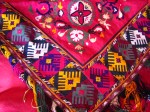
After our morning walk we went on our usual Chicken street outing. This time we had a purpose, rather than a random buying spree (which also happened of course). We bought a gift for Elizabeth in Boston, a wall decoration with the finest embroidery. Neither one of us knowing her taste, Steve thought that I rather than he should select something, as he trusts my taste more than his own. And so I selected and he paid.

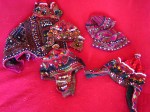
In the process of choosing the gift in one of Steve’s favorate stores we stumbled on a large plastic bag filled with at least a hundred tiny embroidered and decorated baby caps. If you bring the fabric close to your nose you can smell the entire extended family of nomads that produced both the babies and the caps. Every possible item at hand was used to decorate the caps over and beyond the most delicate and fine embroidery: buttons, broken zippers, leftover pieces of wool, small metal shapes and the tiniest of beads. Most of these things would not even be allowed in the same house as a baby in the place I come from.

Back at home we had lunch while watching on Al Jazeera what has now become a daily news report about yet another explosion in Pakistan. My friend Chantelle and her husband Sheldon live in Islamabad and extended an invitation via facebook to come and visit them during a weekend. I think it is actually safer here in Kabul.

I finished reading the 5-part series about David Rohde’s kidnapping and subsequent 7-month ordeal in Waziristan as if it was a spy novel, especially the final part of the escape. The NYT has made an animated re-enactment of the escape that is pretty amazing to watch. To then read articles about ecotourism in Afghanistan, Bamiyan in particular, leaves one incredulous – such opposite stories; but that is Afghanistan as we experience it daily: the beauty of the people, their landscape and their crafts on one side and the ugliness of weapons, war, abject poverty and destruction on the other hand.

We went to see the progress at the new house. The yellow paint I picked is a little more yellow than I thought. I am actually not sure that they used that color (sunburst). I looked much more like the other yellow I did not want (lemon ice). I can just see them in the store, “sorry we don’t have sunburst.” “Oh, never mind, give me another yellow.”

The painters did a rather shoddy job but I guess I will get used to it. They left the bridal suite in hot pink with the doors of the closets in thick white paint with gold and silver dashes and matching ceiling light. That will be the room for consultants and our guests.

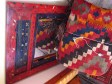
I bought a nice mirror (see picture below) for the hallway and Steve graciously lent me an enormous kelim he had just bought, which we may use until he leaves, to decorate the large living room. He has given me permission to look though his stash of carpets, kelims, wall hangings and countless other large and small knick knacks that are currently heaped on top of each other in garbage bags on his balcony.

Opposites

The walls of the new house are being painted, the carpets put in and the cook and housekeeper are hired. The quality of the food prepared by the new cook got him hired instantly. The housekeeper came with the most glowing recommendations from a colleague of mine who lived here with his wife under the previous project. The young man is learning English and I am learning Dari – it seemed like a good combination. His name is Ghulam Ali. I asked him how he preferred to be called and he said Ghulam which has a guttural ‘g’ that would give Axel trouble. When I discovered that Ghulam means slave I asked if we could call him Ali.

I received the wonderful news that Axel has made his reservations to arrive on the 4th, the day before we will stop receiving travelers. We expect that after the 4th pick up at the airport may become too problematic because of extra security measures. It’s nice to be in close down mode with him rather than without him. I am counting the days.

Now it becomes even more important to get the house in order. A whole bunch of things are being scratched off the list that will lead us to a more normal existence, if such can ever be the case in this country. Having our own house and people to cook and clean for us is appealing, after somewhat of a nomad existence for the last month.

I had lunch today behind the curtain with the women, two doctors and a secretary. I asked if they travel to the provinces and to my surprise they said yes. This is extraordinary. Not being able to travel is the main reason that is invoked for why we don’t have more professional women on staff. I tried to pry out of them why they can travel and discovered that one has a very enlightened husband, also a doctor, and the other is unmarried, also extraordinary.

Probing a little further I discovered that they have travelled outside Afghanistan and had no problem mixing with the opposite sex when in another country. Why then, I asked, can they not feel comfortable here, eating on the other side of the curtain, alongside the men. They answered that it is not because they feel uncomfortable, but because it is uncomfortable for the men. Of course I had asked the same question on the other side of the curtain and got exactly the opposite answer. I don’t get it; the sexes mix freely during the workday or when they are outside the country, but when it comes to eating suddenly everyone assumes that the other sex would be too uncomfortable. I have never seen whole populations shoot themselves in the foot by not testing this very basic assumption (“they will not be comfortable”).

We are having a changing of occupants at the guesthouse. Big man Greg has left with duffle bags full of carpets that will grace his self-built house in Virginia. Niranjan leaves tomorrow for Delhi and then Dhaka, and Inua from Ghana has just arrived. The result is that, at least for tonight, we are having four occupants in the house representing four continents: India, Africa, North America and Europe.

The international theme was also present in the quarterly MSH staff meeting that I ‘attended’ by cellphone and website. It brings all our staff from opposite sides of the world together in one physical and virtual space. It’s pretty amazing to have over 100 people ‘meet’ this way across continents, cultural and linguistic barriers.

Few of our Afghan colleagues attend these meetings mostly because they don’t have the connections at home and because by the time the early morning meeting starts in the US we have already put in 10 hours of work and it is already 2 hours past the official ending of the workday. It would be the equivalent of asking everyone in Cambridge to hang around the office from 5 to 7 and then be in a virtual meeting until 8:30 PM.

If I had to travel across time in the dark and had a family waiting at home I probably would also decline. But it is too bad they can’t be part of this because it is quite an amazing feeling to be in a meeting like that with colleagues from all over the world.


Categories

Blog Stats

  • 136,984 hits

Enter your email address to follow this blog and receive notifications of new posts by email.

Join 76 other subscribers