


We were driving around the center of town to pick up a colleague when one pointed out a large dust cloud. I would have assumed it was a dust cloud but he knew better than that. I watched the reaction of my Afghan colleagues to the explosion while the radio crackled to life and our security man communicated with all his drivers, scattered across the city about the target.
Everyone got on the phone to call relatives or friends who work or live in the area where the cloud originated. There was such a sense of despair – will this ever end? But then, very quickly, after ascertaining that no friends or relatives were injured, life resumed and we pursued our trip to the airport.
We talked about stress again, the constant high alert people are on, with increased levels of adrenaline a perpetual physical state. It reminded me of living in Beirut in the late 70s; it was like that there too. You forget that you are always on high alert but your body knows it. It shows up as high blood pressure, and, I am sure, a constant state of low depression, with spikes every time a bomb goes off. Healthy people of average weight don’t understand their high blood pressure, but my doctor colleagues do.
It is nice travelling with my new colleagues because you learn much about them as persons rather than as co-workers, employees or bosses. I have always preferred that over travelling alone. During the flight to Hirat we talk about things we have never time for in the office.
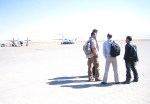
This field trip is a new experience for me. We drove to the UN terminal for our domestic flight. Outside the terminal is a square box with a small hole at the top. A sign above it urges people to empty their weapons in the box. I didn’t see anyone do it but I would have imagined if they did I shouldn’t be looking, as if this was a very private thing, like peeing in a paper cup at the doctor’s office.
In the waiting room we watched Al Jazeera’s presenting one depressing piece of news about the world after another: a typhoon in Japan, floods in India, three earthquakes in the Pacific and a bomb in Kabul, the one that we had just seen from a distance.
In between all the pcitures of distress we saw Obama with his cabinet discussing troop deployment in Afghanistan. I asked my boss what he thinks about that. He is convinced that this is not how you win minds and hearts. Many others share this opinion. The military live in a bubble. When they come into the ministry of health (any ministry I suppose) they enter in groups with their fire arms visible. It is a frightening sight. How can we possibly expect Afghans to warm to them?
One of our consultants had dinner last night with a military surgeon at one of the bases. He reported that the entire experience was surreal. There was no sense of the ordinary reality of Afghan people, Afghan hospitals and what’s possible in hospitals here. The doctors live at the base, eating imported cafeteria foods and having access to near unlimited amounts of money for their projects. I recognize a very deep-seated American assumption that anything can be bought. But it doesn’t work here. You cannot buy hearts and minds, you have to earn being let in.
The way to wiggle your way into the hearts of Afghans is to learn their language, respect their culture, ask to be taught about things you don’t understand. But much of what we do here as Americans is cooked up in these bubbles. Foreigners who are here on their own talk pejoratively about this and I assume they consider me a bubble person as well. It is true that we expats at MSH cannot mingle freely with Afghans on the street. But I can mingle freely with Afghans at work and at their homes; this is something US government officials and military cannot do. I feel sorry for them as they miss out on that one thing that makes this place so special.


 Sylvia's Journal
glad to hear you and your colleagues are all safe – i wonder if there is any aend in sight – am curious to hear more abt what your afghan colleagues think.
much love from haydenville –
there is such a deep sense of despondency among them. One told me he went to a year long training in Amsterdam and when it was time to return his friends were all saying why the hell are you going back? (much like some people asked us, why the hell are you kleaving beautiful and peaceful Lobster Cove?). His answer was, how could I? If I leave, I am abandoning my own people. What if all educated people did that? Who’s going to do the hard work of getting the country back together? And while he was speaking he looked so very sad…Many have children and want to hand something better over to them. But the despondency is woven through all their brave statements.