Archive for the 'Kabul' Category


Movement

We were all woken up at 4:15 AM; it was as if our bed was gently rocked back and forth; a soft clanking of metal against metal outside added to the eerie experience of feeling the earth moving underneath us. It was my first earthquake and it was a frightening experience. The epicenter was about 175 km northeast of Kabul and deep under the Hindukush mountains, which made us all grateful for tall mountains.

Sickness, attacks, earthquakes, it really feels as if we are receiving multiple messages from the universe that it is time for our R&R. In that respect we are lucky, Afghans don’t get R&R, and so we can’t complain.

Today seven provincial teams from the South and the East of Afghanistan, many of them considered dangerous places, came together in our large meeting room for a refresher training as facilitators of our successful leadership development program.

I did a similar program over 14 months ago in the same place with the same teams. Then I took the lead. Now the process is expertly managed by one colleague from our Kabul team, one from Kandahar and one energetic young lady from the ministry. It was immeasurably satisfying to see them apply adult teaching methods with great ease, as if they’d done it all their life and being utterly confident.

They used the morning session to find out where people were in their learning process and crafted a very responsive program around it, firming up a rough idea of a program I had shared with them earlier.

Although I am supposed to be part of the facilitator team, they are really running the show; it is better that way because all can be done in Pashto and Dari.

I was please to be able to follow much of the Dari instructions (but none of the instructions in Pashto) and realize that there too has been much progress in my language acquisition.

And, right in line with all these experiences of movement (most in the right direction, some disturbing) and being moved, Axel applied for a job with a company called Harakat, which means, yes indeed, movement.

All in all a moving day!
Stressed

I missed a post yesterday because I was sick, floored by some GI virus but also heart sick because of the latest attacks on guesthouses where foreigners reside. We were supposed to have gone on an outing to Bandi Qargha, a lake on the outskirts of Kabul, but we chose not to after we heard of the attacks. We watched the scenes of destruction on local TV with horror.

This morning, after a feverish night full of dreams about trying to improve organizational processes at the ministry of public health, we both went to see the doctor. It was a follow up visit for Axel and for me a first visit. The doctor took my blood pressure and noted it higher than normal. Maybe it was the combination of being sick and the nightmare of these recurrent attacks in Kabul or maybe it is the slow building up of stress that I remember from living in another war zone, in Beirut, 33 years ago. It creeps up on you

To get to the doctor we had to drive into town, not far from where the blasts and fighting took place. Shop windows everywhere were shattered and everyone was busy replacing or pasting the broken glass back together. The scenes of destruction and the resulting traffic mess left me depressed.

On days like this I do wonder, why are we bothering to learn Dari, go through all this effort to help Afghanistan. Can it be done? Is it worth it? For the first time since my arrival here now five months ago I felt overwhelmed by the demands of living and working here.

This is, I suppose, why we are let out every three months, to go to a place where there are no razor wires, blast walls, sand bags and men with guns everywhere. Some organizations let their staff leave every 6 or 8 weeks and I have come to realize that my limit may be 10 weeks.

Our Beirut trip is within view, less than 2 weeks from now. The grey weather and the bad things happening here make me want to speed up the days that separate us from our departure.

Light

Today I got a taste of the distress, despair and distrust that is pervading the ministry at all levels. It is no wonder that we have a hard time to get people to focus on things other than themselves. The stories about what is happening that everyone is spinning around them – for themselves and others to believe – are having the opposite effect of the inspired leadership we are after.

Nowadays it seems that our more or less neutral presence – we don’t take sides – allows people to vent. Much of that venting happens in Dari but I can now at least understand the general gist of the venting – to know that it is about things or people.

Through all this we are soldiering on – we with our work plan to implement and our consultants with their two-week scopes of work to complete. This is difficult even under the best of circumstances. If there are predictable but entirely unexpected holidays called for the next day (there are three calendars operating here side by side: solar Muslim, lunar Afghan and western Gregorian), it is time to slow down and let the chips fall where they may. Breathe, breathe…

We had our second women’s meeting and the program for International Women’s Day is shaping up nicely. We have a mistress of ceremonies, an opening prayer, an opening prayer poem, a slide show with lovely pictures of Afghans (Yo Afghan Yo) and a singer who sings about unity (we are all one people).

One of my staff produced a very professional slideshow about the status of women in Afghanistan, with pictures and statistics, which she will conclude with a reflection that should produce some intentions to take action within people’s own families.

One of the pictures she selected is that of a young nervous looking girl, 14 years at most, sitting next to a man who looks about 73 on a dais during a wedding ceremony. When I asked the women how they felt watching these pictures and statistics, I had expected (and hoped) to hear about anger and outrage but all I got was sadness and pity. In my opinions the latter emotions are too light to trigger the kind of action that is needed here.

One of the women checked out a whole bunch of videos on YouTube. I rejected most of them: they were either about women in the armed services with the words ‘Women Armed’ flashing in bright red letters across the screen. It just didn’t seem to transmit the right message.

There were also many videos about women cut, burned, mutilated, crying and other images that would bring you to despair in seconds; also not quite the message we wanted to convey. Finally we found a 5 minute clip about progress (some of it thanks to US taxpayers) that lifted our spirits. That’s the one we selected.

We are also working on a quiz with chocolates as prizes. We will ask anhyone who wants to rise and speak about important women in their lives; then Rabia our receptionist will read another poem. And finally we will provide gifts for the women and then we have lunch. It should be a lovely day of celebrating women and calling everyone to action. Every little bit helps.

The day ended late again because of our weekly phone call with Boston and so I arrived home at the same time as our dinner guest, Catherine, who works for the US government in remote bases.

Her last post was Nooristan, formerly called Kaffiristan, the land of the unbelievers. Now it is the land of Light. It is a place of stunning beauty, the setting for Kipling’s ‘The Man Who Would Be King’ and the place of some fierce fighting. Catherine and her armed fellows worked quietly on good governance, meeting with the highest and the lowest people in the Province, dispensing advice and resources to make life a little lighter.

Back to basics

Many of the very senior people do things that we find inappropriate for people at that level in our world back home: director generals (all medical doctors) who deal with logistics for meetings, acting ministers who correct English. I find myself the de facto secretary of a group that is planning for a, supposedly important, strategic retreat of movers and shakers in the health sector.

I told the chair of the meeting, one of the Director-Generals, that I didn’t want to be the one sending the emails with notes and convening meetings, as that was the ministry’s job. It’s not that I don’t want to do the job but we are trying to stand behind our counterparts in the ministry. More often than not there isn’t anyone to stand behind.

I offered to help him build the skills of the 8 members of his secretariat. One of them speaks some English, the rest don’t. Some of them have computers but not all. A secretariat here is an old fashioned one: filing atom-based rather than byte-based correspondence in old-fashioned binders with marbled covers.

He was grateful for the offer but then reminded me of the realities of the
Afghan job market: anyone who can write, read and speak English and use computers is a hot commodity in the job market. We could bring up the skills of the younger and more promising secretaries but as soon as they’d acquire the coveted skills set they are wanted by the better paying national and international NGOs.

When I was still at headquarters in Cambridge I imagined that all our projects essentially did ‘technical work,’ helping our counterparts in ministries of health all over the world make wise decisions about health policies, data, finances, drugs, etc. But here we are sometimes like a secretary pool or a shopping center that dispenses computers, video cameras, tea cups, meeting room tables, even toilet paper for training rooms (in addition to millions of dollars worth of drugs that are guaranteed to unexpired and unadulterated).

At first I got irritated by these requests. We sometimes refer to this as ‘donor shopping: you try the Americans and if they say no you ask the Europeans, then the Japanese, etc. until someone say, “sure!”

I got spoiled living in the US with new computers every few years, cameras if we need them, good chairs and desks, heat or airco, a cafeteria and vending machines, unlimited supplies of copy paper, pens, pencils, new toner for the copy machines. I never had to imagine doing without all that. But in many parts of the world that is exactly what people have to do without. I can’t remember when I last made a photocopy. It’s good we are so adaptable.

Ligthness

I am a bit wobbly after sharing one bottle of Primitivo with Julie. I am not used to that much wine; but it did taste great.

We rewarded ourselves with the pricey bottle after various meetings that included the ministry’s top leadership and that continued long after working hours, both for her Excellency and her staff and for us.

We ended our day with a lovely dinner with Jan who had been eluding me for months as she works part of the time in Pakistan; we finally were in the same place at the same time.

Last night, Julie gave her five year old son a guided tour of our house/her temporary lodgings, pointing her computer webcam then to this part of our house and then that. Later she repeated the tour with her parents. We’ve never had such a guided tour of our house, and so we felt honored. Axel got to wave to the parentals on camera; I was already asleep.

We are beginning to see our Beirut trip faintly sketched out against the horizon: less than 3 weeks away. The balmy weather of the last few days adds to the ‘lightness of being close to vacation and close to spring.’ The leaf buds on the rose bushes and fruit trees are swelling and some tiny leaves are visible on the honey suckle outside my office. Hawa bahari they call this here.

Wanting and planting

I still have a hard time adjusting to Sunday being the first day of the week. It is as if my entire being is programmed to experience Sunday as a day of rest and so, the first day of work must therefore be Monday. All of us people from ‘The Other Book’ keep making this mistake, even some who have lived here for awhile.

This Sunday-Rest Day meme has its counterpart on the other side of the week, Thursday. The end of the week on Thursday rather than Friday is easier to handle even though that one too always comes as a surprise. I love these Thursday afternoon because they are usually quiet as the government has closed down for the weekend by about noontime and I get to do my own winding down.

Our office women’s group that I launched a week ago has created a flurry of meetings between women from various departments and even projects in ways I did not see before. I don’t know whether this is a result of my suggestion that they should decide amongst themselves what kind of gift they’d like to receive in recognition for being working women or did I light a fire? I hope it is the latter.

I am seeing some other small changes in the people I work with or those who work for them. It has something to do with being less obsessed with checking off work plan activities and more with acting as coaches and leading from behind. It is less of wanting our counterparts or clients in the ministry to dance to our choreography and more of planting seeds or lighting small fires under people who were otherwise rather passive.

Fluids

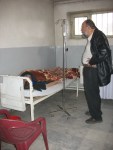
We had not really planned to check the emergency health system quite the way that we did early this morning. An upset stomach turned nasty and at 5 AM Axel was in such a bad shape that a doctor was needed. This was a new experience and one we had not sufficiently researched while he was healthy.

The dispatcher, whose English is OK but not enough for emergencies like that, did not have the necessary information, or, if he had, didn’t know it. I called one of my Afghan staff who is a doctor and asked if he knew of a good doctor classmate or friend who could come to the house and administer IV fluids? He counseled me to dress the patient while he’d call the dispatcher and get a car over to take us to the nearest emergency room. I saw Axel cringe. Here hospitals are not really the place to go to when what you need is expert care.

Luck, or rather bad luck had it that just when we arrived at the main road, at 5:30 AM, Parliament, which is in our neighborhood, came back from recess. A long line of cars and police cars with flashing blue lights and tons of heavily armed men guarded all roads within a quarter mile of the parliament buildings.

Even sick people were not let through and we bumped over unpaved back roads to the entrance of the Cure Hospital which I had always supposed what the place for foreigners to go to. But when we arrived the entire hospital was dark and the reception area without any signs of life. There is no such thing as night duty – something we take for granted in the US or Europe.

After some time we spotted a sleeping boy. We woke him but he refused to find us a doctor because we did not have a contract. Phone calls with one of our own doctors made no difference and we hoisted Axel back in the car and drove, once again via bumpy back roads to the next hospital, Istiqlal, which had the lights on and people walking about.

Our driver disappeared inside and came out after about 10 minutes with a doctor on duty. He checked Axel’s vital signs (OK) and ordered an ECG and gave the driver a prescription for various drugs. With IV fluids in third place I decided it was time to call my colleague Steve to get someone who knew about medicine to oversee the treatment plan. And so Steve was awakened and summoned to Axel’s bed.

1 liter of IV fluids later (I always go home when the bottle is empty, quipped Axel, noticeably better) he was released. I asked where to settle the bill but there was no bill; compliments of the government of Afghanistan. This is the irony: the Afghan government is feverishly trying to show its population that ‘government works for them.’ It did for us.

The IV fluids were probably a gift from the Italian government; the medicines were our own to purchase but Steve decided Axel did not need these. Prescribing drugs, preferably antibiotics, is expected from doctors. Steve used all his tact to counter the doctor’s orders, who gave in and cancelled the prescriptions and then asked for a job.

It took us another hour to inch our way back home through the congested back roads. Steve walked ahead of us to a pharmacy to buy a bunch of Oral Rehydration Solution packets (10 cents each) so we could complete the entire treatment of fluid replenishment (3 liters) and keep a small stock for future GI mishaps.

And so, instead of our Saturday plans of shopping and a visit to the bird bazaar I got to contemplate hospital emergency care in Kabul city, something that is badly needed and that we are working on with US taxpayers’ dollars.

Rest

It was a balmy spring day in Kabul today. Early in the morning I sat outside on the terrace for the first time in weeks, studying my Dari lessons in the warm late winter sun.

Together with the three current residents of Guesthouse zero we went for our usual Friday outing to Baghe-e-bala. We were once again let into the Bagh-e-bala pleasure palace and climbed to the roof with its great views over the North-eastern part of the city. In the balmy spring weather I could have stayed there for hours – there is so much to see from there.

After our walk we splurged at the Intercon hotel for one of the better lunch buffets in town; pricey here but very reasonable for American standards. We invited our guard and driver to sit down and help themselves. They piled up a mini buffet for the two of them, an amount of food I couldn’t imagine they could eat but they did. We calculated that this meal cost about 20 times what they would spend on a lunch.

After lunch the driver dropped the guys off in Shar-e-nao while I went to Wazir Akbar Khan for my weekly Thai massage. My continuing shoulder problems produce all sort of muscle and tendon compensations that mess up my upper back big time. The weekly massage helps.

Afterwards I joined the men on Chicken Street and found them on the second floor of Hamid’s rug shop amidst piles of the most amazing carpets; Axel busy learning the language of carpets and Peter, a carpet connoisseur, pointing out things that are worth learning.

For now we are just looking and seeing what is there. We think we have all the time in the world.

Back home we found that our new house mate, Julie, had already arrived. She is here for a two week consultancy on strategic leadership communications. The strategic communications part will be the easy part of the assignment, the leadership piece will be harder since things are a little in flux at the top. But at least we have an appointment on Monday with what is currently the leadership, so that is promising.

Coalition force

We are now getting the English language Afghanistan Times delivered at our workplace, one for each guesthouse. The masthead promises ‘eye on the news’ that is ‘truthful, factual and unbiased.’ It is also a source for positive stories about Afghanistan, one of the few in print. That is why we requested a subscription.

Today I started coalition building in our own organization by calling all the female staff (all 14 of the 225 staff in total – a sorry state I hope to change). We are in the process of creating child care on the premises and we brainstormed today, in Dari and English, on how to celebrate International Women’s Day – a day not celebrated at MSH/Afghanistan since 2004.

Apparently it required the presence of a ‘Gender Specialist.’ With the gender specialist (my former colleague Miho from Japan) gone, the celebrations stopped. This is a problem with specialization and making the gender awareness a job of a specialist.

Last summer I sat in on a meeting with a bunch of male Anglos (US, Australia and Britain), some of them consultants, some colleagues, as well as some male Afghan colleagues. I was the only woman. No sooner had someone uttered the word gender or all eyes were on me, the assumption that the token woman must therefore be the gender specialist. Don’t get me going on this.

Our ‘MSH/Afghanistan Women Unite!’ meeting, chaired by one of my more promising young female staff, confirmed how badly coalitions are needed. I noticed how powerless the women felt and how unacknowledged and unrecognized. This is the problem with being a victim: you give all your power away.

Although it is generally true that Afghan women got dealt a lousy hand, I do believe that some of the victimization is self imposed: no one took their scarf off in our all-female meeting; no one is stepping out from behind the curtains of the musty light-less women’s dining closet. I don’t hear anyone say: we won’t take this any longer. I am the one saying it, maybe because I can and they feel they cannot.

So today was a first step – I learned some things and they learned some things too. Everyone got a job: looking for images and stories of inspiring Afghan women we can parade in front of our men, a quiz to test our staff’s knowledge about women’s status here in Afghanistan, some poetry from famous female poets, a short video and maybe individual testimonials. We will meet again next week – that’s a least a small victory.

Fish and other desires

Today we had lunch in local Afghan restaurant while we killed time in between a ministry meeting and our weekly meeting in the US government compound. Between the four of us we ate 2 kilos of the most delicious fried fish, a real treat in this landlocked country. The hot fish was sprinkled with a tasty spice mixture consisting of salt, dried chili pepper, cumin, coriander seeds and the powder made from green (unripe) grapes.

The name of the restaurant is Colbah Arman which our Afghan colleagues translated loosely as ‘the hut where you fulfill your greatest desires.’ Steve and I thought of something else than what our colleagues explained the words meant: a place where you meet with friends and enjoy good conversation and a good meal.

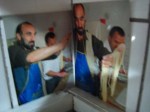
Talking about desire, while removing the pasta making machine from its box, yesterday, the cook and housekeeper must have discovered the instruction booklet that came with it. Its front page features a good looking young women with as her only piece of clothing, if you could call it that, a shawl made out of pasta (presumably created with the past machine) that is fringed at the bottom (something the pasta machine can also do), entirely covering the nakedness of her upper body.

They had stuck the picture up on the wall, as if a pin-up girl, above the knife block and the espresso machine, wedged between the wall and one of the cabinets. Right below it they stuck the two pictures Axel had made of them making the past (fully clothed). When I came home at the end of the day, the picture was still wedged between the wall and the cabinet, but pushed in enough that you couldn’t anymore see her pasta outfit or a hint of what the pasta covered.


December 2025
M T W T F S S
1234567
891011121314
15161718192021
22232425262728
293031  

Categories

Blog Stats

  • 136,984 hits

Enter your email address to follow this blog and receive notifications of new posts by email.

Join 76 other subscribers