Posts Tagged 'Afghanistan'


Two years and counting

Today is the second year since our miraculous survival in that pond at the end of the Gardner municipal airport’s runway 36. We plan to celebrate it in style, in a nice restaurant someplace in town.

Yesterday Axel was introduced to my new boss and colleagues and the compound where MSH is housed, a 2 minute ride around the corner. We are not allowed to walk which is beginning to hit Axel. But one of our Indian colleagues who shares the guesthouse with us went for a walk downtown. We don’t know whether he can do that because he looks more like people here or whether that part of town is considered safe. But of course what is safe one day can suddenly become unsafe.

We received an extra detailed security briefing, one that I now know by heart, for Axel’s sake, while sitting in between a revolver on my right and the TV showing the latest bad news from Afghanistan at the other side of the room. Yet we are quite comfortable here. The security people know what they are doing and have been with MSH for a long time. Of course you can always be at the wrong place at the wrong time, but you can do that anywhere in the world even in places that are certified as safe.

We are beginning to get invitations to people’s places, from the Afghan intelligentsia that we are networking our way into thanks to Ghia from Massachusetts, who knows many Afghans. We are very grateful for these contacts with interesting, bright and courageous people who probably know others like that. It’s a good start.

At noontime we went home for a quite lunch together and then a long nap. I am having some sort of allergic reaction to either the dust or dry air, producing many sniffles, much coughing and red eyes. Since most of my colleagues are either in Bamiyan or Herat there is no rush to be in the office so I can take it easy. Today it will get busier as people will be trickling back in and tomorrow there will be a workshop that I am to play an, as yet to be identified role in.

Guesthouse zero now has plastic garden furniture. Axel dusted it off and we sat on the terrace enjoying the beautiful afternoon, the roses, the grapes dangling in bountiful clusters from the arbor, reading, while drinking our pretend gin tonics (soda water with lime).

We are contemplating our living options. One is to move into the entire second floor of the guesthouse I have been staying in for my last few trips. it has 3 rooms, 2 bathrooms and a small kitchen, a balcony and a roof terrace from which we can look down on the street and into the compound of the Ariana broadcasting corporation.

With a good cleaning and a replacement of ugly curtains and lamps, we could make this into a pretty nice place that is already fully staffed and furnished. We would be living with one other permanent staff, Steve, and then the transients, consultants who come and go and always include interesting people. Right now these transients include an Indian, a Rwandan, a Virginian, a New Mexican, a Bostonian and us. Tomorrow a Nepali will join the team.

We talked with Sita on Skype after discovering on facebook that she had been in the emergency room for an accidental stab with an exacto knife, exactly into a major artery. Seeing a picture of Sita, eyes closed, in a bloody hospital bed on facebook shook us up quite a bit. When we discovered it she was already on the mend, sleeping soundly at home with hero Jim by her side.

When we talked at the end of our day, the beginning of hers, she described the scene as fit for a horror movie with blood pulsing out of her arteries. We were glad she lives close to a good hospital; as if I needed a reminder that such things are not to be taken for granted in this country. Here she would probably have died as so many others do for much less spectacular afflictions. This and our recovery from the crash deserve an ‘alhamdulillah,’ no matter what Richard Dawkins says. We are very grateful.
Hot, dry and lovely

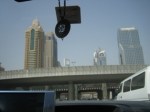
We arrived together in Kabul in the middle of Sunday afternoon. First we were taken to the new terminal that has just been put in use after endless delays. Then, after waiting for the SUV cavalcade of the minister of finance to clear out, we were driven through the hot, dry and dusty city to our new temporary home at the other side of town. Axel has concluded that Kabul had not changed that much in 31 years. But he hasn’t seen the mega fortresses of the US and UN yet.

We were taken to guesthouse 0, my usual lodgings and, to my great surprise, to the room I always stay in. It had been transformed into a cozy lovers nest with a double bed and exotic wall hangings, carpets and objects from all over Central Asia, small but quite lovely (photos to follow). I am still trying to figure who I have to thank for this.

While in Dubai the air was so humid that our eyeglasses fog up the moment we left the air conditioned inside. Here in Kabul the air here is so dry that it takes all the moisture out of your body in no time. It is a bit of an adjustment to go from cool and wet Addis Ababa, through hot and humid Dubai to hot and dry Kabul; much wheezing, sniffing and coughing.

As if to remind me of Addis, the power cycled on and off as soon as it got dark, requiring each time to reset the airco manually – a major pain. Eventually the MSH generator took over and allowed for a fairly good night.

We are lodged here with a whole bunch of pharmacists (druggies we call them) and Sallie Craig, the only other woman. She’s leaving in a few days. I requested that her place be taken by Maria Pia so that there is at least one other woman in the house. That would be nice since I am going to be around men at work all the time.

Maria Pia is about to take a young Afghan kid home with her to Cambridge with his caretaker and so she is also going through some major life changes, just like me. We like to hang out together while we can and talk about such things. Once I am ensconced in Afghanistan and she in Cambridge with her new small family, we won’t be seeing each much.

Hot and cold

Steve counts the number of check-points from our guesthouse to our assigned seats in the plane. There are 18 for males, fewer for females – we are not frisked as often. The only real security check was done by people from UAE, quite thorough compared to all the previous Afghan ‘checks.’ The latter are essentially forms of employment and opportunities for bribes.

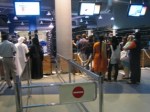
The UAE check is a new step in the process, at the very end when we have already boarded a bus thinking that we are going to the plane. But we are not. We are taken to the new terminal that has not opened yet, even though it should have, months ago. While we stand in line, dogs are led into our bus – bomb sniffing dogs – this is not an agricultural inspection. I like it, although I wonder why the dogs look so skinny. I can see their ribs. In this country dogs are usually not man’s best friend.

While I sat in on the staff meeting of the general directorate for health I heard about an imminent campaign against dogs – there are many cases of rabies reported and the ministry has to act. The department chief in charge of this operation has been working with the Kabul municipal authorities to get the campaign organized. He lists the resources they need: plastic bags, gloves and strychnine as well as a bunch of vehicles. The dog catchers will swarm out over the city all at once and drive the stray dogs into corners. That is, I suppose where the strychnine is administered. I try to imagine the operation, the many dead dogs and the strychnine – it has all the makings of a good detective story.

The pilot of the plane is from Denmark and I must admit it made me feel better. He does turn right after takeoff and circles to gain altitude – as he should. The views are spectacular – blue skies and snow-covered mountains everywhere, range after range, reaching into the far corners of Central Asia.

A taped message in Arabic is played before we take off. I understand enough to know that it’s a prayer, asking for God’s protection. I hope it covers us infidels as well – we are after all in the same boat so to speak. In English we are simply greeted – hello, welcome aboard, hope you have a nice journey, thank you for flying Safi Airways.

The pilot tells us that the temperatures in Dubai are between 30 (early morning) and 40 (mid-day) degrees. I am slowly peeling off layers and headscarves – in the UAE they don’t seem to mind the look of female skin.

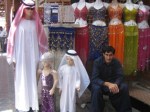
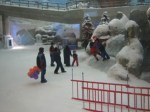
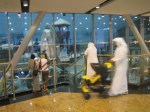
We drop our baggage off at the luxurious hotel and take a taxi to the creek where we board one of the countless small ferries to my favorite restaurant that is built over the water on the other side. It’s hot but the breeze keeps us comfortable. After lunch we take a taxi to the Emirates Mall where we check out the ski slope – a truly bizarre place full of pricy eating establishments and ice cream stores. One is called ‘the marble slab’ – predicting where you will end up if you eat too much of their ice-cold confections.

You can watch the ski fun from the bottom of the slope, the middle and the top depending on which floor you are at. If you want to get onto the slope you have to pay a considerable amount of money, don a rented ski suit (it’s cold on the slopes) and put on rented snow or ski boots. There’s even a store that sells skis, snowboards, ski clothes and other cold weather stuff next to the entrance.

The entrance fee is lower if you only want to wander around at the bottom of the slope and watch the small kids slide around. We spot a woman who wears a black burka over a bulky winter coat, complete with black headdress, a reminder that we are deep inside the Arab world.

Packing up and crossing off

Today has been a very intense day with long to do lists that could not be postponed, especially since I will be on vacation as soon as I land in Boston. There were more meetings, debriefings, feedback session, frank talk about things that disappointed or surprised me and attempts to reconcile various versions that different people describe to me of the same event or situation. I am still reconnecting the system to itself on my way out; there is much still to be done.

And then it was time to pack. In the process of opening suitcases and bags I discovered a small bottle of cognac that I had pocketed on the way over in one of the planes. It helped with the packing. The rugs for Sita (a Qala-i-Nao kilim and a Baluchi carpet) are packed in MPs duffelbag (allowing her to travel back with carry on only) which will be inconvenient until they are checked in in Dubai. I am glad I am traveling with Steve as getting on the plane in Kabul is a pain in the neck with too many controls and checkpoints and dragging heavy luggage around. He will have his share of heavy luggage but at least we can commiserate together.

I am so dead tired that I have no energy to write other than that this has been a great trip; I have met wonderful people; working here is hard but rewarding and despite the ugliness of war, the place is beautiful and I am drawn here in ways I am not to other places. Maybe that is because Axel and I became a couple here.

The sky today was deep blue; the roses are out and the grapes are recognizable as baby grapes, The mountains on one side of the city are still covered in snow reminding of winter while on the other side of the city the harsh mountains are softened by a light green veneer that says it is spring.

I am not sure when I will be back as this depends on other trips that are on the horizon. But it will be sooner than 6 months from now – such a long hiatus did not work, that is obvious. There are dynamics at work that require more frequent trips. I actually welcome that – it will allow for more and better connections.

First round of goodbyes

I am seeing from the other side what it takes to get the necessary papers for study abroad, even if it is only a four-week course. My colleague has been working for weeks now on getting the necessary papers to obtain other necessary papers to obtain the coveted visa stamp in his passport. It’s a daunting task that we would mostly acocmplish by telephone and fax. But here it requires going places and sitting in waiting rooms for hours. The to-do list is long and would faze even the most committed student. It all seemed so simple from the receiving end. I have a new appreciation for the hoops that foreign students who come to Boston University have had to jump through.

And so I was on my own while he was in hot pursuit of more signatures. I took the shuttle to the ministry where I now know the female checkpoint guard who wanted my red dress. I can find my way around without Dr. Ali and actually move much faster through the courty than when he is by my side. I find the office where the internal DG staff meeting is held which is about to start, right on time. I am to be a fly on the wall – which I can even say in Dari: magas ba dewal hastam.

Two people from the European Union are seated at the meeting table, the chief sits behind his desk and the rest, his direct reports or their deputies, sit behind the large table or on chairs that are pushed against the wall. It is crowded and sort of intimate. I find a chair in the furthest corner and try to be inconspicuous. I had not intended to be on the agenda but when the meeting is nearly over I am given the floor, introduced as ‘her excellency.’

I know one of the European consultants from my previous trip but not the other. So I speak carefully to avoid stepping on toes or give the slightest hint that I am encroaching on another donor’s territory. I am after all from the American camp.

I introduce myself as a psychologist and explain that my work is about group dynamics, rather than planning. This is a safe; I have not met anyone who explicitly deals with this part of organizational life and there aren’t many ‘rawanshenasa’ around, as my profession is called in Dari.

After the meeting and before I start my rounds of goodbyes I check out the newly renovated unit where two of our expat staff and a large group of Afghan consultants we have hired are embedded to support the ministry’s procurement and contracting work that involves significant amounts of dollars. I come to see how they do the ’embedding’ part. The place is clean, freshly painted and an oasis in the otherwise dingy and dark looking main building of the ministry.

I want to learn from them how we can make the move for the team I work with successful. Unfortunately, for the next batch there aren’t any obviously places to sit, or, even better, empty offices; there is no internet and the toilets are dirty. How this is all going to be worked out is unclear.

I visit the offices of the various officials I have worked with over the last 2 weeks and bid them farewell. It’s a little difficult because the work I did is far from complete – processes that take time, transformations (if they are possible at all) that cannot be orchestrated in half day conversations conducted twice a year.

When we get home we pour ourselves gin tonics with the complements of Steve and sit in the afternoon sun on the steps of Guesthouse 0 and catch up on each others’ workdays with a little bit of gossip thrown in for good measure. Dinner is of the ‘nuke yourself’ variety, with everyone serving him or herself from various newly made and old dishes and then putting them in the microwave one by one – and so we are a little out of sync when we eat but desert gets us aligned again with its many choices (fruit, cake, ice cream) – we leave a little bit of ice cream for a midnight snack for Steve.

Women, wives and midwives

MP left before I woke up and the house is a little empty without her. I had breakfast with Janneke who decided to move into guesthouse across the yard in the large and airy room that MP just vacated. Although it is our weekend, everyone is planning to spend most of the day working. Only Steve and I have planned an interruption: he for a haircut and I for a lunch with two young Afghan women I met in Dhaka in December.

Sabera has invited me for lunch to her house. She is employed as a midwife by a sister organization of MSH and also in charge of communication of the Afghan Midwifery Association. There are about 2000 or so midwives in this country where men cannot assist in births and so the numbers need to increase a lot.

Sabera says she doesn’t like to do clinical work because basic supplies are lacking and babies and mothers die because of that – so it can be a very sad profession. Instead she works on policy and programmatic aspects of midwifery education in Afghanistan. Sabera’s fellow midwife Victoria, who was also in Dhaka and who I thought resembled Nuha (Nuha disagreed) is a practicing midwife at one of the hospitals in Kabul – she’s joining us for lunch as well.

Although Sabera’s house is not that far from ours, the MSH driver could not find it. There are no street names (and even if there were, they tend not to be used). As a result it took awhile to get there, with the driver calling Sabera on my cell phone every few hundred yards for progressive instructions.

I loved being lost in the popular neighborhood with its one-storied houses and tiny shops. I would have liked to get out and walk around and poke my nose around the high mud-brick walls to see the gardens hidden behind them but all that is forbidden by our security men, so I feast my eyes and hope we stay lost a bit longer.

Sabera’s house is enormous. Scaffolding surrounds the front of the house where workmen are redoing the brickwork on the façade. Apparently this is the third time in three years this is done and each time, in spite of having bought the most expensive materials, the bricks disintegrate or fall down. It had not occurred to me that you could be killed in Kabul because of bricks falling from a house rather than a gunshot or a bomb. Everyone thinks this is very funny.

We talk about (what else) what it is like to be a young woman in Afghanistan (frustrating) and what they are doing to change this. Sabera’s older sister, also in public health, joins us. She is doing research about traditional practices in rural areas that harm women and children. She has some gruesome tales about wife abuse – all in the name of honor – that can only be classified as torture in my book, even more legal than water boarding.

The law that the President has signed into law is a big step back for Afghan women. Although there is some confusion about the exact wording of the law, it is believed to contain articles that force a woman to obtain her husbands’ permission to leave the house, prohibit work, education or visits to the doctor without him, and essentially legalize rape within marriage. Despite much protest from around the world it seems like it’s a done deal. My hostesses are outraged about it; but when even the female parliamentarians feel powerless to stop this, what can you do?

To cheer them out of their depression at this prospect I talk about the fading Y chromosome and that its days are counted. It makes us all feel good for a moment even though 100.000 years has a lot of days in it and a lot of mischief can be done to women during that time.

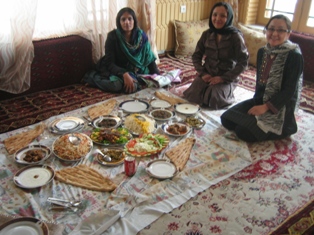
Lunch is served on the ground on top of a plastic tablecloth that is spread out over thick carpets. We sit on carpeted cushions that line the walls and enjoy dishes of saffron rice, Kabuli pilau, salad, vegetables and a delicious Iranian dish with tender meat and cooked greens and beans. KBL_lunch And while we eat everyone is helping me expand my Dari vocabulary.
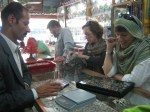
The trip back to the guesthouse is short and straight. Time to go back to work and cross more tasks off my list until Maureen from Canada shows up. We were here together last November and we have some catching up to do. She is joining me in guesthouse 0. For dinner we are four again as MP’s place is now taken by Maureen.

Busy day off

This morning we all slept in and had breakfast in our pajamas. I made thick crepes for breakfast with lemon sugar syrup. At 10 the car came to get us for our weekly ‘airing’ at the German high school tracks. We walked around the tracks for about an hour before going to Chicken Street. This is more or less the Friday morning routine.

As soon as we hit Chicken Street we scattered into various directions, creating a dilemma for the guard sent along with us. In the end he stays with wherever the most of us are. I wonder what he thinks about the seemingly unlimited supply of dollar bills that we, collectively, pull out of our pockets as if they were an ATM.

Steve went off to one place to pay off debts incurred by travelers who never expected to spend so much. He is like our local banker; he would be the most well stocked ATM of us all. After that he goes off on his own and finds more treasures. We never have to wonder where he is because the little street urchins all know him and we can use them as messengers if our phones were ever to fail. Big Steve they call him.

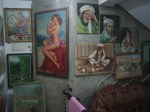
The rest of us went to visit the jewelry store of Mokhtar. There is a downstairs full of rings, earrings and necklaces that go from the gaudy new (as well as some beautiful new) to the most spectacular old jewelry bought up from rural populations from all over Central Asia. It is astonishing how much this region has produced. Upstairs he keeps the really old stuff. As you climb the rickety stairs you pass under an art gallery with awkward art from local artists. It includes a study of a scantily glad woman, right next to fierce looking turbaned men. They are looking in the other direction.

I had memorized where to find the rings that Tessa was interested in by their position in the various boxes that I had sent her pictures of. But the owner had moved and changed the boxes so it took a while to find them. A few were gone, bought by others I suppose, but I found some replacements that I thought she would like.

I was right. “OH MY GOD!!!! THANK YOU!!!!” said the email I got in reply to the photo of the nine rings on my hand, sent to her as soon as I got back home. The bunch included a poison ring (we think), something she wanted but did not mention; how did I know?

When everyone was done and dropped enough dollars in the various little shops to sustain many families for the week, we drove to the Thai restaurant with the orange-pawed fighting dog and the aviary for a Thai lunch. After lunch MP and I were dropped off at the Thai massage place it took us so long to find last week. The rest did some grocery shopping and thenreturned home. We now have ice cream in the freezer – but you have be to be fast or else it is gone.

We were massaged, each on one side of the curtain that partitions the basement, by young, tiny and very strong Thai women. It was like a yoga session. The stretches felt good, albeit a bit painful now and then; it did undo some of the damage of hours and hours of sitting hunched over a computer much every night.

While we were inside a downpour over Kabul turned the streets into muddy rivers floating with garbage and debris. We navigated through the dirty city, past the Kabul zoo where we know the lonely pig is in quarantine somewhere. We would have loved to bring it some edible garbage but the zoo is considered a safety risk so we drove past it.

Although it was my day off, I used the rest of the day to take care of tasks that have come in through email and accumulated into mountains. Most of these tasks have nothing to do with my work here. When I travel like this I end up having two jobs, a day job for my client here and another job after hours for all the people back in the headquarter office (and around the world). I am supposed to be actively coaching teams in Cambodia, Haiti, Pakistan and (lightly) facilitate a virtual worldwide conversation about multi-sector collaboration in addition to completing a third iteration of a book chapter and start writing my current trip report.

I had only part of this done when the car arrived to take us to our farewell dinner for MP who is leaving early tomorrow at some ungodly hour. We picked an Afghan restaurant this time and ordered its ‘Sufi Special’ – a series of courses of small dishes, accompanied by a bottle of red wine, a big treat. We toasted to friendships, good stories, good food and safe returns home.

Afterwards we visited a friend and ex colleague who is living in the house of an ambassador. She is a globetrotting Iranian/American, doctor, writer , musician (and probably much more) who is about to publish her second book. I was sorry to mete her so late in my trip and would love to get to know her better.

At the rather late hours of 11 PM we drove home through a deserted (asleep) Kabul with only men with guns on the street – the people who are there to protect us – that’s the idea. MP sat in the back telling sick jokes from high school, none of which can be repeated here; we laughed until the tears rolled down our cheeks. I wonder what the Afghan driver and guard thought of us; it was probably just as well that they could not understand our rapid fire English.

Conversations

Senior official are very busy here. Yet they will spend hours each week sitting around conference tables waiting for their peers or bosses to arrive. They use the time for small talk, maybe some coordinating and communicating, and I am sure some complaining but I would have to speak a lot better Dari to confirm that. No one checks their watches as we westerners would have done.

I use the waiting time to learn a few more words and try out my Dari on one of the non-English speaking office staff. When I ask for tea and it doesn’t come, I know I need to work on my pronunciation. When it finally comes it is like I passed the orals (with a tangible reward for it).

One of the department heads indicates that he is too busy to attend this meeting and should have sent his deputy. I tell him that I would like him to stay at least for the visioning part. He says that he already has a vision. We spend the next three hours in conversation about the challenges and dilemmas for people at the top. We have a long discussion about power and then they draw their vision, a few under protest. The vision drawings, when put next to each other, produce a fairly complete picture of what the directorate is striving to accomplish. People smile. It is more compelling that the very abstract and boring language that they started with.

The morning serves as a diagnostic for me and as a mirror for the the chief and his department heads. The people who said they would leave because they were too busy for this meeting stayed. I consider this a victory. We don’t get the entire agenda finished and I am not clear how and when to continue our conversation since my departure is in sight. It is now abundantly clear that I cannot do this work if I zip in and out for two weeks every six months.

I ask if I can sit in on the team’s next staff meeting on Sunday. This would provide me with another opportunity to see how they work together and possibly continue our conversation of today. Now that the group has a vision, the next step will be to find out what blocks them from this vision or keeps them stuck in a place they want to leave.

In the afternoon I facilitate another conversation with the technical advisors from the project who will soon leave their comfortable offices at the MSH office and move in with their counterparts in the ministry. It’s a complex undertaking with many unresolved issues, dilemmas, worries and fears. None of their bosses are around, intentionally. The discussions are earnest and frank. It is clear that much needs to be ironed out before the move can actually take place.

When most people have left, Steve and MP congregate in my temporary office. We talk about what we did today in between yawns. It is time to go home, the weekend has started. Only Dr. Ali stays behind to participate in the  worldwide staff meeting in Cambridge where it is 9 in the morning. I had hoped to follow it from the guesthouse but never get the audio right and while messing around with it miss the entire presentation from my colleagues back home I had looked forward to.

Dinner is another slow and wonderful affair with many stories and Janneke’s home cooked nasi goring to complement all the other dishes made by the cook today and yesterday’s leftovers. We have food aplenty.

It’s now the equivalent of Saturday night and so we plan to watch a movie but can’t figure out the video, so we watch the news about Pakistan and Western Afghanistan. As the crow flies these two places that are near but I look at the news as if I am in the US.

Roses and rugby

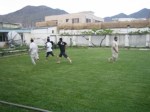
We couldn’t tell whether they were practicing for rugby or football – Afghan men, some in traditional clothing, doing warm up exercises that I have only seen thick-necked Americans do.

After work, now that the weather is nice, some of the men (never women) play sports in the grassy field that belong to the office compound. There is a volleyball/badminton net. Or you can simply run around the perimeter, or shuffle as the case maybe in, in exercise clothes or suit and tie.

MP and I watched the action with one of our colleagues and our conversation veered off into other directions – there is so much to learn for me about this country and there are so many sources of information, expertise and then endless stories; about the time of the Russians, the Mujahideen, the Taliban and whoever is in charge now of one piece or another of the territory. I am reading Barnett Rubin’s The Fragmentation of Afghanistan and recognize Djengis Khan’s Y chromosomes busily at work propagating themselves in the region.

Last night Said and Wafa came to visit and say goodbye to us; another colleague, Douglas, from guesthouse 32, joined us and we had a good time sitting around the big table, telling stories. All the people here, whether they are Afghans or foreigners, have the most amazing collections of stories. The prize-winning story was from Douglas who was a Peace Corps Volunteer in the 60s in the Philippines and told us about the most bizarre burial rituals. He had to wait until everyone had finished eating. It involved oozing bodies that were tied  up into balls and thrown around by bare-chested young men as if it was a basket ball game.

MP and I finally secured appointments for a Thai massage, just in time before MP’s departure on Saturday. We also made plans to visit the poor Afghani pig that has been quarantined in the Kabul zoo but with the recent US-caused deaths in Western Afghanistan we think it is better to keep a low profile this weekend.

I have shifted the focus of my attention to internal matters in the project – mostly orchestrating conversations, here too, to connect the system to itself – it is a bit of a theme, everywhere.

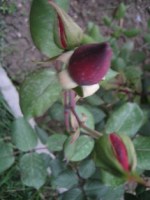
The first rose is out and the grapes are growing like crazy.

Jingle birds

Last night I finally managed to get Skype to work and talk with Axel, rather than me writing and he talking. Getting the settings right for Skype remains a bit of a hit or miss approach as settings appear to change spontaneously.

During the night I dreamt that I was visiting Barak Obama in his home which was a middle class row house and not at all presidential. I remember being surprised how laid back the place was and how easy it was to communicate with him. Having access to the American president in my dream was a whole lot easier than having access to the senior people at the ministry. I would like to sit down with them for a conversation about reconnecting the system to itself – but we don’t seem to be able to secure an appointment.

Today the Kabul provincial team is meeting downstairs in our office for a three day leadership development workshop. The participants are collectvely responsible for healthcare in Kabul province. One would expect this team to have an easier task than the other provincial teams but the opposite is true. Because of the high concentration of NGOs, clinics, hospitals and private health facilities, Kabul is expected to be well provided for. This is true for people who have the means to access these but for the urban poor most of these resources are out of reach. They are worse off than their rural cousins in far flung areas. At least this is what I learn from Steve when he welcomes the participants and opens the workshop.

I am also asked to say a few words and am introduced as Teacher, with a capital T. But now I am not teaching; in fact I am not even coaching. Dr. Ali is lead facilitator, teacher and coach. His team members are from the government – the same two women who have been with us since I arrived. I watch them run the show, from the sidelines. The capacity to run leadership development programs has been successfully transferred and as far as I am concerned, it is sustainable. The facilitators are Afghans and they will remain in Afghanistan. Who employs them or who pays the bill for the workshops does not matter; someone will, for the foreseeable future.

At lunch time MP and I request a car to take us across town to Wazir Akbar Khan. We are looking for the Thai massage salon where I had such a wonderful massage (described in the post Kabuli-Thai). I had misplaced the telephone number and somehow all the women who would have known it have left the country. This is not a place where you can simply look in the phonebook to find an address or phone number. You have to go to the neighborhood and ask around. So that is what we did.

We have set our minds on getting a massage that is long overdue. We stop at a Thai restaurant in the area expecting to get an address and a phonenumber. We do. We decide to stay for lunch. An armed guard with a bullet-proof vest lets us into a small yard populated by a dozens of unusual and colorful pigeons, a large hawk in a cage, an aviary with various small parrots and other colorful birds and small cages with single canaries singing at the top of their lungs.

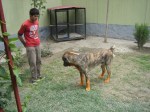
Some of the pigeons have jingle bells on their feet. In the middle of the jingling and chirping menagerie lies an enormous dog with what looks like orange-spray-painted paws and chest. We are told he is a fighting dog. He must have been up fighting all last night because to us he looked like an exhausted friendly giant taking an afternoon nap in the sun.

MP, bird lover, is in seventh heaven. She excitedly points at a carbon copy of her own Diego in the aviary. She stays outside talking with the birds (I think she speaks their language) until the overpriced and not very remarkable Thai food is served. After lunch we find the massage place but it is closed. We will make an appointment tomorrow, for Friday, MP’s last day here.

I observe the rest of the workshop in the afternoon and study more Dari. I am learning the central words that are used in our program and am beginning to recognize enough words that I can sometimes understand the topic that is being discussed. The power of immediate feedback and appreciation makes learning a language in country so much easier than doing this back home. Every new word is greated like it is the greatest victory and people are starting to speak Dari to me, slowly, leading to more new words that are filling up my little notebook. I have many teachers now.


February 2026
M T W T F S S
 1
2345678
9101112131415
16171819202122
232425262728  

Categories

Blog Stats

  • 139,803 hits

Enter your email address to follow this blog and receive notifications of new posts by email.

Join 76 other subscribers