Posts Tagged 'Afghanistan'


Emergent design

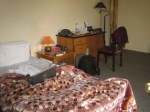
The cold now quickly sucks out the heat in my room during the hours that the electricity is off. The temperature was 11 degrees Celsius when I woke up this morning. Getting out of my warm bed is a little more difficult now. There is nothing I can do about it unless I start using the kerosene stove.

Yesterday was our day off and so I slept in till 7 AM. I checked my mail and Facebook to see what my family members and friends were doing and then crossed the yard to get to the shower. It was nippy outside and I took a very long shower to re-heat myself, practically using up the entire hot water tank. I did some fruitful design thinking while in the shower and by the time I got back to my desk I had made a good start.
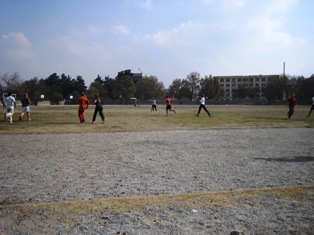
kabulfrisbeeAfter a leisurely breakfast with Steve, both of us in our jammies, we all went to the German high school where they have a track and sports field that is made available to the foreign community between 10 and 12:30 to jog, play Frisbee, soccer or walk in outfits (especially for women) that are not OK outside the school compound. It is a joyful reunion of mostly young foreigners of all nationalities and a place where they can mingle without having to be worried about attracting the attention of bomb throwers.

The school is tucked in between the UNDP and army compounds and heavily protected. Getting to the school entrance is, I imagine, like entering Baghdad’s green zone; it is a heavily fortified battle zone with more tanks and armed soldiers per square inch than anywhere else in the city.

Steve and I opted for the old people’s activity, and walked the tracks while joggers and faster walkers kept overtaking us. We talked about everything and nothing, with a little gossip thrown in here and there for good measure. Contrary to public opinion, men (not just Steve) are just as good at gossip as women. Occasionally we had to duck for an overhead Frisbee with heavily perspiring young men and women dashing after it.
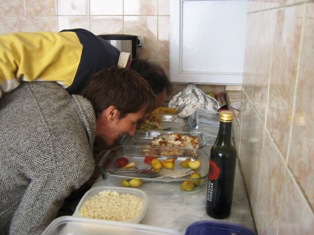
kabulleftovers1Back home it was time for lunch. Steve was about to eat the now two week old spaghetti which had purple spots on it. This did not seem to deter him; it was the smell that finally made him throw it out. We are finally making a dent in the backlog of leftover dishes – some now over a week old. I think we are down to three or four now. Today the cook starts cooking new dishes again so that is how we get behind.

kabulkiteOur next door kite-flying neighbor invited me up on his roof to fly a kite with him. I would have liked to but I declined because I had some serious design work to do. Over the next few hours it slowly emerged out of conversations, reading and old notes. I have something now that is solid enough to start the process that is to, eventually, create a strong team, even if I don’t really have the intact team in the room today, a real possibility.

Maureen and I had more leftovers for dinner (the cook does not come on Fridays) while Steve went to a fundraiser /winners-and-losers party in the US compound. I lent him my Obama button – he had to show everyone that he belonged to the winning group. When he came back he told me most everyone else did as well. He did not see any McCain buttons.

I narrowly escaped two stuff-buying expeditions to Chicken Street over the weekend, Maureen went once and Steve twice. At the high school field we met David, the accountant for the Turquoise Mountain Foundation, which is another handicraft outfit, started by Rory Stewart (the man who walked across Afghanistan in the winter). David was carrying a shopping bag from Holland’s major grocery chain (Albert Heijn) which is why I sought him out, thinking he was Dutch. He wasn’t, but had lived in Amsterdam for some time, hence the bag, and only spoke rudimentary Dutch. Steve wrote down his number – it’s another potential shopping destination for those rare moments we have nothing to do.
Talk like a parrot

Yesterday was all about making plans, a necessary activity dreaded by some, taught by many and botched by even more because it has become such an organizational ritual. Ali prepared the group for the exercise by showing them his unit’s capacity building plan and the resources made available to support the provinces. Some over-enthusiastic participants wanted to elevate our approach (the LDP) to something akin a state religion. They want the tools to be made obligatory, get the government to create LDP policies, create government positions in the provinces, LDP committees and what not. I got worried. I often see this phenomenon where people feel powerless. They demand central government intervention (the archetype of the heroic leader riding in for a rescue), the creation of committees or new staff positions. These things create the illusion of progress; the kind of progress that is evidenced by being able to tick something off your to-do list. Of course it is pseudo progress and the only thing it does is drain scarce resources. I suspect this may explain why central bureaucracies in many developing countries have gotten so bloated. We, the development types, carry much responsibility for that. We have created a monster!

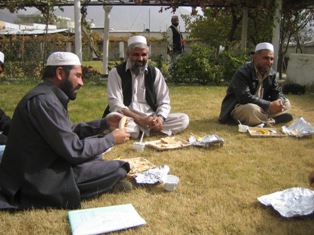
.dinersurlherbe2I am slowly starting to get to know the participants just when they are about to go home. It takes me a while and when you see people only for three days as I did last March, it isn’t enough time. Now I added another three days and I am beginning to find out who is who and from where. I sat with some of the men eating on the grass and we talked about our new (US) President. They asked me what the difference was with Bush (gulp) and why we were all so excited about Obama. When I told them I found Obama inspiring, one responded, “he talks like a parrot.” This, I quickly found out, was considered a compliment

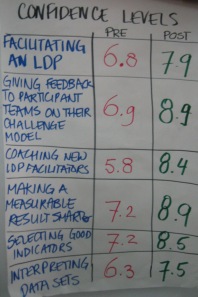
prepostAnd then the workshop was over and everything defaulted to what had become before plus whatever people gained from being here for three days. I know that somewhere in Afghanistan there will be an Open Space session in the near future; hopefully there will be some improved management and leadership (we will wait for the data to support this) and a little more confidence to tackle the enormous challenges ahead. I know that for the group as a whole confidence notched up a little. I already have data for that.

The cold weather has suddenly moved in – the temperature dipped and my dual-mode airco, set to heat, is having a hard time blowing warm air in against the cold air that seeps in through ill fitting doors and windows. Six years ago I arrived here the 16th of November and I have memories of intense cold. Until now it has been like summer. With the cold weather the clouds have also moved in. Gone are the cloudless blue skies. I try not to worry about leaving Kabul airport in the clouds again but it does occupy a piece of my mind.

Luckily I will be very preoccupied with other things till then. On Saturday I am helping one of the director generals develop the rudiments of a team so that he can start to tackle the enormous challenges on his plate together with his direct reports. I have had the most minimal of briefings with him (not with his reports) and suspect I will not know until I see them what exactly they need to be working on. I will have to conduct the retreat on a wing and a prayer, since tomorrow is everyone’s day off.

On Sunday a large event starts in one of the big hotels. Over a hundred people convene to try to solve issues that cannot be solved by any one group alone. I have been asked to facilitate a panel as well as the group work leading up to the panel. The intent is to get the six DGs to make decisions, promises or commitments to actions that will remove obstacles and unclog bottlenecks. The original format was a panel consisting of the DGs (6) facing 34 provincial directors who are asking questions about why things are not moving, with the remaining 100 people watching from the back. Luckily I have been given the freedom to redesign the event to allow for a more consultative approach to problem solving. It is a considerable design challenge given that the point of departure is 12 major problem areas rather than a shared vision.

A place of their own

For a moment the loud thunderclap scared me until Maureen told me it was just that, as we sat around the dinner table. I had not expected thunder and rain. It has been cork dry with bright blue skies until now.

As usual I arrived at the office yesterday a little after 7. Every morning the car with a driver and security escort sits waiting in the driveway, inside the compound – a new security measure, until we emerge from the house. At the office most of the staff arrives between 7 and 7:30.

The first activity in the upstairs ‘capacity building team’ office was a challenge: how can we fit one more person in the (large) bedroom sized office that is already accommodating six small desks, a bunch of bookcases, a kerosene stove and a large meeting table with 5 chairs around it. They tried several scenarios. One involved putting the desks so closely together that the more bulky doctor could only get to his seat by sucking in his belly and slide sideways in between the desks. They finally succeeded with the help of some heavy lifters from the support staff. Moving bookcases provided an opportunity to get rid of years of old flipcharts, file folders and other office debris, a good thing.


The Open Space agenda we had created the day before hung on the walls and everyone organized according to the agenda and joined the group they had signed up for. I joined the group that was proposed by some members of the Kandahar team on ‘Brakedown Management.’ Expecting that I was to be a resource person, or even teach, I quickly discovered that they were fully prepared to teach the session and had come prepared with a session plan, handouts in Dari and Pashto. I asked occasionally for translations and learned that the breakdown they were talking about was about not meeting their own expectations about performance. They illustrated this with a bar graph that dipped.

Participants from Khost, Paktika and Kandahar provinces had signed up for the session, all struggling with major security issues. They explored the notion of a performance breakdown in the context of total societal breakdowns, a hospital falling apart, and travel too dangerous while a measles outbreak was raging in the background. Everything appeared to be breaking or broken already in their provinces.

At lunch I spent some time with the women. In class and during lunch they sit, as they always do, separate from the men; during breaks they stand together. Sometimes I join them. Their English is very good, better than many of the men. They tell me stories about the endless boredom of the Taliban years. They also tell me that they have a long way to go towards fair treatment, “not during my lifetime,” said the one whose only pieces of exposed skin were her hands and her face. They have come to expect and accept that they are not taken seriously.

One of them is a very senior woman in the ministry of health, soft spoken, unassuming. “When we get a big chair (meaning a position of authority) all the men exclaim that we will fail.” Their biggest headaches come from their peers, educated men, and their own husbands. Their biggest supporters are illiterate and uneducated men who appreciate them. Some of the more enlightened men in our workshop, true leaders, are unenlightened when it comes to women, even – or may be especially – their own. One of the star participants in this group has boys studying for degrees and girls married off at a young age – no need to educate them. When I asked why he shrugged his shoulders.

Women have few private spaces in the public arena. In our downstairs office, near the training room is a toilet marked: For Ladies Only. But when you bend down to sit on the toilet your nose is only inches away from a urinal; not even a toilet to call our own. The other toilets in the place are not marked that way; you have to roll up your pant legs and tuck any loose clothing in to stay dry.

Toot and tea

I am drinking endless cups of green tea and eating copious amounts of dried mulberries in the evening, Jon’s farewell gift to me. Dried mulberries are called toot in Dari. He gave me a shopping bag full of toot. This only represented a fraction of what he is taking home to South Africa. That’s what happens when, as a foreigner, you express a desire. As soon as people knew he wanted toot they brought him kilos and kilos of the stuff. I filled a large bowl on the dining room table, emptying only half of the bag. They are a bit like pistachio nuts in that, once you start, it is hard to stop eating them. The tea replaces beer and wine – as we have none here. Green tea most resembles white wine, albeit only in color.

Yesterday we started the three day workshop within half an hour of the established starting time – this was a tremendous improvement over the last time we all met in March. Everyone seemed eager and most were seated at the appointed time except for a few stragglers from the central ministry of health. Some teams had come from very far away. The only missing team was the closest one, from Kabul province.

I was disappointed that the female trainers did not show up. When it comes to women we still have the same 5 women in the workshop we had 6 months ago, less than 10% of the participants – no progress there. On the other hand, the first day of the workshop was orderly chaotic and produced exactly the outcomes we had hoped: much sharing with and learning from each other so that everyone knows what everyone is doing: all this in a room that was entirely filled with large bulky chairs and required much pushing and shoving to get around.

I heard some wonderful stories about the leadership program, how it was being rolled out and how it has changed people’s behavior in clinics and offices. All teams had brought the statistics to prove that these behavior changes actually made a difference for patients. A few people could hardly contain themselves, gushing over with enthusiasm about how they themselves have been affected and how that has spilled over onto others. I am missing a lot of stories and even more nuance because all is done in Dari and I only occasionally ask for translation. The most touching comment was from a colleague in Kandahar, a Taliban-dominated and rather insecure area, who uses our internet site (LeaderNet) to follow virtual events we offer. He prints the material posted on the site and distributes it among his counterparts to make them think about changing one thing or another, or introducing something new. A constant big grin on his face compensates for anything that is not going as planned.

The central team bravely sat in a fishbowl and reviewed their work in front of all their underlings, exposing, with grace, both their clean and dirty laundry; not very Afghan someone commented. The participants listened intently and then pointed out that the central folks were not a coherent team, which was true, and then everyone laughed and the chief took his marching orders from this.

In the afternoon Ali and I presented the idea of Open Space and watched the incredulity on people’s faces change into excitement. Once they understood the idea they put together a good program for themselves for the next day. It includes workshops on priority setting and root cause analysis tools, how to expand and sustain the leadership program, how to inspire people and work through breakdowns and how to make a good plan.

I find myself engaged in a type of improvisation that is fun rather than stressful. There is a saying I learned from a Brazilian that goes like this: In the end, everything works out. If it hasn’t worked out yet, that’s because you haven’t gotten to the end. I am optimistic that at the end of today we can once again say that we accomplished what we set out to get: confidence up in conducting and expanding the leadership program, further into the provinces and its health facilitaties.

I spent some more time in the morning with Jon, downloading as much as I could from his vast store of public health knowledge. Coupled with his deep concern for those people who are always left out of the equation, he is teaching me much about questioning policies and not taking anything for granted or at face value. I still have a lot to learn about the subject but lodging with three public health physicians for a week helps.

A few hours after I said goodbye to Jon he walked back into the office because his flight was cancelled and someone had forgotten to tell him. That also meant he missed his onward flight to Cape Town. He took it all in stride and we got to have him for another evening of stories. The cook had made fresh meals and either thrown away some of the old meals or consolidated them into ‘mixed platters.’ The spaghetti is still there but no one but Steve touches it anymore and it has become a bit of a joke. The new meal was good and the apple-walnut-cream desert even better. It looked like it had come straight out of my 1950s Betty Crocker cookbook (“Romantic Dinners for Two”) that I bought in Beirut in 1978 when I wanted to show my culinary skills to my new American man.

Stories

Yesterday I introduced Owen Harrison’s Open Space Methodology as a suggestion for how to handle unknown refresher training needs in the workshop that starts today. My counterpart Ali jumped on it – there was some skepticism among the others (but what if they pick a topic and there is no expert in the room?) but they are all willing to give it a try. We had more team meetings, both at the project office and at the ministry to help people digest this newfangled design I am proposing. The nice thing about the design it that it requires very little, if any, facilitator preparation; instead, facilitators give mostly instructions and model what we want participants to do. After that they become participants along with the other 70 people who are, supposedly, coming in today. I think the design is tight enough that it will essentially facilitate itself.

All will be done in Dari so I get to watch whether the process is working the way it is supposed to – it needs few words on my part and the participants will be active creators of their own learning. At the ministry I was able to get two young female trainers invited to our workshop so that the official facilitation team is not entirely male (they only agreed to observe). They are doctors (I learned today that there are no nurses employed at the ministry of health). It pains me to see young doctors like that doing essentially secretarial work, tasks for which they were not trained, while they ought to be in the field engaging with mothers about proper health habits, vaccinations and other preventive health for which there are simple solutions that even very young and experienced doctors can learn to do (and non doctors as well, but that is another battle).

On our way out of the ministry we met a ‘gender specialist’ who works for the UN. Those sorts of jobs are usually given to a woman. The cynical part of me thinks that this is because they tend to be low status and not much of a risk (of women taking over!). But this was a man (a doctor no less). I asked him why his organization had not recruited a woman and he replied that men know about gender too. That sounds great in the abstract but I can’t help but think that a woman in that position would handle issues about gender balance somewhat differently – and having a gender unit that cannot staff itself in a gender-balanced way makes it a bit of a joke. At moments like this I feel ashamed to be part of this enormous development and humanitarian aid industry because it is very good at making work for itself, rewarding itself nicely and paying lip service to the real work that needs to be done. I can only hope that, on balance, the work of most people employed in this industry does make a difference. Cynicism is not good for the soul.

Working here is an emotional roller coaster ride, highs and moments of great pride and hope suddenly make way for a sense of hopelessness and deep sadness. I assume that for each heart breaking story I hear there are thousands I don’t hear. On our way out of the ministry of health we met a young doctor who, Ali told me, spent three and a half month in jail under the Taliban because a (Taliban) child under his care died. His jail time left him diminished as Ali explained. The man walks around with his resume under his arm – unemployed – in this country where women and children die by the hundreds of thousands for want of medical care – mind you, what is needed is not medical specialists, but people who can deliver simple live saving primary health care. This is what this doctor could (and did) deliver in the rural areas.

The sad stories are juxtaposed by joyful images such as my neighbor – a grown up – who was enjoying an after-work kite flying diversion standing on his rooftop when I got home. He was in deep concentration when the kite plunged down and grinning ear to ear when it was soaring. It is a good image for my experience here in Kabul.

I am now officially registered with the ministry of interior – it is a new rule imposed on foreigners, supposedly for our safety. It requires two passport pictures and a trip to the ministry of the interior, filling in forms, handing over a passport, then walking up to an upstairs office where a higher up official stamps a form and a card which we keep till we leave. The process was amazingly streamlined – about 15 minutes – and kept about 4 people busy writing and stamping. The most time consuming part was the one hour drive to take us there and back.

Jon is leaving today. We celebrated our last dinner with him last night, eating once more from the 8 leftover dishes, some now over a week old. I was about to throw the spaghetti out but Steve wouldn’t hear of it and had some more. Maureen joined us just in time for storytelling, one of the favorite parts of my days here, after dinner when no one wants to go up to their room to work. Somehow, after stories about the early HIV days in Haiti and New York the conversation degenerated into in competing stories about sludge, fecal matter, shit eating pigs and memorable latrine adventures from all over the world. This is what I love about being here – the sitting around the table and the telling of (public health) stories – you only get those when you travel or live together.

Full and clear

Yesterday was a full day, starting with my appearance at the office and making the rounds to say hello to all and distribute gifts (mostly Dutch cookies and chocolate). I paid my guesthouse bill and arranged for my return ticket to Dubai on the 20th.

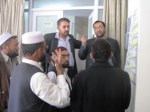
I met briefly with my colleagues, two of them new, who are under some pressure to roll out the leadership program and produce the results that are warranted by the investments made. A little later we left for the ministry of health for what was called an alignment/consensus building meeting. The latter appears to be a popular name for a meeting and I wonder whether that is a literal translation or an imported term.

We convened at the institute for public health with the chiefs or delegates of various NGOs, mostly local. The Institute is the government structure that is assimilating and incorporating our the leadership program in its portfolio of training courses. This will ensure its sustainability.

Most of the training room was taken up by one gigantic boardroom type table of dark shiny wood with soft executive chairs from China around it that showed the familiar wear and tear of Chinese goods. The decorations were quite fantastic and consisted of elaborate draperies (a local specialty it appears; this included drapes over the projection screen. Along its center line, the table – Chinese also no doubt – had one long indentation that was filled with a colorful plastic flower arrangement.kabulnov2008_aphi

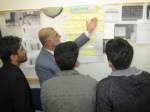
The deliberations were mostly held in Dari and so I concentrated on watching; asking for periodic translations when I had an inkling that the meeting needed more focus. Focus will be the magic word for the next two weeks I think. We listened to two graduates from the program who showcased their transformation armed with line and bar charts. They had come out on top of a competition for best performer and their reward was a trip to Kabul (from Herat and Bamiyan) and a wallchart featuring Afghan teams in one corner. Applause.

The intent of the meeting was to get the NGOs more involved in rolling out the leadership program. Whether we succeeded remains to be seen but we think we planted some seeds and we expect several inquiries to explore things further. Questions will, no doubt, concern financial support and some of that can probably be provided as long as it shows up in a plan – another assignment for this week. The project is thinking about the post project period and needs to make sure its current technical and process contributions will be taken over by local actors after it closes its books.

In the afternoon I had my briefing with the Security Chief which I have described in one of my posts in March of this year. It was more or less the same – a three-way conversation with me not knowing whether to look at the Dari-speaking Chief or his interpreter. It is hard to concentrate when you speak with the person who is not addressing you. My eyes would sometimes drift to the TV that was on, in back of them. At one point I hoped I was seeing some coded information that informed our chief about action but it turned out to be a commercial. Later at dinner I learned from my colleagues that I had missed some action; an “armed’ UN truck was stolen from the airport – empty. People thought it was funny – apparently they don’t mind seeing the UN put in their place. There are rivalries among helpers here, as one could expect, and between helpers and locals. International emergency assistance is big business, and if it is not status and recognition, than it is money that catches people’s fancy.

Back home we found new platters of food waiting for us in the oven, in addition to the other 8 dishes already prepared over the last week and not yet finished, combining into a veritable buffet dinner. Steve likes the very old dishes; I picked something a little fresher, essentially what I had yesterday and Maureen had yet another combination. The deserts are also piling up: carrot cake, honey-nut bananas, yoghurt and the chocolate I brought along.

After dinner Jon gave me an elaborate briefing on BRAC’s school of public health. It is a relatively new program that Jon midwived with a few other committed souls. It is a fascinating story, yet another one, of BRAC establishing its own of anything that it needs to have in order to conduct its essential development work – so why not go into tertiary education. I have a better sense now of the characters I will meet.

Bedtime is not entirely a voluntary thing – I stay up until the generator is shut off, a little after midnight and I am woken up when it is turned on again and all the lights and noise wake me up at about 5:30 AM.

Trustfall

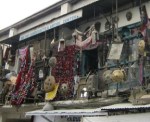
I had my last morning of leisure before the work started with a visit to the ministry of health in the afternoon. Government officials have Thursday afternoon and Friday off while our MSH colleagues have Friday and Saturday off. Dr. Ali picked me up at the guesthouse after Steve, Maureen and I went for a quick visit to Chicken Street which was off limits last time I was here. Steve took us to his carpet man Mr. Smiley who smiled indeed when he saw us come in, knowing that Steve cannot leave without buy adding something to his collection. I went there naively not planning to buy anything and then got seduced into getting a rug, a large shawl and some embroidered belts – which left me in debt to Steve and with just a little of the American cash that has to see me through my two week stay. But I suspected it might well be my only free time and I did not want to have any regrets.

I met my various counterparts and clients at the ministry. We came in through back door because the main entrance is now off limits after the Ministry of Culture was invaded by armed men with sinister plans, who wrecked much havoc some time ago. In 2006 the main entrance hall was newly painted and looked as nice as a cavernous entrance hall of a government building can look. The back entrance was not pretty and as a believer in pattern language, had all the wrong patterns: those that suck energy out of you when you enter rather than inspire one to do the difficult work that needs to be done.

Much of the conversations took place in Dari. As a result my interactions are sometimes like one big trust fall. I wished I spoke the language but I am never here long enough to engage in serious study. I know I miss a lot as a result and when I speak in English I also know that much is missed. But somehow, something gets across and we get on with the work.

That work consists of three events that have to produce lasting outcomes, measured as engagement and implementable plans to roll out the leadership program in ways that will maintain quality and an emphasis on measurable results such as safe deliveries, family planning, vaccinations, TB detections, etc.

The DG of Health Services sketched out the enormous task before him and the pressures he is under. He asked for help getting his team in gear to support him in pulling something off that seems rather impossible at the moment. He knows what he is up against. Over the last few years he crisscrossed the country and reported on the enormous gaps between policies made at the top and the daily realities way out in the countryside; the grocery store owner who only had a bag of 7 kilos of sugar which had been untouched for over half a year because no one could afford to buy; the empty orchards; the curative health professionals who looked down on anyone engaged in preventive public health, essentially an exercise in producing non-event; a hard sell in any part of the world, but especially here.

The city was busy by the time we left, with everyone else trying to get home. Our driver followed a convoy of VIPs which got us swiftly through a jam packed square until we told him that we preferred being stuck rather than being in the wake of a potential target. Once never knows here and so we melded back into the crowd of honking cars and undisciplined pedestrians. Despite the threats and the occasional real scares, life here goes on as it does in any other chaotic and conflict ridden place. People have to earn a living and buy their food. We remember that from Beirut.

Tucked in

After I ate too many stroopwafels, serving as early breakfast, I fell asleep again for the other part of the night that I missed and woke up at 11:00 AM. And then it was weekend. The house was empty, my housemates off to whatever they do on Friday mornings. This turned out to be running the tracks at the German school.

Steve came in a bit later with a large pack of ice cream that needed to be eaten or put in the freeze (he did both) after which we left for the Kabul museum to join my other housemates. It has been repainted and restored after much damage and looting which I read about in the Bactrian Gold exhibit that I saw in DC earlier this year. The museum, which used to be crowded with stuff, is now empty with mostly large items that, I suppose, weren’t easily carted off. One of the exhibits was a series of large photos of the covered bazaar in Khulm which I remember from my hippie-trail-tracking days with Axel. It no longer exists as it was destroyed during one or the other of Afghanistan’s many armed conflicts. Seeing the photos flooded me with memories of the trip some 30 years ago. Somewhere we have our own pictures of this extraordinary place, but I bought a set of poor quality small reprints that were made of the large photos.

Back home we all went to our various rooms to nap, read, work, email and facebook. I worked my way through a book about senior leadership teams that cemented my wish to do more on that level and figure out how. I hope to get a chance here with the DG for Health Services and his team of direct reports, a request that was added to my scope of work at the last minute, in addition to all the other stuff. It’s the task I am most keen about.

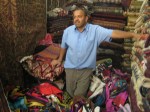
Before we had dinner I had a private tour of Steve’s quarters which are stuffed with Afghan goods like a bazaar: all the drawers, closets and even the closed in porch were piled high with rugs, carpets, old shields, pots, musical instruments, old dresses, embroidered cloth, you name it and he has it. With his purchases he keeps at least one merchant family in business and with food on the table. His wife, back in Wellesley, is trying to get rid of stuff accumulated over their years of globetrotting, but Steve keeps refilling the pipeline on this end.

For dinner we collected in the kitchen over numerous platters with leftover foods from the week and those the cook leaves us when he has his days off. We had a choice of limp and cold French fries, rice, beans, chicken curry, an eggplant dish, dried out lasagna and more. Everyone piled their selections on a plate and micro waved it. It was the company that made it all palatable. We discussed American politics for hours and then it was time to go to bed.

I stayed up in order to participate in an OBTS webinar that started at 2 PM at Drexel University in Philadelphia – which meant 11:30 PM for me. Connections are slow here and it took me about a third of the time of the one hour webinar to get everything downloaded. Then, just as I was getting into the subject matter (the scholarship of positive leadership by Kim Cameron) the generator was cut off and my connection lost, about 20 minutes before the end. Still, the 20 minutes I was online were great and it was exciting to be virtually present from such a distance.

I like my long evenings when I am on the road, sometimes going to bed as late as 2 AM. But here there is a full stop just after midnight, when the generator stops, and the room is suddenly pitch dark. You better have your teeth brushed and piyamas on unless you want to do that with a flashlight around your neck. I was prepared for that and ‘attended’ the webinar in my jammies, tucked under the 15 kilos of my Chinese blankets and with a hot water bottle by my toes. The temperature drops down to about 11 degrees (Celsius) at night and the warm water bottle I brought from home is especially nice.

Sleepless in Kabul

I woke up at 4 AM. I played solitaire on my battery-operated computer while eating stroopwafels, until the power came on at about 5 AM.

Yesterday seems worlds away, the elections even further. In Dubai I had breakfast in the club lounge of the Renaissance Hotel. For some reason we MSH travelers are considered specially important and are lodged on the club floors, with complementary breakfast and free internet. Everyone calls me Miss Sylvia. The staff is personable, I suspect trained to be like that but I don’t particularly care for it, maybe because it is part of some customer service manual. My Afghan colleagues also call me Miss Sylvia, a literal translation of ghanem Sylvia, but there I don’t mind it because I actually have a real relationship with them. The waitresses say my name each time they do something that involves me, as if fearful that someone will tattle on them when they address me or serve me without mentioning my name. I pick the Arab breakfast: baba ganoush, olives, goat cheese – memories of a distant past.

I am treated like royalty for the simple reason that I (MSH, or make that the American taxpayer) can afford to stay in the several-hundred-dollars-a-night extravaganza. On my own dime I would never stay in a place like this. My Calvinistic upbringing has some difficulty with this ostentatious wealth and luxury that stand in stark contrast, not only to the place I am heading to but also most of the rest of the world.

An op-ed piece in the local newspaper congratulates the Arab countries on coming out of the financial crisis with flying colors, heralding a new era in which they, not those arrogant Europeans and Americans, set the terms of world affairs. The tone of the piece annoys me.

Dubai’s terminal 2 is where the UN flight to Kabul departs from. It has been under construction since 2006. I don’t see much improvement other than that everything is now in another place, smoking has been banned and the little snack bar has become a Mc Donalds. The bright and cold fluorescent lights are still there; the bare walls amplify the sounds that bounce around in the small space and hurt my ears. This includes the sounds coming from the snowy TV screens mounted in each corner; background noise that’s gotten to the foreground. No one else seems to be bothered.

I am standing in several queues with women covered in black. There is much nervous shouting and packing and unpacking of luggage as maximum limits have been reached. The women are stressed and squat down, their voices angry and shrill. They push and shove. I try to imagine what it would be like to be in a fearful crowd with them, when things go wrong, when people feel hurt, scared or panicked. Here, for some people, the stress of travel is enough already. I pick up these stressful vibes too easily. I am unsettled by them, I think.

Once I am in the plane I realize that all the unsettledness comes from my last experience on this same (UN) plane, on April 10 to be exact. I recognize the crew – the same pilot, the same flight attendants who dashed to the rear of the plane when we stalled. The uneasy feeling I have had since landing in Dubai and which I did not want to recognize has nothing mysterious about it, its source obvious.

All through the flight I am tense, my senses tuned to any change in sound, altitude. I get really tense when we are in the clouds and relieved when they clear and the Hindu Kush become visible. The path through the mountains to the airport is clear, but still, I am not as relaxed as I usually am, and them when we land, a deep sigh.

It takes a couple of hours to get from the tarmac to the guesthouse. We drop Mourid, the MSH expediter, off at a bus stop, he goes to class in the evening. The city is bustling; the weekend has started. Everything is covered with dust; the colors are muted because of it.

I am dropped off at guesthouse number zero, where I stayed the last time, but now I am in the building across the yard where the rooms have private bathrooms. Nice. I meet my housemates, two of them leaving tomorrow, one, Steve, residing here for the long haul and two more, like me, on temporary duty. I saw Jon last when we were both in Haiti in the summer. We all had dinner together. I offered Dutch cheese and chocolate for desert and discovered that what I really should have brought is coffee. The Nescafe-fed guests are starved for some real coffee. I am told it can be had, at a price.

Close

We took off from Kabul airport in the rain and clouds. The Hindu Kush mountain range forms a bowl with Kabul at the bottom. It wasn’t great weather for flying but also nothing unusual for the pilots of the UN flight who shuttle between Dubai and Kabul year in year out (since 2002) several times a week. I thought a lot about my three colleagues who perished in a Kam Air plane that flew into the mountains as it approached Kabul, three years ago. I am acutely aware of the risks of flying in bad weather in the mountains. But I am also acutely aware of the thorough training that pilots receive and that dealing with emergencies is a big part of their training. So I settled in my seat with the intent to sleep all the way to Dubai. Little did I know that we were to need the pilot’s experience very soon.

Suddenly the plane started to shudder and bank first left then right, then left again. I felt the plane’s nose going down and I could sense that we were losing speed and altitude. The view from the window was solid white; we were still in the clouds. A loud roar coming from the back accompanied the shaking and banking of the plane. I don’t think I have ever prayed that hard in my life. I later understood from a veteran pilot sitting across the aisle that the plane went into a stall on its climbout over the mountain. In July my plane went into a stall which makes it uncontrollable and we crashed. Now we were over high mountains. Taking the nose down is only possible if you have enough clearance. I had no idea whether we did.

In my little Piper Warrior I had to practice stalls all the time and learn what to do. It is very simple, you put the nose down and gain enough speed to produce the necessary lift so you can pick up speed again and climb out. It becomes problematic when you cannot put the nose down. This happened in July. We were lucky to crash in a pond. I have never in my 30 years of flying around the world experienced a stall in a big jet. I knew that if our altitude was too low to clear the mountain we would not survive this stall. The passengers were all looking at each other in great fright and I kept thinking about Carmen, Cristy and Amy, wondering whether it had been like that during the final last minutes of their doomed flight. My body was preparing for a calamity (the body knows), with a surge of adrenaline and a fast heartbeat. It was nothing like the serenity of my last fall out of the sky. I wondered, would I be lucky, again, this time or would this be another one of those early morning calls to Jono, his third.

The whole thing lasted only a few minutes but it felt like an eternity. We saw the flight crew run to the back, I smelt gasoline and wondered wether the plane was dumping its fuel for an emergency landing (where? I wondered). And then the crew returned from the back of the plane with two thumbs up and smiles on their faces. From the hard to hear explanation over the intercom I heard something about ice and windsheer, a potentially fatal combination. Later the second pilot made the rounds, shaking hands with us. I asked him what really happened and that is when I found out that we just escaped what may well have been the same scenario that killed our three sisters. As the plane was climbing to clear the top of a mountain, wind surged over the mountain top and pushed the nose down; trying to bring it back up caused the stall. As I am writing this I realize how close a call it had been and that it was much worse than I had thought. In aviation this event is called an ‘incident’ which requires investigation. Why did the plane go in a stall and why was there so little clearance. The veteran pilot across the aisle who flies for USAID in Afghanistan is going to find out.

Although the second pilot, a Ghanaian, claimed that God, not the pilot had saved us, I knew that the pilot’s experience and strength to hold the controls, was an important part of our narrow escape.

Later I was asked to fill in a standard customer survey questionnaire about cleanliness and politeness of the crew and all that. I put a big line through the whole thing and wrote in the comment section that none of that actually mattered; the only thing that did matter today was the pilot’s skill and whether the aircraft was airworthy. That is really all I want from an airline. It is amazing how quick your priorities change. I learned that in July and I am reminded of it again.

The passengers bonded instantly as we recovered from our scare. In front of me sat an Ethiopian looking gentleman. I ask him if I had identified him correctly and the answer was yes. He was a USAID IT contractor from Ethiopia who was on his way home. I might see him in two weeks. When you have been scared to death together, you become instant friends.

With the adrenaline still coursing through my body I could no longer sleep and all my tiredness was gone. So I wrote; it helped to get some of the fright out of my system. Going to a hot flat place suddenly felt very attractive. And then there is that thought…. that someone is watching over me.

I shared a taxi to my hotel with two Brits, one military and one carpenter. Neither one had realized that we had just had a very close call. The military guy was not perturbed the way I was. I guess death is a professional hazard for him. The British taxpayer paid for the ride.


February 2026
M T W T F S S
 1
2345678
9101112131415
16171819202122
232425262728  

Categories

Blog Stats

  • 139,809 hits

Enter your email address to follow this blog and receive notifications of new posts by email.

Join 76 other subscribers